
Introduction
In the annals of history, few empires have captivated the imagination of scholars and enthusiasts alike quite like the Byzantine Empire. Spanning over a millennium, this extraordinary realm serves as a bridge between the ancient and modern worlds, steeped in rich culture and profound achievements. Many wonder what allowed a once-mighty empire to flourish, only to suffer an eventual decline and fragmentation amidst the pages of history. From its strategic heart in Constantinople – one of the most defensible cities of its time – to its pivotal role as a center of trade, religion, and culture, the Byzantine Empire’s influence resonates even today.
As we delve into the epic saga of this remarkable empire, we will uncover the intriguing events, formidable figures, and transformative periods that defined Byzantine history. We will examine the dynamics that propelled its emergence from the ashes of the Roman Empire, the crucial battles that shaped its destiny, and the critical factors that contributed to its eventual downfall. Through this exploration, not only do we honor the rich tapestry of Byzantium’s past, but we also draw connections to the present, revealing how this ancient empire’s legacy continues to inform our modern world. Prepare to journey back in time as we unveil the rise and fall of the Byzantine Empire.
Historical Background and Context
The Byzantine Empire traces its roots to the eastern portion of the Roman Empire, which began to flourish in the late 3rd century AD. When the Roman Empire was divided in 285 AD under Emperor Diocletian, the eastern half, which included territories in Greece, Asia Minor, and the Levant, gradually became the epicenter of power. By 330 AD, Emperor Constantine the Great recognized the strategic advantages of Byzantium, a small city located on the Bosporus strait, and transformed it into Constantinople. This not only marked a new chapter for the city but also served as a symbol of the transition from a predominantly pagan Rome to an increasingly Christian empire.
Constantinople was strategically situated at the crossroads of Europe and Asia, making it a vital hub for trade and cultural exchange. The city was fortified with impressive walls, making it a stronghold against invaders. More significantly, the establishment of Christianity as the state religion solidified a cultural and religious foundation that would define the Byzantine identity for centuries. Over the next 1,000 years, the Byzantine Empire would witness the rise and fall of dynasties, the flourishing of art and scholarship during the Golden Age, and profound conflicts including wars, plagues, and external threats.
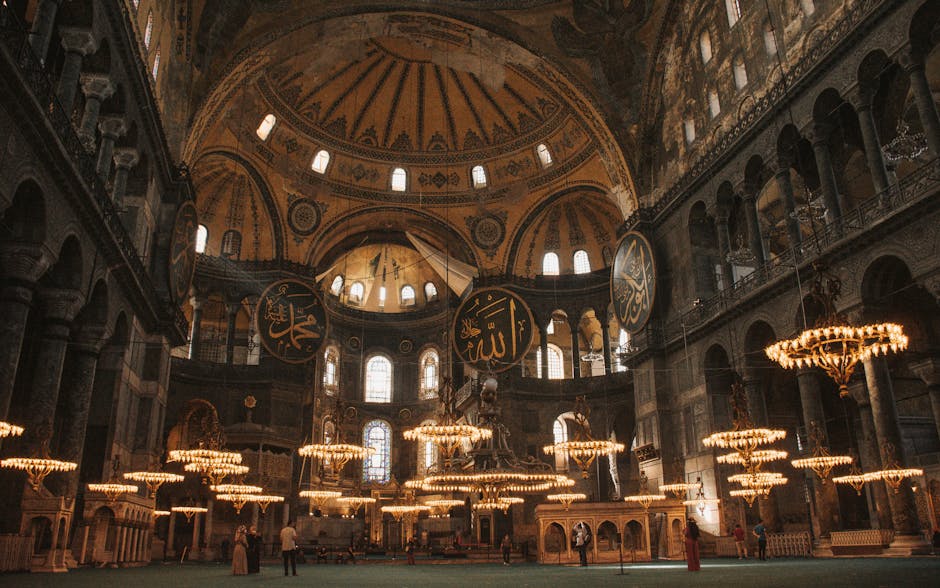
Byzantium’s relationship with Western Europe was complex, marked by both cooperation and rivalry. While the Eastern and Western halves of the Roman Empire shared a common language and culture, ecclesiastical disputes, political strife, and differing theological interpretations led to the Great Schism of 1054, creating lasting divisions. Nevertheless, the Empire underwent a golden age in the 6th century, under the rule of Emperor Justinian I, characterized by military conquest, monumental architecture like the Hagia Sophia, and impressive legal reforms codified in the Corpus Juris Civilis.
However, this glorious era was not to last, and over the years, the Byzantine Empire faced numerous challenges, including territorial losses, internal strife, and the relentless onslaught of external enemies. The geopolitical landscape of the Middle Ages was shifting, and the rise of powerful nations and groups—including the Seljuk Turks, Crusaders, and later the Ottomans—posed significant threats. The Byzantine Empire’s decline began in earnest following its disastrous experiences during the Fourth Crusade in 1204, which culminated in the sacking of Constantinople, leading to the establishment of the Latin Empire. Though Byzantium was restored in 1261, its former glory was irreparably damaged, and it never regained its preeminence.
Key Events, Battles, and Developments
Throughout its history, the Byzantine Empire experienced a plethora of key events and battles that shaped its destiny. Each of these moments contributed to both its rise and decline, leaving indelible marks on history.
The Foundation of Constantinople – 330 AD
The founding of Constantinople by Emperor Constantine I in 330 AD marked a monumental turning point in the history of the Byzantine Empire. Recognizing its strategic location, he chose Byzantium as the new capital of the Roman Empire, effectively shifting power from Rome to the East. The city was adorned with palaces, churches, and public buildings, symbolizing the divine favor and imperial authority bestowed upon it. This ambitious project set the stage for centuries of dominance in trade and culture.
The Reign of Justinian I – 527-565 AD
One of the most significant eras in Byzantine history came during the reign of Emperor Justinian I. Ascending to the throne in 527 AD, Justinian aimed to restore the former glory of the Roman Empire. His achievements included military conquests, legal reforms, and monumental architecture. The completion of the Hagia Sophia between 537 AD and 548 AD created one of the most significant architectural masterpieces of the ancient world. Furthermore, Justinian’s legal reforms, encapsulated in the Corpus Juris Civilis, profoundly influenced modern legal systems.
The Plague of Justinian – 541-542 AD
While Justinian’s reign signaled a period of revival, it was also marred by adversity. The Plague of Justinian struck in 541 AD, attributed to the Yersinia pestis bacterium. This epidemic decimated the population of the empire, killing millions and crippling the economy. Historians estimate that the plague claimed up to 25 million lives, contributing to labor shortages and weakening Byzantine power.
The Iconoclast Controversy – 726-843 AD
The Iconoclast Controversy was a significant theological and cultural conflict within the Byzantine Empire that lasted from 726 AD to 843 AD. It arose over the use of religious images or icons in worship, with many arguing that it was idolatrous. The span of this conflict significantly impacted the relationship between the church and state, altering Byzantine art and culture. Icon supporters, known as Iconodules, pushed back against this movement, leading to a period of intense sociopolitical strife.
The Battle of Manzikert – 1071 AD
One of the most decisive moments marking the decline of Byzantine power came with the Battle of Manzikert in 1071. The Byzantine army, led by Emperor Romanos IV Diogenes, faced the Seljuk Turks, who inflicted a crushing defeat on Byzantine forces. This loss resulted in the gradual Turkification of Anatolia and significantly weakened Byzantine territorial control. The consequences of Manzikert echoed through history, sowing the seeds for the eventual fall of Constantinople.
The Fourth Crusade – 1204 AD
The Fourth Crusade remains one of the most infamous events overshadowing Byzantine history. Launched in 1202, the crusade initially aimed to liberate Jerusalem but devolved into a shocking assault on Constantinople itself. In 1204, crusaders laid siege to the city, resulting in extensive looting and destruction. The establishment of the Latin Empire further curtailed Byzantine influence, leading to a 60-year period of fragmentation and decline before the city was reclaimed by Michael VIII Palaiologos in 1261.
The Fall of Constantinople – 1453 AD
The crowning tragedy of the Byzantine Empire came with the fall of Constantinople on May 29, 1453. Under the leadership of Sultan Mehmed II, the Ottomans launched a massive assault on the city that had withstood countless sieges for over a millennium. Faced with an overwhelming force, the Byzantine defenders, led by Emperor Constantine XI, fought valiantly but were ultimately overwhelmed. The fall of Constantinople not only signaled the end of the Byzantine Empire but also marked the rise of the Ottoman Empire, fundamentally reshaping the political landscape of Europe and Asia.
Important Figures and Their Roles
The history of the Byzantine Empire is replete with remarkable figures whose actions and decisions had profound effects on the course of history.
Emperor Constantine I (Constantine the Great)
As the founder of Constantinople and the first Christian Roman emperor, Constantine I played a pivotal role in the establishment of Byzantine identity. His commitment to Christianity and the establishment of the city laid the groundwork for the future of the empire.
Emperor Justinian I
Perhaps the most celebrated Byzantine emperor, Justinian I is renowned for his military campaigns to reclaim lost territories, monumental architectural works such as Hagia Sophia, and his codification of Roman law. His extensive reforms sought to restore the former grandeur of Rome.
Emperor Heraclius
Heraclius (610-641 AD) is credited with reforming the Byzantine military and administration and declaring Greek as the official language of the empire. His rule was marked by the successful defense against Persian and Islamic invasions, shaping the boundaries of the empire.
Empress Theodora
Theodora, wife of Justinian I, served as an influential co-ruler and political adviser. Known for her advocacy for women’s rights and her shrewd political acumen, she played a significant role during the Nika Riots, where her steadfastness rallied citizens in support of her husband.
Constantine XI Palaiologos
The last Byzantine emperor, Constantine XI, epitomized loyalty and valor in the face of oblivion. He fiercely defended Constantinople against the Ottoman onslaught during the siege of 1453, becoming a symbol of resistance that resonates throughout history.
Causes and Consequences
The decline and ultimate fall of the Byzantine Empire stem from a complex interplay of internal and external factors. Understanding these causes helps shed light on the broader consequences that followed the empire’s demise.
Causes of Decline
Several reasons contributed to the decline of the Byzantine Empire. These included ongoing military threats, internal strife, socio-economic challenges, and religious divisions. The conquests of the Seljuk Turks following the Battle of Manzikert illustrated the increasing vulnerability of Byzantine territories. The empire’s inability to effectively respond to these threats undermined its authority and territorial integrity.
Consequences of the Fall
The fall of Constantinople in 1453 had profound consequences that extended far beyond the borders of the Byzantine Empire. The Ottoman conquest led to the spread of Islam into southeastern Europe, altering demographic and cultural landscapes. Europe faced the emergence of new geopolitical powers while the fall effectively marked the end of Christian Byzantine influence in the East. Additionally, this event instigated a series of migrations, pushing scholars, artists, and diplomats westward, which significantly contributed to the Renaissance.
Global Impact and Legacy
The global impact and legacy of the Byzantine Empire are irrefutable, shaping the historical, cultural, and political landscapes of subsequent generations.
Preservation of Knowledge
Byzantine scholars played a crucial role in preserving classical knowledge and literature during the Middle Ages. Through the copying and dissemination of ancient texts, these scholars ensured that the intellectual heritage of Rome and Greece survived, serving as a cornerstone for the Renaissance.
Art and Architecture
The artistic achievements of the Byzantine Empire, particularly in the realms of mosaic and iconography, had a lasting influence on Christian art. Byzantine architectural innovations, exemplified by structures like the Hagia Sophia, inspired future religious and civic buildings, profoundly shaping Western architecture.
Christianity and Orthodoxy
Byzantium served as a cradle for Christianity, shaping its doctrinal foundations and rituals. The Orthodox Church, emerging from Byzantium, continues to be a significant part of the global Christian community, influencing religious practices and beliefs in parts of Eastern Europe and beyond.
Fascinating Little-Known Facts
Despite its prominence, the Byzantine Empire is often overshadowed by its Roman predecessor. However, here are some little-known facts that showcase its unique legacy:
- The Byzantine Empire was known for its unique administrative system, characterized by the use of a complex bureaucracy and system of governors known as ‘strategoi’.
- Women in the Byzantine Empire played significant roles in society, including owning businesses and becoming influential figures, such as Empress Theodora.
- The Byzantines were pioneers of military tactics, including the use of Greek fire, a devastating incendiary weapon that was crucial in naval battles.
- The Book of Ceremonies, commissioned by Emperor Constantine VII, provides valuable insight into Byzantine court life and ceremonial practices.
Conclusion: Modern Relevance
The story of the Byzantine Empire, a tapestry woven with threads of glory, tragedy, and resilience, offers lessons that resonate in our contemporary world. The enduring legacy of this once-powerful realm continues to inspire scholars, artists, and thinkers who seek to understand the complexities of civilization. By studying its history, we can glean insights into the rise and fall of empires, the intricate dance of culture and religion, and the human capacity for adaptation and reinvention.
As modern society grapples with division and conflict, the lessons learned from the Byzantine experience remind us of the importance of unity and strong governance, as well as the pitfalls of excessive fragmentation and strife. In an era defined by interconnectivity, the rich cultural heritage of the Byzantine Empire serves as a testament to the power of resilience, innovation, and the enduring pursuit of knowledge. The Byzantine Empire may have faded into history, but its grandeur and lessons continue to illuminate the path forward for generations to come.