
Introduction
The Byzantine Empire, often overshadowed by its predecessor, the Roman Empire, tells a captivating story of resilience, elegance, and inevitable decline that continue to fascinate historians and enthusiasts alike. The empire stood at the crossroads of Europe and Asia, serving as a bastion of culture, art, and learning amid the chaos of the Middle Ages. For over a thousand years after the fall of the Western Roman Empire in 476 CE, the Byzantine Empire thrived in its sophisticated capital, Constantinople, acting as a vital connector between civilizations and preserving the heritage of the ancients. But what caused the collapse of this seemingly invincible empire? Was it internal decay, external invasions, or something else? Join us on a historical journey that explores the triumphs and tragedies of the Byzantine Empire, and discover how its legacy still resonates in today’s world.
From its formation to its dramatic fall in 1453, the Byzantine Empire shaped the world with its complex political maneuvers and cultural developments. The empire was more than just a continuation of Roman power; it was a unique blend of Greco-Roman traditions, emerging Christian beliefs, and influences from the surrounding regions. It provided a haven for scholars, preserving ancient texts while also advancing sciences and philosophies. However, its history is riddled with strife, from the iconic battles waged against invading forces to the civil wars that erupted within its borders.
In this article, we will dive deep into the Byzantine Empire’s historical background, key figures, significant battles, and the complex causes that led to its eventual fall. We will also examine the global implications of the empire’s collapse and uncover fascinating facts that you may not know. The narrative unfolds markedly against the backdrop of the Middle Ages, offering insights into both the brilliance and the vulnerabilities of one of history’s most storied empires. The lessons learned from the Byzantine experience offer us valuable reflections on resilience, cultural preservation, and the human condition throughout time.
Historical Background and Context
The Byzantine Empire is essentially the continuation of the Roman Empire in its Eastern provinces. It was established after Emperor Constantine the Great founded Constantinople in 330 CE, recognizing the necessity to fortify Roman governance beyond Italy. The East was ripe for economic and cultural flourishing due to its strategic location along the Silk Road, which facilitated trade between Europe and Asia. As the Roman Empire threatened to divide due to internal strife and external pressures, the Eastern provinces remained more stable and prosperous.
The unity of the empire was challenged throughout the 3rd century CE, as various external pressures, such as barbarian invasions in the West and the Persian Empire’s continued hostility in the East, weakened Roman authority. The eventual split of the Roman Empire into Eastern and Western halves in 395 CE inadvertently set the stage for the Byzantine Empire’s unique evolution. The Western Empire fell to invasions from tribes like the Vandals and Goths, while the Eastern Roman Empire experienced a newfound resurgence, especially in the 6th century under Emperor Justinian I.
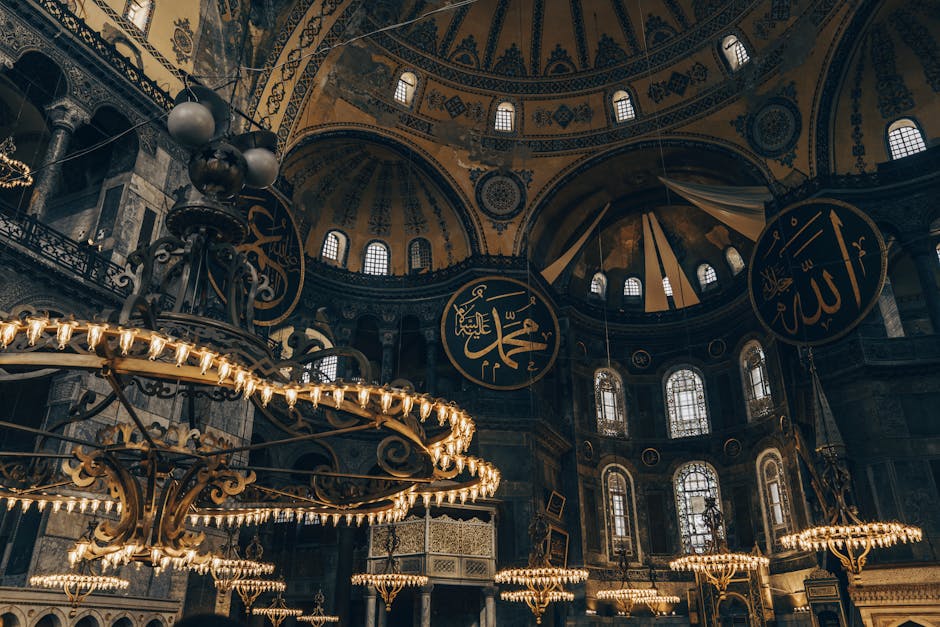
Justinian’s rule, which lasted from 527 to 565 CE, is often viewed as a golden age for the Byzantine Empire. He aimed to reclaim lost territories, revitalize the empire’s economy, and consolidate its judicial framework through the codification of Roman law, known as the Corpus Juris Civilis. This period was notable for extensive building projects, including the iconic Hagia Sophia, which represented the zenith of Byzantine architecture and the fusion of religious and imperial authority.
The Byzantine Empire was defined not just by its governance but by its rich cultural identity. Christianity became the official state religion under Theodosius I in 380 CE, profoundly influencing Byzantine art, literature, and philosophy. Monastic societies flourished during this time and played a pivotal role in preserving ancient texts and knowledge. The empire became a center for theological debate, particularly during the iconoclast controversies that highlighted the tension between religious orthodoxy and the artistic expression of faith.
As the years progressed, however, the Byzantine Empire faced mounting challenges. The internal political strife, foreign invasions, and the rise of alternative powers, such as the Seljuk Turks and later the Ottomans, marked the complex dynamics of the medieval world that would ultimately lead to the empire’s decline and fall.
Key Events, Battles, and Developments
Understanding the Byzantine Empire’s trajectory requires a detailed examination of its key events and battles, some of which have defined its course through history.
1. The Reign of Justinian I (527-565 CE)
One of the most crucial periods in Byzantine history is during the reign of Justinian I, marked by ambitious military campaigns and legislative reform. His quest to reclaim Western territories began with the conquest of North Africa in 533 CE, where the general Belisarius decisively defeated the Vandal king Gelimer at the Battle of Tricamarum. This victory allowed the empire to regain control of Carthage.
Following North Africa’s reclamation, Justinian turned his sights to Italy, aiming to conquer the Ostrogoths. The campaign, though successful at first, faced challenges and would consume vast resources. By 552 CE, Belisarius had achieved a decisive victory in the Gothic War, liberating significant territories in Italy. However, the subsequent mishandling of these regions led to further conflicts that left the empire vulnerable.
2. The Plague of Justinian (541-542 CE)
The empire’s prosperity was severely tested with the arrival of the Plague of Justinian, a pandemic that swept through the Eastern Mediterranean. Estimates suggest that 25 to 50 million people died from the plague, drastically reducing the population and crippling the Byzantine economy. This calamity contributed to the decline in military strength and resources, affecting Justinian’s ambitions.
3. The Iconoclast Controversy (726-843 CE)
Following Justinian’s era, controversies emerged regarding the use of religious icons. The first major decree against icon veneration was issued by Emperor Leo III in 726 CE, marking the beginning of the Iconoclastic Schism. This movement aimed to reduce the perceived idolatry surrounding icons but led to civil unrest, theological disputes, and significant societal divisions. The conflict escalated under subsequent emperors, resulting in persecution against those who supported icon veneration and creating profound theological implications for the Orthodox Church.
4. The Battle of Manzikert (1071 CE)
The Byzantine Empire suffered a significant defeat at the Battle of Manzikert, where Sultan Alp Arslan of the Seljuk Turks triumphed over Byzantine Emperor Romanos IV Diogenes. This defeat marked the beginning of significant territorial losses for the empire in Anatolia, as many of its provinces fell under Turkish control, leading to demographic shifts and political instability within the empire.
5. The Fourth Crusade (1204 CE)
One of the most damaging episodes in Byzantine history was the Fourth Crusade, aimed ostensibly at reclaiming the Holy Land. Instead, it ended with the siege of Constantinople in 1204 CE, resulting in one of the most catastrophic events in the empire’s history. Crusaders captured the city, establishing a short-lived Latin Empire over Byzantine territories. Although Byzantium was restored in 1261, it never fully recovered its former glory.
6. The Fall of Constantinople (1453 CE)
The final chapter of the Byzantine saga culminated on May 29, 1453, when Mehmed II of the Ottoman Empire laid siege to Constantinople. After a prolonged siege using advanced artillery, the Ottomans breached the famed walls of the city. The fall marked not only the end of Byzantine rule but also the beginning of a new era in world history, as the city became the new capital of the Ottoman Empire. The fall of Constantinople has been described by many historians as a significant turning point that shifted power dynamics across Europe and Asia.
Important Figures and Their Roles
The narrative of the Byzantine Empire cannot be fully understood without recognizing the pivotal figures who shaped its path.
1. Emperor Justinian I
Justinian’s ambitious vision for a restored Roman Empire is central to Byzantine history. His codification of Roman law not only reformed the legal structure but also laid the groundwork for many modern legal systems. His reign is characterized by an expansionist policy, vibrant cultural advancements, and the construction of monumental architecture, such as the Hagia Sophia.
2. Belisarius
The loyal general Belisarius served under Justinian and played a pivotal role in restoring lands in North Africa and Italy, showcasing military brilliance in crucial battles. His strategies redefined Byzantine military efforts, but his later sidelining by Justinian also demonstrates the complexities of court politics.
3. Theodora
Justinian’s wife, Theodora, was no less significant than her husband. Originally an actress, she rose to prominence and wielded considerable influence over political affairs. Her advocacy for women’s rights and social reform marked a progressive leap for Byzantine society.
4. Basil II
Known as the “Bulgar Slayer,” Basil II ruled from 976 to 1025 CE and is celebrated for his military competence and administrative reforms. He expanded the empire’s borders and strengthened its military infrastructure through sheer determination and strategic warfare.
5. Mehmed II
The conqueror of Constantinople, Mehmed II, also known as Mehmed the Conqueror, was a figure of immense significance in both Ottoman and Byzantine history. His tactical brilliance enabled him to successfully siege the city, marking the end of the Byzantine Empire and the rise of the Ottomans.
Causes and Consequences
The eventual decline of the Byzantine Empire can be attributed to various causes, both internal and external. Understanding these factors provides an illuminating perspective on the circumstances leading to its fall.
Causes of Decline
1. Internal Strife: The Byzantine Empire faced numerous internal political conflicts, often revolving around succession disputes and power struggles. Such instability weakened the central authority and diverted essential resources away from urgent military needs.
2. Economic Weakness: The Plague of Justinian and subsequent epidemics severely impacted the economy, leading to a reduced workforce, weakened trade relations, and increased taxation to support military campaigns. This economic strain made sustaining a robust defense increasingly difficult.
3. Military Overreach: The extensive territorial ambitions during the Justinian period ultimately overextended the Byzantine military. Frequent wars drained both financial and human resources, leaving the empire vulnerable to threats from neighboring powers.
4. Religious Conflicts: The religious tensions within the empire, particularly stemming from the Iconoclastic controversies, led to societal divisions, weakening unity and creating opportunities for external threats to exploit internal discord.
Consequences of the Fall
The fall of Constantinople in 1453 had profound consequences for both Europe and Asia. It signaled the definitive end of Christian Byzantine rule and the rise of a powerful Islamic Ottoman Empire in southeastern Europe.
The new Ottoman governance promoted religious pluralism but also introduced Islamic laws and traditions that significantly altered the landscape of the region. The conquest re-oriented trade routes around the Ottoman capital, impacting European commerce and fueling the Age of Exploration as Western powers sought new routes to avoid Ottoman dominance.
Additionally, the fall of the Byzantine Empire triggered critical cultural exchanges, as many Byzantine scholars fled westward, carrying with them invaluable ancient Greek and Roman texts. This migration of knowledge played a crucial role in the Renaissance period, significantly impacting European art, philosophy, and science.
Global Impact and Legacy
The Byzantine Empire’s legacy extends far beyond its borders, influencing various aspects of governance, art, culture, and religion in subsequent centuries.
1. Architectural Influence
The architectural styles developed during the Byzantine era, notably the extensive use of domes and mosaics in churches like the Hagia Sophia, set a precedent for future architectural endeavors, particularly in Eastern Orthodox countries and Islamic architecture.
2. Legal Foundations
Justinian’s legal codex laid essential groundwork for the development of modern legal systems, impacting international law and governance structures that still resonate in today’s judicial practices.
3. Cultural Preservation
Byzantium played a pivotal role in preserving Greco-Roman heritage. The preservation of classical texts and the advancement of philosophy, science, and literature during the Byzantine period significantly contributed to the intellectual developments in Europe, particularly during the Renaissance.
4. The Orthodox Church
The Eastern Orthodox Church, born from Byzantine roots, remains one of the dominant branches of Christianity today, exemplifying the lasting spiritual influence of the Byzantine Empire on the Eastern world.
Fascinating Little-Known Facts
The Byzantine Empire is rich with intriguing details that often slip under the radar.
1. The Byzantine Empire is often incorrectly portrayed as a stagnant entity, but it was in fact marked by significant advancements in areas such as medicine and philosophy, with figures like Paul of Aegina introducing early surgical techniques.
2. The use of Greek fire, a secret incendiary weapon developed by the Byzantines, became an essential element in naval combat. Its exact composition remains unknown, showcasing the empire’s technological innovations in warfare.
3. The Byzantine court was renowned for its elaborate ceremonies and strict etiquette. The intricate protocols established during the imperial court influenced European court culture for centuries.
Conclusion with Modern Relevance
As we reflect upon the Byzantine Empire, we are reminded of the complexities that come with navigating power, culture, and conflict. The rise and fall of this enduring empire showcase the delicate balance between resilience and vulnerability. Its legacy lives on through modern governance, art, and religious practices, signifying that while empires may fall, their contributions to civilization remain profoundly impactful.
In today’s world, the lessons drawn from the Byzantine experience allure us to cultivate a deep appreciation for culture, to engage diplomatically with global communities, and to recognize the importance of preserving knowledge amidst turmoil. The Byzantine Empire is a testament to the intricacies of human nature, and as we navigate contemporary societal challenges, revisiting its history can provide valuable insights into our own resilience and adaptability.