
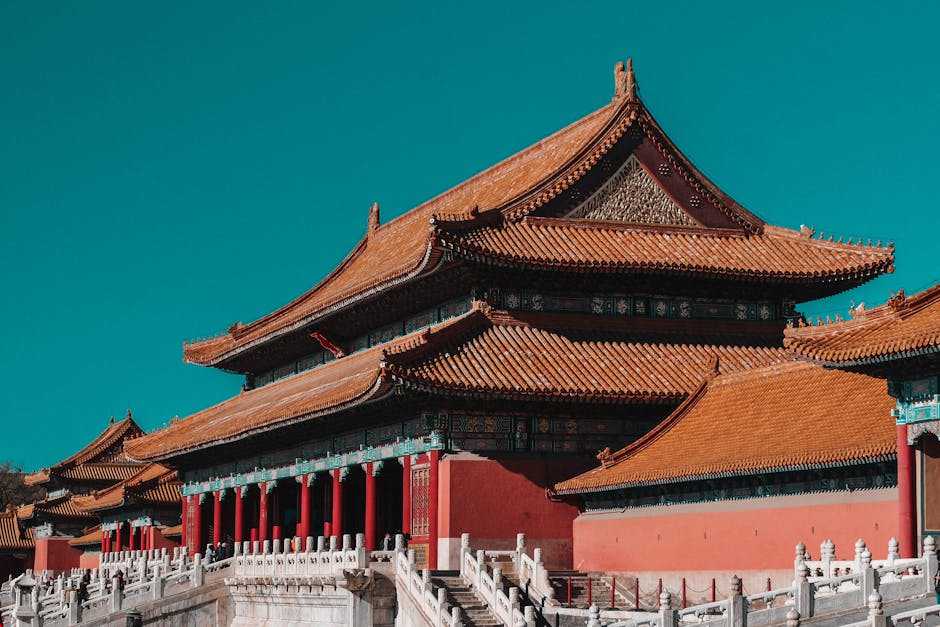
Compelling Introduction: The Flourishing Era of the Song Dynasty
In the annals of Chinese history, few periods are as captivating as the Song Dynasty, a time of unprecedented innovation, cultural bloom, and economic prosperity that radically shaped not only China but influenced the entire world. Stretching from 960 to 1279, this dazzling era encapsulated a revolutionary interval marked by groundbreaking inventions and profound philosophical and artistic achievements. It was a period of transition, resilience, and remarkable human endeavor that still resonates today in countless aspects of modern life. Understanding the Song Dynasty is to witness a time when civilization took great strides toward modernity, laying foundational elements for future societal developments.
Historical Background and Context
Established in 960 by the astute Emperor Taizu, the Song Dynasty arose from the turmoil that marked the end of the Five Dynasties and Ten Kingdoms period. This era of fragmented governance precipitated an urgent need for consolidation, a need Emperor Taizu skillfully addressed by uniting a fractured China under the emblem of the Song. His vision ushered in an expansive epoch driven by principles of Confucianism, marking a departure from the preceding militaristic regimes.
Geopolitically, the Song Dynasty navigated constant pressures from neighboring states, including the Khitan Liao Dynasty in the north and the Tangut-led Western Xia. This continuous challenge of maintaining sovereignty introduced a new military strategy focusing on diplomacy rather than mere warfare. Interestingly, this led to a focus on cultural and intellectual advancements that the Song Dynasty so famously championed.
The dynasty itself can be divided into two distinct periods: the Northern Song (960–1127) when the capital resided in Kaifeng, and the Southern Song (1127–1279) after losing the northern half to the Jurchens of the Jin Dynasty, with its capital relocated to Lin’an (modern Hangzhou). Each phase contributed uniquely to the dynasty’s enduring legacy in distinct fields such as technological growth, literature, and the arts.
Key Events, Battles, and Developments
The Founding and the Reforms of Emperor Taizu (960-976)
Taizu implemented sweeping reforms that centralized the bureaucracy. His commitment to civil service reform, particularly through the meritocratic imperial examination system, elevated the requirements for governmental appointments, underscoring an era where talent outshone nobility.
The Economic Revolution and Technological Advancements
The Northern Song period was notable for its economic revolution, marked by significant agricultural improvements. Technological advancements such as the widespread use of the compass and the perfection of gunpowder advanced China’s maritime and military prowess. During this time, the imperial court also standardized currency, which contributed to economic stability and expanded international trade.
The Jingkang Incident (1127)
One of the most pivotal, if tragic, events of the Song Dynasty was the Jingkang Incident. The invasion and eventual capture of Kaifeng by the Jurchens of the Jin Dynasty forced the Song court to flee southward. This event not only marked the start of the Southern Song but also set the stage for China’s resurgence south of the Yangtze River.
The Mongol Conquests (1279)
The Song Dynasty’s downfall came at the hands of the Mongol Empire led by Kublai Khan. Despite valiant defiance, Song forces were ultimately overwhelmed at the Battle of Yamen in 1279, marking the end of the Song Dynasty and the inception of the Yuan Dynasty under Mongolian rule, thus transitioning China into another transformative historical phase.
Important Figures and Their Roles
Emperor Taizu of Song
The progenitor of the Song Dynasty, Emperor Taizu (Zhao Kuangyin), was a visionary leader whose policies and reforms set the tone for an age of intellectual flourishing and economic revitalization. His ascent to power marked a stabilization of the chaotic war-torn landscape, enabling strides in governance and centralized power.
Wang Anshi (1021-1086)
Serving as a chancellor during the Northern Song, Wang Anshi was a pivotal reformer whose initiatives aimed at enhancing government efficiency and addressing economic discrepancies. His ‘New Policies’ sought to strengthen state control over trade and stimulate agriculture, though his policies were met with mixed reception and spurred considerable debate.
Su Shi (1037-1101)
A literary colossus, Su Shi, also known as Su Dongpo, epitomized the cultural vigor of the Song Era. His contributions to Chinese poetry and prose, alongside his official duties, positioned him as a paragon of the era’s intellectual brilliance.
Causes and Consequences
The inception of the Song Dynasty was deeply rooted in the need for stability and reunification following tumultuous periods of division. Its success was a direct result of pragmatic governance reforms, fostering an environment ripe for agricultural and technological advancements.
However, the dynasty’s emphasis on cultural and intellectual pursuit came at the cost of military neglect, which contributed to its susceptibility to external invasions, most notably by the Jurchens and later the Mongols. These invasions, while signaling the dynasty’s end, also underscored the high stakes of maintaining a balanced approach in governance and defense.
Global Impact and Legacy
The Song Dynasty’s legacy endures prominently through its numerous innovations. The introduction of movable type printing revolutionized information dissemination, thereby enhancing literacy and education. Similarly, the development of the compass contributed to advances in navigation far beyond China’s borders.
The aesthetic and cultural legacies, particularly in landscape painting and poetry, continue to be celebrated in modern times, underscoring their timeless influence on world art and literature. Moreover, concepts of economy and governance from the Song period laid groundwork re-used and re-imagined across different civilizations worldwide.
Fascinating Little-Known Facts
Did you know that the Song Dynasty was the first government in world history to issue paper money? This was a result of burgeoning commercialism and requisite convenience for trade, illuminating how innovation often emerges from practical necessity.
Furthermore, during the Song Era, the renowned polymath Shen Kuo wrote the ‘Dream Pool Essays’, a work filled with insights that placed him centuries ahead of scientific thinking elsewhere in the world.
Interestingly, the Southern Song is credited with pioneering firepower weapons due to advancements in gunpowder, setting early precedents for modern warfare.
Conclusion: Modern Relevance of the Song Dynasty
In today’s ever-evolving geopolitical and cultural landscape, the Song Dynasty serves as a historical compass guiding contemporary society. The dynasty’s formidable strides in technology, economic management, and cultural achievements remain poignant reminders of the potential of human innovation and foresight.
These lessons are particularly relevant in an age dominated by technological leaps and globalization. The Song era’s balanced approach to governance, prioritization of intellectual advancements, and emphasis on cultural vitality prove instructive to modern administrations striving for sustainable progress without compromising artistic and intellectual integrity.
Ultimately, the Song Dynasty’s story is one of resilience, creativity, and eternal impact, shedding light on the bedrock of timeless human aspiration and the enduring pursuit of development.