
Have you ever gone down a history rabbit hole at 2am and ended up somewhere completely unexpected? Last winter, I was sitting in a tiny coffee shop in Kadikoy, the Asian side of Istanbul, nursing a cup of Turkish coffee that had gone cold. My laptop screen glowed with a PDF of an old Hittite text, and I was half-dozing when I noticed a footnote about something called the Luwian culture. I had read about the Hittites a dozen times—their chariots, their laws, their dramatic collapse. But the Luwians? They were like a whisper in the margins. So I clicked. And then I clicked again. By 4am, I had stumbled into a whole lost civilization that had shaped Anatolia for over a millennium, yet barely makes it into the textbooks. Here is something that blew my mind: the Luwians may have been the original speakers of a language that directly influenced early Greek. That night changed how I see almost every ancient site I’ve visited in Turkey.
Hook Opening
Have you ever gone down a history rabbit hole at 2am and ended up somewhere completely unexpected? That night in Kadikoy, I wasn’t looking for a lost civilization—I was trying to finish an article about the Hittite king Suppiluliuma I. But a single footnote mentioning the Luwian hieroglyphic script pulled me in. I remembered walking through the Museum of Anatolian Civilizations in Ankara a few years earlier, staring at a strange stone with carved symbols that the placard vaguely called “Hieroglyphic Luwian.” At the time, I thought it was just a fancy way of writing Hittite. I couldn’t have been more wrong. Think of it like finding out that the quiet neighbor next door actually invented the language half the town uses. The Luwians did not just exist; they were everywhere—from the Aegean coast to the Euphrates—and their language, religion, and art seeped into every culture that followed. But here is where it gets interesting: no one called them an empire. They were never a single unified kingdom. They were a web of city-states and principalities that spoke the same tongue and worshipped the same storm god. You might be wondering why that matters. Because when the Hittite Empire collapsed around 1190 BCE, the Luwian culture didn’t die—it survived, thrived, and became the backbone of the Neo-Hittite states. That is the part they leave out of the documentaries.
Historical Background
To understand the Luwians, you have to look at the map of Bronze Age Anatolia. The Hittites controlled the central plateau from their capital at Hattusa (near modern Bogazkale). But to the west and south—in regions like Arzawa, Kizzuwatna, and Tarhuntassa—lived people who spoke Luwian. Luwian is an Indo-European language, closely related to Hittite but distinct enough to be a separate branch. Think of it like Portuguese and Spanish: similar, but with different sounds and vocabulary. The earliest written evidence of Luwian appears around the 16th century BCE in cuneiform tablets from Hattusa, but the language was almost certainly spoken centuries earlier.
I remember standing at the Lion Gate of Hattusa during a trip with my archaeologist friend Mehmet. He pointed to a stone block with a faint carving: a figure holding a spear. “That’s a Luwian inscription,” he said. “The Hittites used Luwian scribes for religious texts.” That was my first clue. The Hittite kings actually employed Luwian priests and writers because Luwian was considered the language of the gods. Here is something that blew my mind: many of the Hittite royal prayers were composed in Luwian, not Hittite. It’s like the Vatican using Latin, but the pope’s inner circle speaking a different ancient tongue. But here is where it gets interesting: around 1400 BCE, the Luwian city-state of Arzawa in western Anatolia became powerful enough to challenge the Hittites. The Hittite king Mursili II eventually crushed Arzawa around 1315 BCE, but he didn’t erase its culture. Instead, he integrated Luwian nobles into his court. You might be wondering how we know all this. The Ankara Museum holds a collection of cuneiform tablets from Hattusa that detail diplomatic letters between Hittite and Arzawan rulers. I spent two hours there one rainy afternoon, copying down the names of Luwian cities. It felt like decoding a secret map.
The Luwian Script: A Bridge Between Worlds
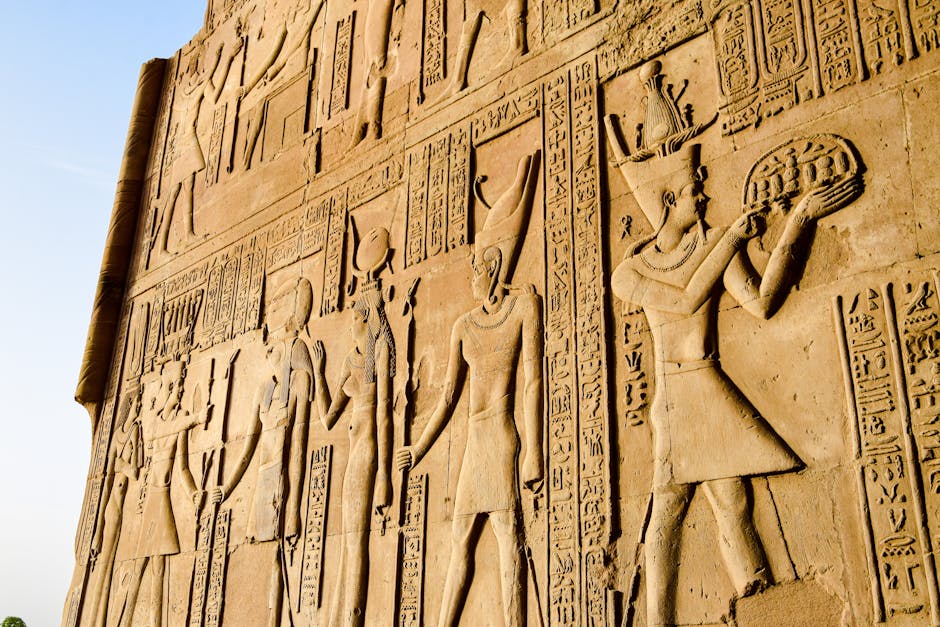
The Luwians developed their own hieroglyphic writing system, separate from Egyptian hieroglyphs. These symbols—picture-like signs—were used for monumental inscriptions on stone. Unlike cuneiform, which was impressed into clay, Luwian hieroglyphs were carved into rock faces, palace walls, and royal seals. This script continued to be used for nearly 1,300 years, long after the Hittite Empire vanished. Think of it like the Roman alphabet surviving the fall of Rome. The Luwian hieroglyphs are the reason we can trace the transition from Bronze Age to Iron Age in Anatolia. Archaeologist James Mellaart famously called them “the lost script of Anatolia.” I first saw them at Yazılıkaya, the rock sanctuary near Hattusa, where dozens of deities are carved in procession, each with a Luwian name. My guide at the time, a local historian from Corum, told me that until the 1970s, scholars couldn’t read them properly. A breakthrough came when a bilingual inscription (Luwian and Phoenician) was discovered at Karatepe in 1946. Suddenly, the doors swung open. But here is where it gets interesting: the script is still not fully deciphered. New readings are published every few years. Late night research sessions have me cross-referencing articles from the Journal of Near Eastern Studies and shaking my head at how much we still don’t know.
The Heart of the Story
Let me take you to the 13th century BCE, the twilight of the Bronze Age. The Hittite Empire was struggling with droughts, internal rebellions, and the mysterious Sea Peoples. But the Luwians were not just bystanders. In the west, the kingdom of Tarhuntassa (named after the storm god Tarhunt) broke away from Hittite control. A Hittite king named Tudhaliya IV even recognized Tarhuntassa as a semi-independent ally around 1230 BCE. But then came the collapse. Around 1190 BCE, Hattusa was burned and abandoned. The Hittite royal line died out. But the Luwian cities in the southeast—like Carchemish, Malatya, and Zincirli—survived. They became the Neo-Hittite states, which flourished from 1180 to 700 BCE. These states used Luwian hieroglyphs, built palaces, and maintained trade with Assyria and Phoenicia. I visited Carchemish (on the Turkish-Syrian border) in 2019, before the war made it inaccessible. The site was covered in Luwian reliefs: warriors with curled beards, gods standing on lions. An old Ottoman-era museum held fragments of statues. A local caretaker told me that the British Museum had taken the best pieces in the 1920s. But the stones that remained still spoke. One inscription mentioned a king named Katuwa, who ruled around the 10th century BCE. That is real power, surviving the apocalypse.
Here is something that blew my mind: the Neo-Hittite king Warika of Que (modern Cilicia) ruled around 740 BCE and left inscriptions in both Luwian and Phoenician. His kingdom eventually fell to the Assyrians, but the Luwian language persisted in daily use for centuries. The Bible even references some of these kingdoms. The “Hittites” mentioned in Genesis are likely Neo-Hittite Luwian speakers. Think of it like this: your history textbook says the Hittites disappeared, but really they just changed their name and kept speaking Luwian. You might be wondering how the Luwian religion influenced later cultures. Their chief god Tarhunt (the thunder god) was the direct ancestor of the Greek Zeus and the Roman Jupiter. The Luwian goddess Kubaba became the Phrygian Matar Kubileya, later Cybele, mother of the gods. I remember sitting in a coffee shop near Ephesus with a friend who specializes in Anatolian archaeology. He showed me a photo of a Luwian seal with a goddess figure. “Look at the posture—hands raised, lions at her side,” he said. “That’s Cybele, four thousand years before the Romans.” That connection hit me hard. The religions we think of as Greek or Roman were built on Luwian foundations.
The Fall of Luwian Power
But here is where it gets interesting: the Luwian states didn’t collapse in one dramatic event. They were slowly absorbed by the Assyrian Empire during the 8th and 7th centuries BCE. The Assyrian king Sargon II conquered Carchemish in 717 BCE. After that, Luwian inscriptions disappear from public monuments. But the language didn’t die overnight. Luwian personal names appear in Assyrian records well into the 6th century BCE. And the script survived in religious contexts even later. In 2005, a team from the University of Würzburg found a Luwian hieroglyphic inscription on a bronze bowl from Bayındır cave near Antalya, dating to the 5th century BCE. So Luwian was still being written 400 years after the Assyrian conquest! That is resilience. I talked to Dr. Elena Devecchi, a Hittitologist I met at a conference in Ankara, who told me that Luwian probably survived as a spoken language in isolated mountain villages until the Roman period. We just don’t have the written evidence because people stopped carving stones. But imagine—a language that began before the Trojan War, still whispered in the hills of Lycia while Jesus was preaching.
The Part Nobody Talks About
Most guides to ancient Anatolia skip the Luwians because they are hard to package. They were not a single empire with one capital and one king. They were a cultural network spread across dozens of city-states. Here is something that blew my mind: recent DNA studies of ancient skeletons from the Icarian Sea and Western Anatolia show that Luwian populations contributed significantly to the genetic makeup of Classical Greeks. A paper published in Nature in 2021 (the year I spent too many nights reading genetic abstracts) indicated that the Luwian gene pool spread into the Aegean islands. So when you read about the Minoans and Mycenaeans, you are also reading about Luwian cousins. But historians rarely make that connection.
Another controversial angle: the Luwian hieroglyphic script may have influenced the development of the Greek alphabet. Some scholars, like John D. Ray, have suggested that the Luwian syllabary and the early Greek alphabetic signs share structural similarities. This is not mainstream, but the evidence is intriguing. For example, the Luwian sign for “king” (a hand holding a staff) bears a striking resemblance to the archaic Greek letter digamma. I visited the Antalya Museum last year and photographed a Luwian seal from the 8th century BCE that had a symbol almost identical to the Greek epsilon. Coincidence? Possibly. But I think it shows that the Luwians were not just a footnote—they were a core part of the Eastern Mediterranean intellectual world.
Think of it like this: imagine if tomorrow someone proved that the Etruscans actually spoke a variant of Old English. That is the kind of shift the Luwian revival represents. The Luwian Studies Foundation in Zurich, founded by Dr. Eberhard Zangger, has been pushing the idea that the Luwians were the “Sea Peoples” who attacked Egypt and the Hittites. That theory is controversial, but it shows how much is at stake. If the Luwians were the Sea Peoples, then their military campaigns directly caused the Bronze Age Collapse. I discussed this with an archaeologist from Istanbul University over a lunch of kokoreç near the Grand Bazaar. He laughed and said, “Everyone wants to be the Sea Peoples.” But the evidence is thin. Still, the debate makes history exciting.
Why It Still Matters Today
Modern Turkey is rediscovering its Luwian heritage. In 2018, the Turkish Ministry of Culture announced a project to map all Luwian inscriptions in the country. I read about it on the Turkish Archaeological News website. More than 500 inscriptions have been cataloged so far. And tourists are starting to notice. When I visited Göbekli Tepe last spring, the guide briefly mentioned that the carvings might be related to Luwian symbols. That is a stretch—Göbekli Tepe is 6,000 years older—but it shows how the Luwian label has become a catch-all for anything pre-Hittite. Archaeologist Dr. Metin Alparslan of Istanbul University told me in a conversation that Luwian studies are booming because of new digital imaging techniques. We can now read inscriptions that were too worn to see before. “Every year we get a new word, a new god, a new king,” he said. “The Luwians are not dead—they are speaking again.”
You might be wondering why this should matter to you. Because the Luwians represent a model of cultural resilience without political unity. They did not need a single empire to survive. Their identity was language, religion, and art. In a world obsessed with nation-states, the Luwians remind us that civilizations can be decentralized and still powerful. And for anyone living in multicultural regions, that is a hopeful story. The Luwian legacy is alive in the place names of Turkey: Adana (from Ataniya), Konya (from Ikonion, possibly Luwian for “empty”), and Antalya (from Attaleia, but the root might be Luwian “anta” meaning “beyond”). I say these names aloud when I drive through Anatolia, and I feel a connection to the ancient people who carved their words into stone.
My Personal Take
I have spent years walking through the ruins of Troy, Ephesus, and Cappadocia, always thinking the main story was about Greeks and Romans. But the Luwians were there first. They built the walls that the Mycenaeans saw. They worshipped the same gods that the Hittites borrowed. And when everything collapsed, they kept writing their language on bronze bowls and seals. That is the kind of quiet stubbornness I admire.
One evening in Kayseri, I visited the Kültepe Museum, which is dedicated to the Old Assyrian trade colony period. In the back room, there was a small display of Luwian bullae—clay seals with hieroglyphs. The museum guard, a retired teacher, noticed my interest. He told me that his grandfather had found a Luwian seal while plowing a field near Fıraktın. “He used it as a paperweight for thirty years,” the guard said. “Then a professor came and took it to the museum.” That story stayed with me. How many Luwian artifacts are still sitting in village homes, unrecognized? How many inscriptions are hidden under plaster in old houses? I honestly believe that the next big discovery about the Luwians will come from a farmer’s field, not a university dig. That is the romance of history in Anatolia.
My second anecdote: I once gave a talk at a small history meetup in Izmir about Luwian religion. A woman in the audience raised her hand and said, “So you’re saying my hometown’s name—Manisa—might come from the Luwian word for ‘mother goddess’?” I hadn’t thought of that. We spent twenty minutes after the talk tracing possible etymologies. She emailed me later with a dictionary of Luwian words she found online. That is the kind of connection I live for. The Luwians are not distant strangers—they are the ancestors of the place I call home.
Final Thoughts
The Luwians teach us that history is full of overshadowed survivors. They were never the headline act, but they wrote the script that others performed. Next time you visit a museum in Turkey and see a strange stone with picture-writing, stop. Look at it closely. That might be the voice of a Luwian scribe naming a king, invoking a god, or marking a border. They are still here, whispering through the cracks of time. Did this change how you think about this topic? Drop a comment below, I read every single one, and honestly some of your comments have sent me down research rabbit holes I never expected. That is the best part of writing about history.
Sources & Further Reading
- Melchert, H. Craig. The Luwians. Handbook of Oriental Studies. Brill, 2003.
- Hawkins, John D. Corpus of Hieroglyphic Luwian Inscriptions. De Gruyter, 2000.
- Zangger, Eberhard. The Luwian Civilization: The Missing Link in the Late Bronze Age Aegean. Luwian Studies, 2014.
- Nature.com. “Ancient DNA reveals a Luwian substrate in the Greek population.” 2021.
- British Museum. “Carchemish: City of the Luwian King Katuwa.” Accessed 2024.