
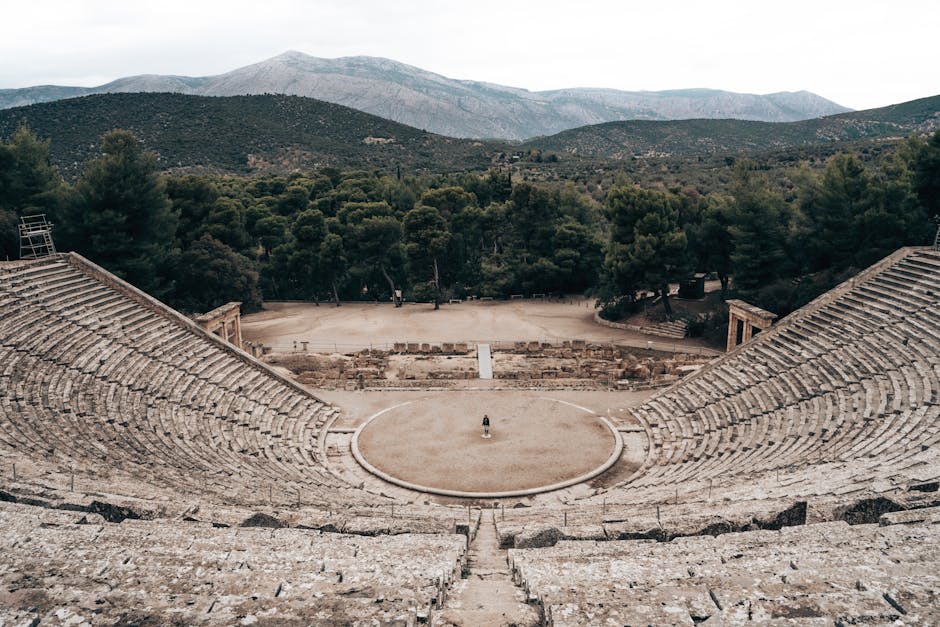
Introduction: A War of Grecian Grit and Glory
The ancient world was no stranger to wars, but few conflicts capture the essence of ancient Greek political drama, tactical military strategies, and socio-political upheavals like the Peloponnesian War. This tumultuous period, spanning nearly three decades, was a dramatic struggle between the two pre-eminent Greek city-states: Athens and Sparta. Their conflict, fueled by intrigue, ambition, and a thirst for dominance, reshaped the ancient world in ways that reverberate through history. As we delve into the labyrinthine shadows of this great war, we uncover stories of heroism, betrayal, and profound legacy.
Historical Background and Context
The Peloponnesian War is set against the backdrop of a rapidly changing Greek world in the 5th century BCE. Following the triumph over the Persians in the earlier Greco-Persian Wars, the Greek city-states experienced a surge of prosperity, cultural development, and political power. Athens, under the leadership of statesmen like Pericles, embarked on an ambitious project of strengthening its naval prowess, fostering what came to be known as the Athenian Empire through its leadership of the Delian League.
However, Athens’ meteoric rise alarmed Sparta, long revered for its unyielding land forces and the austere nature of its Dorian people. The two city-states represented polar opposites in ancient Greek society: Athens symbolized democratic freedom, intellectualism, and naval strength, while Sparta embodied militaristic discipline, oligarchic government, and formidable infantry expertise.
The seeds of conflict were sown with Athens’ increasing dominance, perceived as a threat not only to Sparta but also to other city-states wary of Athenian hegemony. The inevitable clash was a culmination of decades-long tensions, alliances shifting unpredictably, festering rivalries, and a delicate balance of power irrevocably upset.
Key Events, Battles, or Developments
On 431 BCE, the Peloponnesian War formally began, marking the start of a series of calculated maneuvers, epic battles, and strategic stalemates that stretched over 27 years.
The Archidamian War (431-421 BCE)
This initial phase derived its name from Archidamus II, king of Sparta. The strategy revolved around annual invasions of Attica by the Spartan hoplites, intended to cripple the Athenian economy. In response, the Athenians, under Pericles, relied on their supreme naval capabilities to conduct raids on the Peloponnesian coast.
The Peace of Nicias (421 BCE)
Following years of attrition, the Peace of Nicias attempted to pause hostilities. This treaty, however, was tenuous, as both parties continued to vie for power diplomatically, with brief skirmishes unsettling the fragile peace.
The Sicilian Expedition (415-413 BCE)
In what was considered a dramatic overreach, Athens embarked on the Sicilian Expedition. This campaign, aimed at expanding Athenian influence into Sicily under Nicias’ leadership, ended disastrously, with massive losses of ships and soldiers. This defeat weakened Athens significantly, emboldening its adversaries.
The Ionian War (413-404 BCE)
This final phase involved resumed conflict across the Aegean and directly into the heart of the Greek mainland. Aided financially and militarily by the Persian Empire, Sparta struck decisive blows at Athenian strength, leading to the critical defeat at the Battle of Aegospotami in 405 BCE. By 404 BCE, Athens was compelled to surrender, resulting in the dissolution of its empire.
Important Figures and Their Roles
The Peloponnesian War was colored by the presence of influential figures whose decisions and actions shaped the course of history.
Pericles
A towering statesman, Pericles fostered Athenian culture and strategic maritime power. His initial strategies shaped the early stages of the war, emphasizing defensive standpoints and naval superiority.
Alcibiades
A brilliant yet controversial Athenian leader, known for his shifting allegiances, Alcibiades played a complex role—first as a proponent of the Sicilian Expedition, then as an exile rallying Spartan support against Athens, and ultimately returning to an Athenian command.
Lysander
A Spartan admiral, Lysander’s leadership was pivotal in securing the final Spartan victories. His successful blockade of Athenian routes led directly to their surrender.
Cyrus the Younger
The Persian prince who supported Sparta financially, ensuring they could maintain and supply their war efforts effectively against the Athenian fleets.
Causes and Consequences
The causes of the Peloponnesian War are deeply embedded in the struggle for hegemony between Athens and Sparta, spurred by old alliances and strategic rivalry. The consequences were profound, marking not only a shift in Greek power dynamics but also a change in cultural and political landscapes.
Following the war, Athens’ status as a dominant power waned, leading to a period of instability known as the Thirty Tyrants. Conversely, Sparta’s brief supremacy ushered in a new era, but they too struggled under the weight of stewarding a fragmented Greek world.
The war depleted resources, weakened the Greek states, and left them vulnerable to later conquest, notably by Philip II of Macedonia and eventually Alexander the Great, whose realm spread Greek culture far beyond its traditional boundaries.
Global Impact and Legacy
The Peloponnesian War had far-reaching impacts, extending beyond Greece. It serves as an archetypal example of how prolonged conflict can destabilize and lead to unexpected shifts in power. The war’s narratives, recorded by Thucydides, are foundational to the study of history and political science, providing insights into power dynamics, diplomacy, and military strategy.
The philosophical debates and political theories prompted by the war, especially from figures like Socrates (who later faced trial partly due to Athenian wartime paranoia), laid groundwork for modern political thought and ethical discussions.
Fascinating Little-Known Facts
- The Plague of Athens: During the early stages of the war, a devastating plague struck Athens, killing nearly a third of its population, including Pericles, which eroded Athenian morale and leadership.
- Religious Interpretations: Many Greeks saw the war as punishment from the gods, whose displeasure was believed to be manifest in the war’s key military failures and strategic blunders.
- Currency Comparisons: Athens’ over-reliance on its monetary system and naval trade ironically became a downfall, highlighting early economic theories on dependency and resource allocation.
Conclusion: Echoes of Ancient Wars in Modern Times
The Peloponnesian War, despite being an ancient conflict, resonates deeply with the modern world. The war underscores the dangers of hubris, the volatility of alliances, and the perennial nature of power struggles. As nations today navigate geopolitical tensions, the lessons from Athens and Sparta vibrate with cautionary tones.
The eternal record of the Peloponnesian War by Thucydides reminds modern governance of the fragile nature of democracy, the societal costs of extended military campaigns, and the unpredictable shifts in global power balances that can arise from seemingly local disputes.
As we examine the unfolding events on the world stage, the lessons of strategic patience, diplomatic engagement, and internal resilience remain ever-relevant, proving that the lessons of history, while ancient, forge the keystone of our future.