
The Rise and Fall of the Byzantine Empire: A Millennium of Influence and Transformation
Introduction: The Enigma of Byzantium
Nestled in the crossroads of Europe and Asia, the Byzantine Empire stands as one of history’s most enduring and intriguing civilizations. Often overshadowed by its formidable Western neighbor, the Roman Empire, Byzantium offers a treasure trove of extraordinary tales and cultural achievements that continue to captivate historians and enthusiasts alike. Its strategic position on the Bosporus, its vibrant capital Constantinople, and its unique blend of Roman governance, Greek culture, and Christian faith formed the backbone of a powerful empire that lasted for over a thousand years. In this article, we embark on a journey through time, unraveling the rich tapestry of Byzantine history, exploring the pivotal events, influential figures, and legacy of an empire that served as a guardian of classical knowledge and a bastion of Christianity.
Historical Background and Context
The origins of the Byzantine Empire trace back to the late Roman Empire, when Emperor Constantine I established Constantinople in 330 AD as the new imperial capital. The city, formerly known as Byzantium, was strategically located on the ancient trade routes between Europe and Asia, which empowered it to become a primary hub of commerce and culture. When the Western Roman Empire fell in 476 AD, the Byzantine Empire, as it came to be known, endured as a continuation of Roman legacy in the East. This survival marked the beginning of a distinct entity that would eventually surpass its parent in longevity.
The Byzantine Empire, often regarded as the Eastern Roman Empire, adopted a unique mixture of Roman law, Greek intellectualism, and Christian theology. The Greek language predominated, replacing Latin, and Eastern Orthodox Christianity became a defining feature. Throughout centuries, the Byzantines faced numerous challenges, including waves of invasions from Germanic tribes, Persians, Arabs, Slavs, and later the Seljuk and Ottoman Turks. Despite these threats, Byzantium emerged resilient, employing diplomacy, marriage alliances, and military prowess to safeguard its borders and influence.
Key Events, Battles, or Developments
The Byzantine Empire’s history is marked by significant battles and pivotal events that defined its course over the centuries.
The Reign of Justinian I: 527 – 565 AD
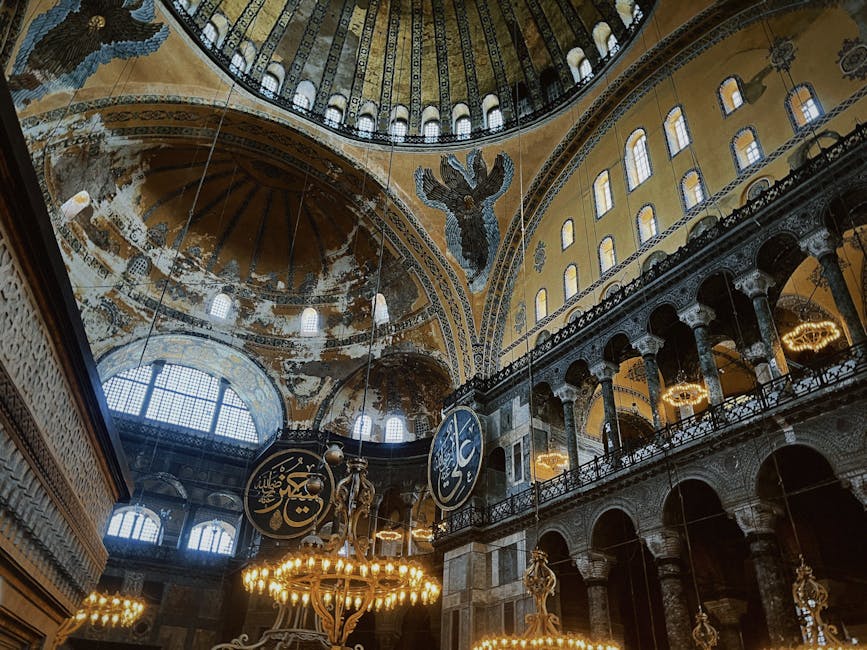
One of the most notable figures, Emperor Justinian I, ruled from 527 to 565 AD. His reign was characterized by ambitious military campaigns aimed at reclaiming the former Roman territories in the West. The successful conquest of North Africa, Italy, and parts of Spain marked the height of Byzantine territorial expansion. Justinian’s legacy includes the codification of Roman law in the “Corpus Juris Civilis” and the construction of the iconic Hagia Sophia, reflecting his integration of statecraft with religion.
The Iconoclasm Controversy: 726 – 843 AD
The iconoclasm controversy, a period of religious turmoil between 726 and 843 AD, saw the empire divided over the veneration of icons. Emperors like Leo III initially banned icons, causing significant conflict with the church and influencing both religious and political spheres. This controversy culminated in the eventual restoration of icon venerations under Empress Theodora, leaving a lasting impact on Eastern Orthodoxy.
The Battle of Manzikert: 1071 AD
The Battle of Manzikert in 1071 AD was a crucial turning point. The Seljuk Turks defeated the Byzantine army, leading to the loss of much of Anatolia, a key territory for the empire’s military and economic strength. This defeat severely weakened Byzantium, setting the stage for future invasions and contributing to internal instability.
Important Figures and Their Roles
Throughout its history, the Byzantine Empire was shaped by dynamic leaders who left indelible marks on its legacy.
Empress Theodora: A Maverick of Power
Empress Theodora, wife of Justinian I, was a remarkable figure. Her intelligence and political acumen significantly influenced imperial policies, advocating for women’s rights and religious tolerance. Her role during the Nika riots, where she displayed exceptional courage, prevented the overthrow of Justinian.
Basil II: The Bulgar Slayer
Basil II, nicknamed the “Bulgar Slayer,” reigned from 976 to 1025 AD. His military campaigns secured Byzantine dominance over the Balkans, and under his rule, the empire reached an economic and cultural zenith. Basil’s administrative reforms improved the fiscal stability and governance efficiency of the empire.
Causes and Consequences
The Byzantine Empire’s rise and fall can be attributed to a complex web of causes and consequences, intertwining economic, religious, and military factors.
Religious Schisms
The Great Schism of 1054 AD, which split Christianity into Roman Catholic and Eastern Orthodox branches, had profound implications. The ecclesiastical divisions fostered political rifts with Western Europe, undermining potential alliances.
Military Decline and External Pressures
Byzantine decline in the 11th and 12th centuries was exacerbated by military setbacks and growing pressure from the Normans, Pechenegs, and Seljuk Turks. The empire’s inability to adequately replenish its military forces and a reliance on mercenaries further weakened its defense capabilities.
Global Impact and Legacy
Despite its eventual collapse, the Byzantine Empire’s global impact is undeniable. It served as a cultural and intellectual bridge between antiquity and the Renaissance, preserving and transmitting classical knowledge. Byzantine art and architecture, especially the distinctive domes and iconography, influenced Islamic and European aesthetics. Greek manuscripts safeguarded by Byzantine scholars laid the groundwork for the Western revival of knowledge. Furthermore, Byzantine law codes influenced legal systems in Europe, leaving a lasting legal legacy.
Fascinating Little-Known Facts
- Charioteer Factions: The Byzantine Empire hosted chariot races, and the competing factions—the Greens and the Blues—played significant roles in politics, often acting as rallying groups during riots.
- Secret Fire: “Greek Fire,” a formidable military weapon, was a highly guarded state secret. This incendiary device was crucial in defending Constantinople from sieges, as it could burn even on water.
- Byzantine Silk: The empire became a major silk producer after smuggling silkworm eggs from China, which disrupted the Chinese silk monopoly and established Byzantine silk as a valuable trade commodity.
Conclusion: The Modern Relevance of Byzantium
In modern times, the Byzantine Empire’s enduring legacy continues to influence global culture, law, and religion. Its historical significance as a preserver of classical traditions during tumultuous times provides invaluable insights into resilience and adaptation. Byzantium exemplifies a unique model of cultural synthesis and statecraft which remains relevant today in discussions about multiculturalism and geopolitics. As we navigate our complex world, the lessons from this enigmatic empire about the power of cultural integration, religious tolerance, and strategic diplomacy remind us of the infinite possibilities inherent in human civilization.