
Ancient Judah · source evidence
The Lachish Letters: reading the last signals from a city under pressure
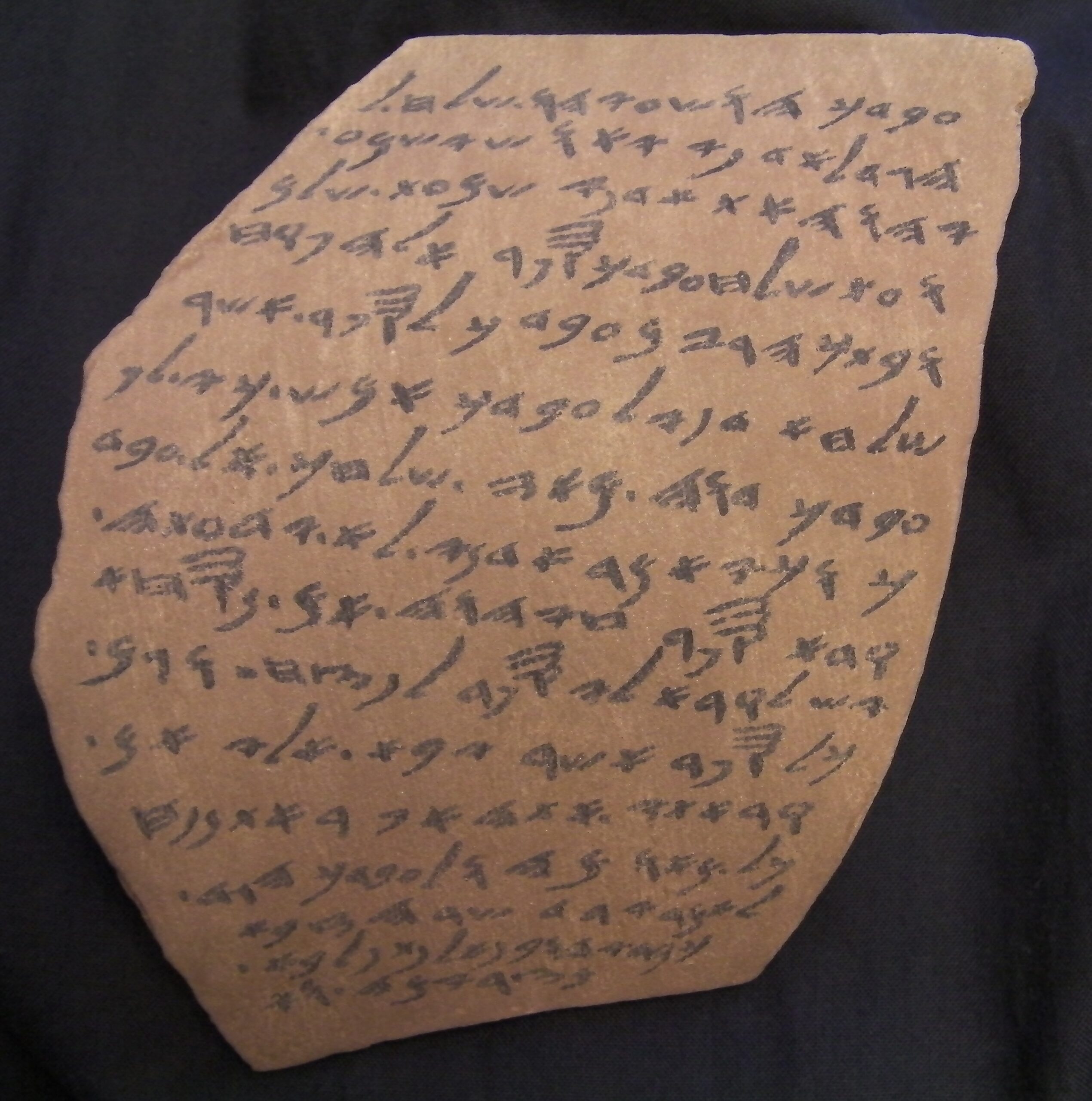
The Lachish ostraca are often introduced as dramatic letters from the edge of disaster. They are more valuable than that slogan suggests: small pieces of pottery that preserve administrative voices, uncertain readings, and the practical nervousness of a fortified town in Judah’s final decades.
What the objects are
The Lachish Letters are not parchment dispatches preserved in a royal archive. They are ostraca: pottery sherds used as writing surfaces, marked in ink in a late form of Hebrew script. That physical fact matters. A sherd is cheap and durable, but ink can fade, breakage can remove key words, and an excavated group can look more orderly in a textbook than it was in the ground.
Modern descriptions identify a corpus of twenty-one inscribed sherds associated with Tell ed-Duweir, ancient Lachish. Several objects are held by the British Museum and other institutions, while scholarly reappraisal continues to test older readings against archaeology, palaeography and philology. The Oxford research record is especially useful because it stresses that the group is not perfectly homogeneous and that some ostraca came from different contexts or remain difficult to interpret.
The historical pressure around Lachish
Lachish had already carried the memory of Assyrian violence. Sennacherib’s conquest in 701 BCE was advertised in imperial art, and the city later became part of Judah’s defensive geography again. By the late seventh and early sixth centuries BCE, the strategic picture had changed: Babylon replaced Assyria as the dominant power, Judah’s rulers maneuvered between imperial pressure and hope of Egyptian help, and fortified towns became places where ordinary administrative messages could suddenly feel like survival evidence.
The Bible Odyssey overview of the Babylonian exile dates deportations to 597 and 587 BCE and places Zedekiah’s revolt in the chain that led to Jerusalem’s destruction. The Lachish letters fit near that world of pressure, but they do not by themselves narrate the whole collapse. They are a local window, not a complete campaign diary.
Why the famous signal-fire line is powerful but limited
The line most readers remember reports watching for the fire signals of Lachish because Azekah could no longer be seen. It is easy to make that sentence cinematic: a last beacon, an enemy closing in, a frightened watchman. The caution is that the text survives through damaged objects, edited translations and debated contexts. The responsible historical reading is stronger, not weaker, when it admits the limits. It shows a communication network, military anxiety and local reporting without pretending to know every troop movement from one line.
Small sources are most useful when they are allowed to stay small: precise enough to illuminate a moment, not large enough to carry every later reconstruction placed on them.
How to read them like evidence
Start with the object
Ask which ostracon, which catalogue number, what material, how much text, and what condition. The object record comes before the story.
Separate context from inference
Burnt debris, gate areas and late Judah chronology are context. Claims about individual motives are inference and need stronger support.
Respect revised scholarship
Older translations remain important, but modern reappraisal checks them against photographs, autopsy, stratigraphy and comparative scripts.
What HistoryZ will not overclaim
This article does not claim that every Lachish letter was written on the same day, by the same hand, or for the same administrative purpose. It does not use the ostraca as a simple proof-text for a single biblical verse. It also avoids decorative images that suggest more certainty than the surviving evidence permits. The value of the letters lies in their texture: names, requests, tension, bureaucracy, partial sightlines and silence where the sherd has broken.
Why they still matter
The letters turn a famous geopolitical collapse back into human-scale material. Empires are visible in chronicles and monuments; a fortress under pressure is visible in cheap writing surfaces, damaged ink and routine phrases that suddenly matter. That is why the Lachish ostraca deserve careful reading. They are neither mere relics nor ready-made drama. They are disciplined evidence from a world close to disaster.
Sources and rights record
- Oxford Research Archive: Abigail Zammit, The Lachish letters: a reappraisal.
- Center for Online Judaic Studies: The Lakhish Ostraca.
- Bible Odyssey: Babylonian Exile, by Bob Becking.
- Wikipedia summary used only for orientation and cross-checking object identifiers.
Lead visual is original inline SVG created for HistoryZ; no third-party image asset or paid license is used. Cost: 0 TL.