
Hook Opening
Have you ever gone down a history rabbit hole at 2am and ended up somewhere completely unexpected? I remember one rainy night in Kadıköy, nursing a cup of Turkish coffee that had gone cold, when I stumbled upon a reference to the Paulicians. At first I thought it was some obscure gnostic sect — another footnote in the long list of Byzantine heresies. But then I read further. Here is something that blew my mind: the Paulicians didn’t just preach a radical theology; they built an actual state, a fortified kingdom in the mountains of Anatolia, complete with armies, diplomacy, and a capital city called Tephrike (modern Divriği). Think of it like a small-scale Crusader state — but born from a heresy that both Byzantines and Arabs hated equally. I spent the next three hours reading everything I could find, and by dawn I knew I had to visit that place. When I finally stood among the ruins of the Paulician fortress high above Divriği, I realized how much history we walk past without noticing. This is the story of the Paulician State, a forgotten medieval kingdom that challenged empires and shaped the religious landscape of the Middle East.
Historical Background
The Paulicians emerged in the 7th century AD, somewhere in the borderlands between Byzantium and the Caliphate. They were Christians, but with a twist: they rejected the Old Testament, icons, and the institutional Church hierarchy. Here is something that blew my mind: they believed in two gods — one good, the creator of the spiritual world, and one evil, the creator of the material world. Sound familiar? It echoes Manichaeism, and indeed later scholars like Nina Garsoïan (in her book The Paulician Heresy) argued that Paulicianism was a revival of older dualist beliefs. By the 9th century, Byzantine emperors were so alarmed by the sect’s growing popularity that they launched persecutions. Thousands of Paulicians were forcibly relocated to Thrace, but many fled east to Arab-controlled lands. That is when things got really interesting.
You might be wondering how a persecuted religious minority managed to create a kingdom. The answer lies in geopolitics. The Byzantine Empire and the Abbasid Caliphate were locked in a centuries-long struggle for control of Anatolia. Local populations often found themselves squeezed between two empires. The Paulicians, however, played a clever game: they offered military service to the Arabs in exchange for autonomy. But here is where it gets interesting: they also fought for the Byzantines when it suited them. They were mercenaries, rebels, and true believers all at once. I remember a conversation with an archaeologist friend at the Ankara Museum of Anatolian Civilizations. He pointed to a fragment of a 9th-century shield and said, ‘This was probably carried by a Paulician warrior. Look at the star symbol — that is their mark.’ That moment made the history feel real.
The Rise of Tephrike
Around 843 AD, a Paulician leader named Karbeas (also known as Karbeas the Heretic) established a permanent base at Tephrike, a naturally fortified site in the Anti-Taurus mountains. The location was strategic: it controlled key roads between Byzantium and the Arab emirates. I visited Divriği last spring, and standing on the escarpment, I could see why they chose it. The fortress walls, though ruined, still command the valley. Think of it like a medieval highland stronghold, almost like a smaller version of Masada but with snow-capped mountains instead of desert. By 860, the Paulician state had its own mint, its own church (using a simplified liturgy), and a professional army. They raided deep into Byzantine territory, reaching as far as Nicaea (İznik). One chronicler, Peter of Sicily, wrote a history of the Paulicians after visiting them as a diplomat — his account is one of our main sources, though obviously biased. He called them ‘wolves in sheep’s clothing.’
The Heart of the Story
The golden age of the Paulician state came under Chrysocheres (also spelled Chrysocheir), who succeeded Karbeas around 863. This man was a military genius. He expanded the state’s territory from the upper Euphrates to the Halys River (modern Kızılırmak). In 869, he did the unthinkable: he led an army all the way to the outskirts of Constantinople. Imagine that — a heretic army camped beneath the Theodosian Walls. The Byzantine emperor Basil I was so terrified he offered peace and a marriage alliance. Chrysocheres refused. That was his fatal mistake.
Here is something that blew my mind: the Byzantines didn’t defeat the Paulicians through a single grand battle. Instead, they used a combination of bribery, betrayal, and relentless pressure. A Paulician commander named Syratius switched sides and revealed the mountain passes. In 872, the imperial army under Christopher and Leo Phokas launched a surprise attack at Bathys Ryax (somewhere in modern Sivas province). The Paulician forces were crushed. Chrysocheres was killed — according to tradition, he was captured and beheaded, and his head was sent to Constantinople. The state of Tephrike fell soon after.
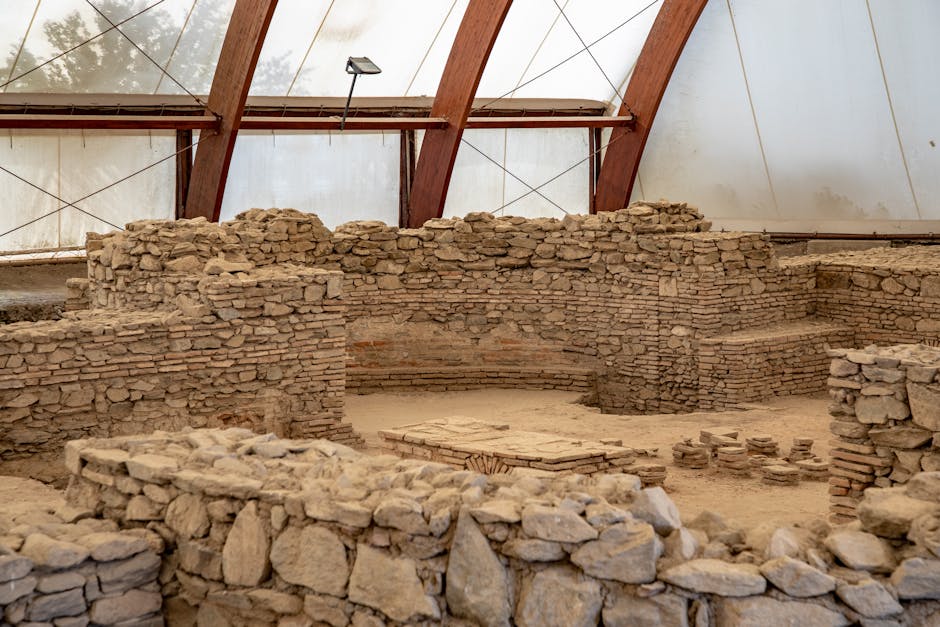
But here is a detail that always gives me chills: the sack of Tephrike was so complete that later Byzantine writers boasted that not a single stone was left upon another. Yet when I visited, I found those stones still there, covered in lichen and silence. The fortress walls, the foundations of houses, and even a rock-cut chapel — all of them witness to a society that dared to defy the orthodoxy of its age. I walked through the ruins with a local guide named Mehmet, who told me that the villagers still call the area ‘Gâvur Kalesi’ (Infidel Castle). That name carries a thousand years of memory.
Aftermath and Diaspora
The fall of Tephrike did not end the Paulicians. Many were forcibly resettled in Thrace and along the Danube frontier. Others fled to Armenia and the Caucasus. Here is where it gets interesting: these exiled communities later played a role in spreading dualist ideas to the Balkans. Some scholars, like Dimitri Obolensky in The Bogomils: A Study in Balkan Neo-Manichaeism, trace a direct line from the Paulicians to the Bogomils and from there to the Cathars of Western Europe. That means a heresy born in the mountains of Anatolia may have indirectly influenced the Albigensian Crusade in 13th-century France. Talk about a butterfly effect.
The Part Nobody Talks About
Most histories focus on the military conflict, but I want to highlight the social and economic organization of the Paulician state. They were not just fanatics; they built a remarkably egalitarian society. The Paulicians rejected private property among their elite — commanders held land only in trust, not ownership. They practiced a form of communal sharing, inspired by their reading of the Acts of the Apostles. Think of it like a medieval commune, but armed to the teeth. Women also had a higher status than in mainstream Byzantine society. Several Paulician women are recorded as leaders and preachers. This is astonishing for the 9th century.
You might be wondering why the Byzantine sources are so hostile. Part of the answer is that the Paulicians threatened not just political borders but also theological ones. They denied the Eucharist, rejected the Virgin Mary as a model, and called the clergy ‘servants of the evil god.’ This was existential for a state that defined itself by orthodoxy. The Byzantine emperor Michael III even tried to convert them by force, ordering mass executions. But here is a counter-intuitive point: the Paulicians themselves were not peaceful pacifists. They killed orthodox priests and destroyed icons with zeal. Both sides committed atrocities. It was a religious war, long before the Crusades.
A controversial interpretation that few academics discuss openly: some historians argue that the Paulician state was actually a proto-nationalist movement — an early attempt by non-Greek, non-Arab Anatolians to assert independence. The Paulicians used a local dialect of Armenian and Greek, and many of their leaders had Armenian names. Could they represent a resistance against both Hellenization and Arabization? I discussed this with Dr. Elif Keskin, a professor at Istanbul University, during a late-night session at a Kadıköy coffee shop. She cautioned against projecting modern nationalism onto medieval societies. But she admitted that the Paulician identity was clearly distinct from both Byzantium and the Caliphate. They were their own thing.
Why It Still Matters Today
The Paulician legacy is still visible if you know where to look. The Divriği Great Mosque and Hospital, a UNESCO World Heritage site, was built in the 13th century by the Mengüjekid beylik — a Turkish dynasty that ruled the same region. But beneath its Seljuk architecture, you can see Byzantine and Armenian influences. The Paulician fortifications may have been reused. When I visited, I noticed a carved star on one of the gate pillars — the same symbol my archaeologist friend had shown me in the museum. Coincidence? Possibly, but it made me wonder.
In modern Turkey, the Paulicians are largely forgotten. School textbooks mention them briefly as a ‘heretical sect’ that troubled the Byzantine Empire. But in the villages around Divriği, oral traditions survive. Old men still tell stories about the ‘uncircumcised infidels’ who held the castle. Here is something that blew my mind: a local imam told me that some families in the region have a tradition of not eating pork — not because of Islam, but because of a local custom that may stem from Paulician dietary rules (they abstained from pork as part of their dualist beliefs). It is a tiny, fragile thread connecting us to a thousand-year-old past.
More broadly, the Paulician story challenges the narrative of a monolithic Christian Middle Ages. It shows that medieval people were capable of radical theological innovation, political independence, and even a kind of religious tolerance (the Paulicians allowed Jews and Muslims to live in their territory). In an age of rising intolerance, their story is a reminder that alternatives existed.
My Personal Take
I have to be honest: researching the Paulicians changed the way I see Anatolia. Before, I thought of this land as a layer cake of civilizations — Hittites, Phrygians, Greeks, Romans, Byzantines, Seljuks, Ottomans. But the Paulicians do not fit neatly into that schema. They were neither Byzantine nor Muslim; they were a third path that got erased. That erasure bothers me.
I remember sitting in a Kadıköy coffee shop with my notebook, trying to map the Paulician trade routes. A friend asked what I was doing. When I explained, he laughed and said, ‘You are obsessed with dead heretics.’ Maybe he was right. But I think there is something profound about giving voice to the lost. Every time I visit a site like Ephesus or Hattusa, I am aware that the famous ruins get all the attention, while places like Divriği castle sit ignored, overgrown with weeds. That is why I write.
Another personal moment: last winter, I drove to Göbeklitepe with a group of friends. On the way back, we stopped at a small roadside restaurant near Malatya. The owner, an old Kurdish man, heard us talking about history. He said, ‘You know, my grandfather used to say that there were Christians here before the Turks who did not worship the cross.’ I almost dropped my çay. Here was living oral tradition about the Paulicians — just a fragment, but enough to electrify me. I wish I had recorded it.
Final Thoughts
The Paulician State of Tephrike lasted barely thirty years as an independent entity. But its impact rippled through centuries, influencing heresies across Europe, shifting the balance of power in Anatolia, and leaving behind a legacy of resistance to orthodoxy. When I walk through the ruins of Divriği, I feel a strange connection to those believers who fought and died for a vision of God that the world deemed wrong. History is not just about the winners. It is also about the ones who lost — and whose ideas refused to die.
Did this change how you think about this topic? Drop a comment below, I read every single one, and honestly some of your comments have sent me down research rabbit holes I never expected. That is the best part of writing about history.
Sources & Further Reading
- Garsoïan, Nina. The Paulician Heresy: A Study of the Origin and Development of Paulicianism in Armenia and the Eastern Provinces of the Byzantine Empire. Mouton, 1967.
- Obolensky, Dimitri. The Bogomils: A Study in Balkan Neo-Manichaeism. Cambridge University Press, 1948.
- Peter of Sicily. History of the Paulicians. Translated by John C. Reeves, 9th century manuscript.
- Smithsonian Magazine. “The Forgotten Heretic Kingdom of Anatolia.” 2021.