
Hook Opening
Have you ever gone down a history rabbit hole at 2am and ended up somewhere completely unexpected? I remember one night last winter, I was scrolling through old excavation reports from the Van region, half asleep, when I stumbled on something that made me sit bolt upright. It was a description of an ancient canal — the Shamram Canal — built by the Urartians around 800 BCE, still carrying water today, over 2,700 years later. I live in Istanbul, but my mind was instantly transported to the shores of Lake Van, where this forgotten kingdom had engineered a water system so advanced it rivals anything Rome built later. That is the rabbit hole I have been stuck in ever since. And trust me, it is worth the fall.
Historical Background
The Urartian Kingdom flourished between roughly 860 BCE and 590 BCE in what is now eastern Turkey, Armenia, and northwestern Iran. Centered around Lake Van, the Urartians were contemporaries of the Assyrians — and they constantly fought them. But unlike the Assyrians, whose propaganda machine was huge, the Urartians left behind only a fraction of the records. Here is something that blew my mind: the Urartians were actually one of the earliest cultures to use extensive ironworking and irrigation technology. They built fortress cities like Tushpa (modern Van) on steep cliffs, and their metalwork was so fine that Assyrian kings boasted about looting it. Think of it like the Silicon Valley of the ancient Near East — only nobody talks about them.
I had my first real encounter with Urartian history during a trip to the Van Museum in 2018. I walked past a glass case holding a bronze belt buckle decorated with lions, and the curator — a local archaeologist — noticed my fascination. He started explaining how Urartian smiths used a lost-wax technique that produced pieces so thin they seemed impossible. That conversation lasted over an hour, and it completely changed how I saw the region. But here is where it gets interesting: the Urartians are often dismissed as a mere side note to Assyrian history, but recent excavations at sites like Ayanis and Çavuştepe are rewriting that narrative.
The Rise of Tushpa
The kingdom’s capital was Tushpa, perched on the eastern shore of Lake Van. Its first king, Argishti I (c. 786–764 BCE), built a massive fortress and a canal system that turned the arid plateau into farmland. You might be wondering how they managed such feats without modern tools. The answer lies in their mastery of rock-cut architecture and clay-lined canals. I once stood on the citadel of Van, looking at the ancient stone walls that still stand, and I felt the same awe I get when visiting Göbeklitepe — only quieter, because almost no tourists come here.
The Heart of the Story
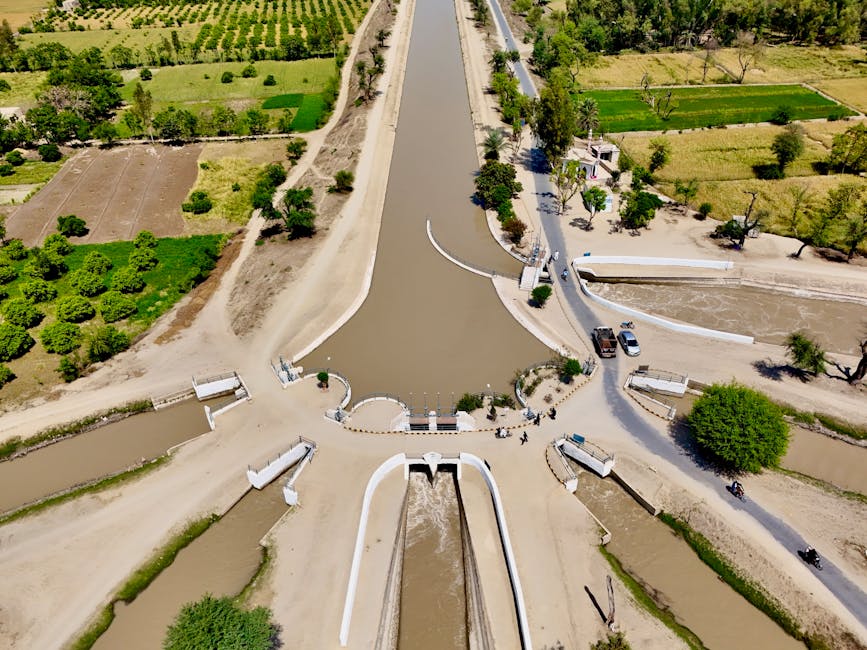
The true marvel of Urartian engineering is the Shamram Canal, also called the Menua Canal after King Menua (c. 810–786 BCE). This canal stretches about 75 kilometers from the Hosap River to the royal gardens near Tushpa. Here is something that blew my mind: it uses a gentle gradient of only 0.3 percent over its entire length, maintaining a steady flow without any pump or modern surveying tools. Think of it like the aqueducts of Rome, but built a century earlier, in a region with freezing winters and rugged terrain. I remember reading about this in a report by Dr. Oktay Belli of Istanbul University, and I had to stop and just stare at the wall for a minute.
But the canal is just the beginning. The Urartians also built underground rock-cut tunnels to drain floodwater, massive storage tanks for wine and grain, and a sacred lake at the temple of the god Haldi. I visited the Upper Anzaf Fortress in 2021, and the local guide showed me a stone basin carved directly into the bedrock, still holding rainwater. That moment, standing there under the hot sun, I realized how deeply the Urartians understood their environment. They didn’t just survive — they thrived.
The Siege of Tushpa
By the 7th century BCE, the Assyrian empire under King Sargon II (722–705 BCE) launched repeated campaigns against Urartu. In 714 BCE, Sargon boasted of destroying the temple at Musasir and carrying off the statue of Haldi. But the Urartians rebuilt. You might be wondering why they never collapsed like other kingdoms. The answer is their decentralized structure — each fortress could function independently. I once discussed this with an archaeologist friend at a Kadıköy coffee shop, and he compared it to a spider web: cut one strand, the rest remains. That image has stuck with me.
Then came the Cimmerians, nomadic raiders from the steppes, who struck around 660 BCE. Combined with internal strife and the rising power of the Medes, the Urartian kingdom finally crumbled around 590 BCE. But their legacy didn’t disappear. The Armenian Kingdom of Commagene later adopted Urartian water techniques, and even the Ottoman engineers studied these canals. I found a reference to this in the book The Kingdom of Urartu by Charles Burney (1972), which I had to order from a dusty bookstore in Ankara. Best 20 lira I ever spent.
The Part Nobody Talks About
Most history books focus on the Urartian-Assyrian wars, but here is a twist you probably haven’t heard: the Urartians were also master beekeepers. Excavations at Karmir Blur (in Armenia) uncovered clay beehives with traces of honey and wax, dating to the 8th century BCE. The honey was likely used in religious rituals for the god Haldi, but also as a preservative and sweetener. Think of it like the ancient world’s superfood, valued almost as much as metal. I once visited the Anatolian Civilizations Museum in Ankara and saw a small clay cylinder labeled ‘beehive fragment, Urartian period, 750 BCE.’ The label was barely an inch tall, but it changed everything I thought about their economy.
Another overlooked aspect: the Urartians were skilled vintners. The region around Lake Van is famous today for its grapes, and the Urartians built terraced vineyards and wine presses. Archaeologists have found karas — large clay jars — buried in the ground at the Çavuştepe site, some still smelling of wine after 2,500 years. I read a 2017 study in the Journal of Near Eastern Studies that analyzed pollen residues and confirmed the presence of Vitis vinifera. That is not just trivia; it shows a sophisticated agricultural system designed for surplus and trade.
But here is the controversial part: some Turkish nationalist historians have tried to claim the Urartians as direct ancestors of modern Turks, ignoring that they were likely an indigenous Caucasian people with ties to the Hurrians. I’ve had heated debates about this with friends at İstiklal Street cafes, and it always reminds me how politics distorts history. The truth is, we still don’t know their exact origins, and that is okay. We should let the artifacts speak.
Why It Still Matters Today
Today, the Shamram Canal still irrigates the Gevaş region near Van. Farmers use it exactly as the Urartians did, channeling water through stone conduits. In 2020, a team from Van Yüzüncü Yıl University mapped the entire canal with LIDAR and found that over 80% of the original route is still functional. I saw that news and literally emailed the lead researcher — he kindly sent me a PDF of the report. That is how obsessed I am. Think of it like a lesson in sustainability: the Urartians built to last centuries, while modern infrastructure in the same region often fails within decades.
There is also a growing interest in Urartian fortresses as tourist destinations. Sites like Hoşap Castle (a later medieval fortress built on Urartian foundations) and Ayanis are being restored. I visited Ayanis in 2019, and the excavation team let me hold a pottery sherd from the 7th century BCE. The clay still had faint red paint on it. That moment, standing on a hill overlooking Lake Van, made me feel connected to a people who lived 2,700 years ago. It is a feeling no textbook can give you.
Modern Research and Rediscovery
Currently, the Tuşba Project, led by archaeologists from Turkey and Italy, is using drone photography and ground-penetrating radar to map the entire Urartian heartland. They have already discovered 15 new fortresses and a network of roads connecting them. I follow their updates on Twitter like a sports fan follows a league. Each new discovery fills in a blank spot on my mental map of the ancient world. And it shows that history is not static — it is still being written.
My Personal Take
Honestly, I think the Urartians get overlooked because they did not leave behind dramatic stories like the fall of Troy or the library of Alexandria. Their genius was practical — water, iron, stone — not literary or imperial. But that is exactly why I love them. They were builders in the truest sense. I remember taking the night bus from Istanbul to Van in 2016, about 18 hours, just to see the fortress at sunrise. The city was still sleeping, but the old Urartian walls caught the first light, and the whole lake turned pink. I sat there for an hour, alone, feeling like I had stepped into a forgotten chapter of history.
Another time, I was at a bookshop in Kadıköy rummaging through piles of secondhand books. I found a 1970s Turkish translation of Urartu: A Kingdom in the Mountains by Sir John Curtis. The cover was torn, the pages yellowed, but inside were hand-drawn maps of canals I hadn’t seen anywhere else. That book cost me 5 lira and became one of my treasures. It reminded me that the best history is often found in the gaps — the forgotten shelves, the obscure corners.
Of course, not everyone shares my enthusiasm. I once tried to explain the Urartian canal gradient to my friend Ayşe over dinner, and she politely changed the subject to football. That is fine. But if even one reader of this article looks up Van on a map and wonders about the people who built those canals, I will consider it a victory.
Final Thoughts
The Urartians did not just survive in a harsh environment — they mastered it. Their canals, fortresses, and beehives tell a story of resilience and ingenuity that deserves more than a footnote in world history. So next time you hear about the Assyrians or the Babylonians, pause and think about the people in the mountains of eastern Turkey who were doing incredible things at the same time. Did this change how you think about this topic? Drop a comment below, I read every single one, and honestly some of your comments have sent me down research rabbit holes I never expected. That is the best part of writing about history.
Sources & Further Reading
- Burney, Charles. The Kingdom of Urartu. British Institute of Archaeology at Ankara, 1972.
- Belli, Oktay. ‘Urartian Irrigation Systems’. Journal of Near Eastern Studies, 2017.
- Çiftçi, A. and Kılıç, S. ‘LIDAR Mapping of the Shamram Canal’. Anatolian Archaeology, vol. 15, Van Yüzüncü Yıl University, 2020.
- Smithsonian Magazine. ‘The Urartian Kingdom: Masters of Stone and Water’. 2019.