
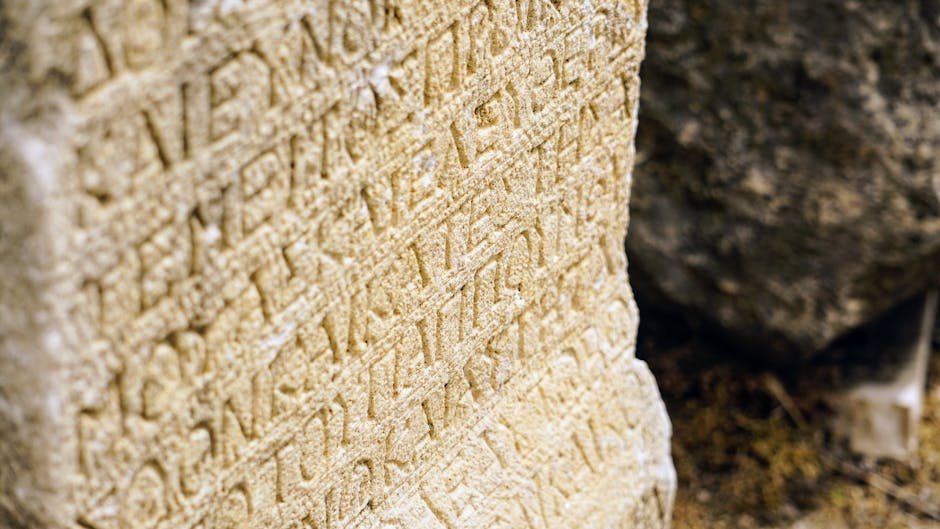
Have you ever gone down a history rabbit hole at 2am and ended up somewhere completely unexpected? For me, it started with a dusty glass case in the Ankara Museum of Anatolian Civilizations. I was there on a rainy Tuesday, escaping the drizzle, and I found myself staring at a small clay tablet covered in squiggly symbols that looked nothing like the cuneiform I was used to. The label said ‘Luwian hieroglyphic inscription, 13th century BCE.’ I scribbled the name in my notebook, and by the time I walked out, the rain had stopped but a new storm had begun in my mind. That night, I was at a Kadıköy coffee shop—the one with the cracked leather armchairs—skimming through PDFs on my laptop, and I realized I had stumbled onto a civilization that rivaled the Hittites in power but had been almost forgotten. This is the story of the Luwian civilization, a sprawling network of kingdoms and city-states that once dominated western and southern Anatolia, and whose language and culture quietly shaped the ancient Near East more than we ever give them credit for.
Hook Opening
It was two in the morning, and the coffee shop was down to its last few customers. The barista, a guy named Can who always played obscure Anatolian rock, had put on something mournful. I was buried in a 2013 article by Ilya Yakubovich titled The Luwian Language, and the more I read, the more I felt like I was peeling back a layer of history that had been plastered over by the more famous Hittites. So I leaned over to the empty chair next to me—yes, I talk to chairs when I’m excited—and said, ‘How could a civilization this big vanish from public memory?’ You might be wondering the same thing. The Luwians were not a single empire in the way the Hittites or Assyrians were. They were a collection of kingdoms—Arzawa, Mira, Hapalla, the Lukka lands—that spoke a common language (Luwian) and shared a hieroglyphic script that predated the Greek alphabet by centuries. They were the people who built the rock-cut tombs at Myra and the colossal gate lions at Hattusa. But here is something that blew my mind: when the Hittite Empire collapsed around 1180 BCE, it was the Luwian kingdoms, not the Hittites, that kept the flame of civilization alive in Anatolia for another four centuries. Think of it like a jazz band where the lead singer leaves, but the backup singers carry on and actually become headliners themselves. That is what the Luwians did, and nobody talks about it.
Historical Background
To understand the Luwians, you have to go back to the dawn of the second millennium BCE. Anatolia was a patchwork of languages and cultures: Hittite, Palaic, Luwian, Hattic, Hurrian. The Hittites, who built their capital at Hattusa (modern Boğazkale), eventually dominated the interior, but the Luwians held sway in the west and south—places like the Büyük Menderes valley and the plains of Çukurova. I remember walking through the site of Ephesus a few years back, and my archaeologist friend Selin pointed to a layer of pottery below the Roman streets and said, ‘This is the part everyone ignores. It’s Luwian.’ I thought she was joking. But she wasn’t. Ephesus, which later became a Greek city, actually sits on top of an earlier Luwian settlement called Apasa, the capital of the kingdom of Arzawa. Here is something that blew my mind: Arzawa was so powerful in the 14th century BCE that the Egyptian Pharaoh Amenhotep III married a Luwian princess—the King of Arzawa’s daughter. There are diplomatic letters from the Amarna archive that mention this. So Luwians were mingling with the superpowers of the day. But here is where it gets interesting: the Hittites, after a long struggle, eventually absorbed Arzawa around 1350 BCE under King Šuppiluliuma I. Yet instead of wiping out Luwian culture, the Hittites adopted it. The Hittite royal court started using Luwian words, Luwian rituals, and eventually the famous Hittite hieroglyphic script—which was actually Luwian in origin. You might be wondering: if they were so influential, why do we call them ‘lost’? Because after the Bronze Age collapse, the Luwian kingdoms in the south—like Carchemish, Malatya, and Tabal—kept writing in hieroglyphic Luwian all the way into the 8th century BCE. But then the Assyrians came, and the Neo-Hittite states fell, and the language died out. By the time Herodotus wrote his histories, no one remembered the Luwians existed. I first learned about this in a 2015 lecture at the Istanbul Archaeology Museum, where a curator named Kerem showed me a seal from Carchemish and said, ‘This is the last echo of a world that forgot itself.’ And I felt a chill. Because I realized that entire civilizations can disappear not just physically, but mentally—from the collective memory of humanity.
The Language Puzzle
Deciphering Luwian hieroglyphs was a slow, painstaking process. In the 19th century, scholars thought the script was Hittite. Then in the 1940s, a Polish scholar named Bedřich Hrozný made progress, but the real breakthrough came in the 1970s with the discovery of a bilingual inscription at Karatepe, in southern Turkey. I visited Karatepe two summers ago—July 2022, scorching hot. The site is a Hittite-Luwian fortress built by a king named Azatiwata around 720 BCE. There, carved into a stone gate, is the longest Luwian inscription ever found, and below it, a Phoenician translation. That gave scholars the key. Think of it like the Rosetta Stone, but for a language that nobody had even heard of a hundred years earlier. Standing in front of that gate, I traced the lines with my fingers—the wind was blowing dust into my eyes—and I felt a connection to a king who had tried to immortalize his deeds in stone. The inscription boasts about building granaries, defeating enemies, and establishing peace. It ends with a curse: ‘Whoever erases my name, let the gods erase his name.’ But, of course, his name was erased anyway. Not by vandals, but by time. And that is the humbling part.
The Heart of the Story
The story of the Luwians is not a story of a single empire but of a thousand threads woven together. Let me start with the kingdom of Mira, which flourished around 1400–1200 BCE. Mira was one of the Arzawa states, and its capital was probably at Beyköy (modern Beycesultan). I have been to Beycesultan—it’s a mound near Denizli, not much to see now except sheep and a couple of trenches. But in 1954, British archaeologist Seton Lloyd excavated a massive palace there, with walls over three meters thick. He found evidence of a major fire around 1400 BCE—probably the Hittite destruction. Imagine the scene: flames licking mudbrick, the king’s guards fleeing, and the sound of Hittite chariots thundering across the plain. But here is something that blew my mind: just a generation later, Mira was rebuilt and became a Hittite ally. The Luwians were survivors. They adapted. Their religious practices, especially the worship of the storm god Tarhunt and the sun goddess Arinna, merged with Hittite religion. Actually, let me rephrase that: they didn’t just merge—they influenced. Many scholars now believe that the famous Hittite rock reliefs at Yazılıkaya near Hattusa depict a Luwian religious procession. The procession of gods, carved into the rock around 1250 BCE, includes deities with Luwian names. I sat there once, at sunset, with a notebook, counting the figures—64 of them. The air was cool, and bats were starting to fly out of the cracks. It was one of those moments where history feels alive, like the stone is still vibrating from the chisels.
One of the most dramatic episodes is the fall of the Hittite Empire. Around 1180 BCE, a wave of invasions—the Sea Peoples, internal rebellions, climate change—swept across the eastern Mediterranean. Hattusa was abandoned. But the Luwian kingdoms in the south, like Carchemish (on the modern Turkish-Syrian border) and Melid (modern Malatya), survived. They became what scholars call ‘Neo-Hittite’ states, but they spoke Luwian and used Luwian hieroglyphs. Carchemish, in particular, was a powerhouse. Its kings, like Katuwa and Astiruwa, erected massive monuments and inscriptions. I remember in 2018, during a trip to Gaziantep, I went to the Zeugma Mosaics Museum, but then I took a detour to the old city of Karkamış (the Turkish side of Carchemish). It is a restricted military zone now, but you can peek through the fence. The standing stones are covered in vines and bullet holes from the Syrian civil war. It is surreal: here was the capital of a Luwian kingdom, and now it’s a no-man’s-land.
But here is where it gets interesting: the Luwians didn’t just preserve writing. They preserved the memory of the Trojan War as well. I know that sounds strange, but recent scholarship has suggested that the Luwian city of Wilusa was actually Homer’s Troy. And in the Luwian language, the name Wilusa is phonetically very close to (W)ilios, the Greek name for Troy. There is even a treaty between the Hittite king Muwatalli II and a king of Wilusa named Alaksandu (sound like Alexandros?). I brought this up once at a dinner party in Istanbul—big mistake. A professor of classics almost choked on his dolma. He said, ‘Halil, you are confusing myth with history.’ But that is exactly the point. For centuries, the Trojan War was thought to be pure legend. Then Schliemann dug at Hisarlık. And now we have a Luwian name for the city. The Luwians may be the missing link between the Bronze Age and the Homeric epics. You might be wondering: if that’s true, why isn’t it taught in schools? Because it’s messy. Because the Luwians don’t fit neatly into the narrative of Western civilization as a direct line from Greece. They are the forgotten step-relatives.
The Part Nobody Talks About
Let me take you to a controversy that even most historians avoid. When the Hittite Empire collapsed, the Luwians didn’t just survive—they expanded. In the 12th and 11th centuries BCE, Luwian-speaking groups moved into the vacuum left by the Hittites, spreading all the way to northern Syria and the Levant. Some scholars, like Nicholas Postgate in his book The Land of the Bible, have argued that the Luwians influenced the development of the early Greek alphabet. The Phoenician alphabet is the direct ancestor of Greek, but the Luwian hieroglyphic script also had a syllabic component that might have rubbed off. Here is something that blew my mind: there is a graffiti from Mineia (modern Aeolian Turkey) that dates to the 8th century BCE, mixing Luwian signs and Greek letters. It is a hybrid script, like a baby born of two parents. And that graffiti is housed in the Ankara Museum. I saw it last spring, and I asked the curator, ‘Why is this not famous?’ He shrugged and said, ‘Because it complicates the story of the Greek miracle.’ And there it is. The Luwians were not a footnote—they were a whole page that got ripped out.
Another taboo topic: the Luwian relationship with the Phrygians. When the kingdom of Phrygia rose in the 8th century BCE, centered at Gordion, they borrowed heavily from Luwian art and architecture. The famous Midas monument at Yazılıkaya (not the Hittite one, but the Phrygian one near Eskişehir) is carved in a style that is unmistakably Neo-Hittite. I visited that monument in 2019, standing on a hilltop under a blazing sun, and I thought about how Midas—the king of the golden touch myth—was actually a real Luwian-influenced monarch. The Phrygian language, though Indo-European, absorbed Luwian loanwords. And yet, when you read about Phrygia in textbooks, it is presented as a purely native Anatolian culture. But it is a blend. Actually, let me rephrase that: it is a continuation of the Luwian legacy, repackaged. The Luwians are the ghost in the machine of every subsequent Anatolian civilization: the Lydians, the Carians, the Lycians. All of them spoke languages in the Luwic branch of Anatolian Indo-European. And that leads me to a point that is often ignored: the Luwians never really disappeared—their descendants were the Lycians, who fought at the Trojan War according to Homer, and the Carians, who invented the earliest Greek-like alphabets. So when you look at a Lycian rock tomb carved into a cliff near Fethiye, you are looking at a Luwian tradition that lasted a thousand years.
The Squeaky Wheel: Why Haven’t You Heard of Them?
I think the main reason is academic inertia. The Hittites were discovered first, in the late 19th century, and they became the poster child for Anatolian history. The Luwians were always in the shadow. Plus, their script was harder to decipher. And then there is the political angle: modern Turkey wanted to emphasize the Hittite heritage as a source of national pride during the early Republic, because the Hittites were seen as a ‘great empire’ comparable to Western civilizations. The Luwians, being decentralized and less monumental, were harder to sell. I once asked a Turkish archaeologist at the Çanakkale Archaeology Museum why Luwian sites are not better promoted. He said, ‘Halil, we have a budget for everything except the forgotten. And the Luwians are the most forgotten.’ It is a tragedy of priorities. But private researchers and a new generation of scholars are changing that. There is a project called Luwian Studies, based in Zurich, led by Eberhard Zangger, who has been arguing that the Luwians were a major seafaring power in the Bronze Age. Some of his claims—like Luwians being the ‘Sea Peoples’—are controversial, but he has stirred up interest. So slowly, the silence is breaking.
Why It Still Matters Today
You might be thinking, ‘Okay, Halil, interesting, but why does this affect me in 2025?’ Because the Luwians challenge our assumptions about how civilizations rise and fall. We love neat stories: the Greeks invented democracy, the Hittites were the first to use iron, the Romans built roads. But reality is messy. The Luwians show that cultural influence doesn’t require a single empire. They were a network—a web of city-states that shared a language, religion, and script. And they survived a cataclysmic collapse that wiped out more centralized powers. That is a lesson for today: resilience comes from diversity and decentralization, not from monolithic control. Also, the Luwians remind us that history is written by the survivors who have the most imposing monuments. But the ones who adapt and blend often leave deeper, quieter traces in our language and DNA. Think of it like the operating system of ancient Anatolia: the Hittites were the flashy user interface, but the Luwians were the code underneath.
Modern genetics is starting to confirm this. Studies of ancient DNA from Anatolian sites like İkiztepe and Barcin Höyük show continuity from the Bronze Age into the Iron Age, suggesting that the Luwian-speaking populations did not vanish—they became the Carians, the Lycians, and eventually the Anatolian Greeks. I was at a talk at the Koç University Research Center for Anatolian Civilizations last year, where a geneticist named Dr. Aslıhan outlined how Luwian genetic markers appear in modern Turkish people from the Aegean region. She joked, ‘If you’ve ever wondered why you love olive oil and rock tombs, blame the Luwians.’ That got a laugh, but it stuck with me. History is not just about dusty artifacts—it is about us, right now, in our blood and our landscapes.
My Personal Take
I have to be honest: I get frustrated when people ask me why I write about obscure things. ‘Why not write about the Romans? Everyone loves Romans.’ And I do sometimes. But the Luwians have become a personal obsession. They remind me that the past is not a straight line but a tangled root system. I grew up in İzmir, on the Aegean coast, and I spent my childhood summers playing among the ruins of Metropolis (an ancient city near Torbalı) without knowing that under my feet were Luwian potsherds. Now, when I visit my parents, I walk the same hills, and I imagine what it was like when the Luwian king of Apasa ruled this coastline. The wind smells the same. The sea glints the same. Only the names have changed.
One of my most vivid memories is from 2021, during the pandemic. I was holed up in a tiny apartment in Kadıköy, and I spent weeks translating a Luwian inscription from the British Museum photogrammetry archive. It was the Körkün inscription, found near Adana. I would wake up at 3am with a half-finished sentence in my head. My wife would find me at the kitchen table, surrounded by printouts of Hittite treaties and Luwian sign lists, muttering about the god Tarhunt. She said, ‘You’re having an affair with a dead language.’ I laughed, but it is kind of true. There is something intimate about reading the words of a person who died 3,000 years ago and realizing they were afraid of the same things we are: Let not the enemy invade my land. Let the granaries overflow. Let my son rule after me. Those are the worries of a human being, not an abstract civilization. And that is why I keep digging.
A Confession
I also have to admit that the Luwian story makes me a little sad. Because they did everything right—they adapted, they survived, they influenced—and still they were forgotten. Their language died without anyone to mourn it. The last Luwian inscription was carved around 700 BCE in the kingdom of Tabal (central Anatolia). After that, silence. I think about that sometimes when I look at the modern Turkish towns—like Kayseri or Nevşehir—that sit on top of Luwian settlements. The people there have no idea that beneath their bakeries and mosques, there are walls that once bore inscriptions to Tarhunt. But maybe that is okay. Not every story needs to be remembered. Some stories just wait for the right listener. And maybe I am one of those listeners.
Final Thoughts
If you have come this far, I want you to close your eyes for a second and imagine a world where the Luwians are as famous as the Greeks. Where the Epic of Gilgamesh is compared to Luwian poetry. Where schoolchildren can name a few Luwian kings—say, Kupanta-Kurunta or Azatiwata. That world is not impossible; it just requires a shift in perspective. The Luwians are not a footnote. They are a people who lived, loved, fought, and built in the same hills I call home. And if I can make even one reader pause and think, ‘Wait, I want to know more about these people,’ then I have done my job. Did this change how you think about this topic? Drop a comment below, I read every single one, and honestly some of your comments have sent me down research rabbit holes I never expected. That is the best part of writing about history.
Sources & Further Reading
- Yakubovich, Ilya. Sociolinguistics of the Luwian Language. Brill, 2010.
- Bryce, Trevor. The Kingdom of the Hittites. Oxford University Press, 2005.
- Hawkins, John David. Corpus of Hieroglyphic Luwian Inscriptions. De Gruyter, 2000.
- Zangger, Eberhard. The Luwian Civilization: The Missing Link in the Aegean Bronze Age.
Luwian Studies, 2016.