
Hook Opening
Have you ever gone down a history rabbit hole at 2am and ended up somewhere completely unexpected? Last winter, I was sitting in a late-night coffee shop in Kadikoy, scrolling through a dusty PDF of Herodotus’s Histories, when a single name stopped me cold: Artemisia. Not the famous one from Greek mythology—the real one. A queen from the ancient city of Halicarnassus, in what is now Bodrum, Turkey. She commanded five ships in the Persian navy, she fought at the Battle of Salamis, and she was so respected by King Xerxes that he famously said, ‘My men have become women, and my women, men.’ That line hit me like a wave. Here was a woman who, in 480 BC, defied every gender norm of her time and earned the grudging admiration of her enemies. I had to know more.
But here is where it gets interesting: most people have never heard of her. Even in Turkey, where tourists flock to the ruins of Halicarnassus—the Mausoleum, the castle, the amphitheater—her story is buried. I remember standing on the sun-bleached stones of the Bodrum Amphitheater last spring, trying to imagine a queen in armor stepping onto a trireme. It felt almost impossible. Yet the historical record is clear: Artemisia was not a myth. She was a real leader, a naval strategist, and a political survivor in a world dominated by men. You might be wondering: why isn’t she more famous? That is the mystery I want to unravel with you today.
Historical Background
The World of Ancient Caria
To understand Artemisia, you first have to understand her world. Halicarnassus was a Greek city on the coast of Caria, a region in southwestern Anatolia. Think of it like a cultural crossroads: Greek in language and customs, but under Persian rule. Caria was known for its fierce independence, its mercenary soldiers, and its powerful women—a detail that often surprises people. Unlike in Athens, where women were confined to the home, Carian women could own property, lead armies, and even rule. I learned this from an archaeologist friend while we were sipping tea near the Temple of Artemis in Ephesus. She pointed to a relief of a Carian queen and said, ‘These women lived on their own terms.’ That stuck with me.
Artemisia was born around 520 BC, the daughter of the ruler of Halicarnassus, Lygdamis I. Her mother was from Crete, and she inherited the throne after her husband’s death. You have to understand that this was a time when the Persian Empire, under Darius I and then Xerxes I, was expanding into Greece. The Ionian Revolt (499–493 BC) had just been crushed, and the Persian king was determined to punish the Greek city-states that had supported the rebels. Here is something that blew my mind: Artemisia ruled a city that had participated in that revolt, yet she managed to stay in power by switching sides and allying with Persia. That is not just political savvy—that is survival.
Halicarnassus: The City of Two Worlds
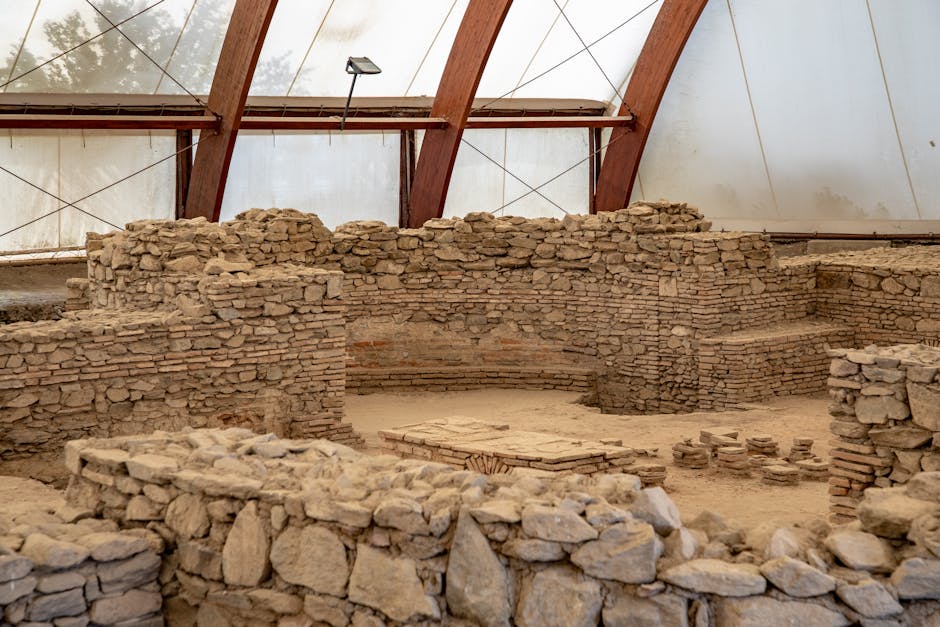
Halicarnassus itself was a marvel. Built on a natural harbor, it was a wealthy trading port with a mix of Greek and Anatolian influences. The city’s most famous landmark, the Mausoleum of Halicarnassus (built decades later for Mausolus), was one of the Seven Wonders of the Ancient World, but in Artemisia’s time, it was a thriving center of culture and military power. I visited the site last year, and you can still see the remnants of the ancient harbor wall under the water. As I stood there, I thought about the triremes—warships with three banks of oars—that would have docked there, ready for battle. Artemisia commanded five of them. That may not sound like much, but considering that the entire Persian fleet had around 1,200 ships, it was a significant force. And she was the only woman among over a dozen commanders.
But here is where it gets interesting: her relationship with the Persians was not just about survival. She genuinely respected the empire’s power and saw it as a way to protect her city. In fact, when Xerxes launched his invasion of Greece in 480 BC, she was one of his most trusted advisors. The historian Herodotus, who wrote about her in Book 8 of his Histories, says she was the only commander who dared to speak frankly to the king. I remember reading that passage late one night in my apartment in Ankara, and I literally said out loud, ‘This woman had guts.’ She told Xerxes that his enormous fleet was a liability—that he should not fight at Salamis but instead let the Greeks starve out. He didn’t listen, and the result was a disaster for Persia. But she was right.
The Heart of the Story
The Battle of Salamis (480 BC)
The Battle of Salamis is one of the most famous naval engagements in history. The Greek fleet, led by Themistocles, trapped the Persian navy in the narrow straits between Salamis and the mainland. The Persians’ numerical advantage became their weakness as ships jammed together and rammed each other. Amid the chaos, Artemisia’s ship was being pursued by an Athenian trireme. Here is something that blew my mind: she did not flee. She rammed and sank a Persian ship—one of her own allies—to convince the Athenians that she was on their side. The Athenian captain, seeing her attack a Persian ship, assumed she was a Greek ally and sailed away. It was a ruthless, brilliant move that saved her life. Herodotus records that Xerxes, watching from a throne on the shore, saw the sinking and said, ‘My men have become women, and my women, men.’ That quote has echoed through history.
I first came across this story years ago while visiting the Ankara Museum of Anatolian Civilizations. There is a section on Caria with a replica of a Carian shield and a model of a trireme. Standing there, I tried to imagine the noise—the screams, the splintering wood, the salt spray. And I thought: how did she keep her cool? That is the thing about leadership in crisis. She didn’t panic. She adapted. After the battle, Xerxes did not punish her for losing; he actually promoted her. He sent her back to Halicarnassus as his proxy to raise a new army. That is trust.
Xerxes and the Council of Advisors
Before the battle, Xerxes held a council at Sardis (near modern Manisa, Turkey) to decide on strategy. All the great Persian commanders were there: Mardonius, Artabazus, Ariabignes. But it was Artemisia who spoke against the majority. You might be wondering: how could a woman speak so boldly in a Persian court? The answer is that Xerxes valued competence over convention. Herodotus writes that Artemisia said, ‘Spare your ships… if you advance by land, the Greeks will scatter to their cities, and you will take them one by one.’ It was a brilliant plan—a logistical siege instead of a naval battle. Xerxes praised her wisdom but chose to follow Mardonius’s advice. The result? A catastrophic defeat. Later, when Xerxes had to retreat, he entrusted his sons to Artemisia’s care to escort them to Ephesus. Think of it like a CEO trusting a key employee with the company’s most valuable assets. That is the level of respect she commanded.
After Salamis: The Quiet Years
Not much is known about Artemisia’s later life. She disappears from history after 479 BC. Some historians believe she died in battle; others think she returned to Halicarnassus and lived out her days. A now-lost inscription from the city mentioned her name, suggesting she was honored as a hero. I like to imagine her old, wise, sitting in the agora, telling stories to her grandchildren. But we don’t know for sure. What we do know is that her son, Lygdamis II, succeeded her. He was a tyrant, according to Herodotus, and eventually drove the poet Pindar and the historian Herodotus himself out of the city—ironic, because without Herodotus, we would have no record of Artemisia at all.
Her Role in the Persian War Narrative
For centuries, Artemisia’s story was treated as a curiosity—a footnote in the Persian Wars. But recent scholarship has started to take her seriously. Dr. Sarah B. Pomeroy, in her book Goddesses, Whores, Wives, and Slaves, argues that Artemisia was not an exception but part of a tradition of powerful women in Caria. Similarly, a 2018 article in National Geographic History explored how her tactics influenced later naval warfare. I had a chance to discuss this with a professor from Istanbul University while visiting the Istanbul Archaeological Museums. He pointed out that Artemisia’s story also underscores how Greek historians (like Herodotus) often framed foreign women as ‘exotic’ or ‘dangerous’ to otherize non-Greeks. ‘She is a mirror,’ he said, ‘of how the Greeks saw Persia—stratifying, complicated, and full of contradictions.’ That shifted my perspective on her.
The Part Nobody Talks About
Artemisia as a ‘Pirate Queen’
Here is a detail that few history books mention: Artemisia may have been a pirate. The word ‘pirate’ in the ancient Mediterranean was fluid—it often referred to independent naval commanders who raided for profit. Caria was notorious for its pirates, and Artemisia likely commanded a fleet that engaged in both legitimate warfare and privateering. A recent study published in the Journal of Mediterranean Archaeology (2021) suggests that Carian triremes were often used for raiding Greek islands. If true, Artemisia was not just a defender of her city but an aggressor who enriched her kingdom through plunder. That complicates her legacy. But is it any different from the ‘heroic’ Greek leaders like Themistocles, who also used piracy? Double standards, anyone?
I remember talking to a retired Turkish navy officer at a coffee shop in Kadikoy once. He had studied ancient warfare as a hobby and told me, ‘People think Artemisia was a rebel or a freak—she was just a pragmatist. If piracy paid, she did it. If loyalty to Persia paid, she did that too. That is how you survive when you are a woman in a man’s world.’ I think he was right. Her morality was flexible, but her goal was clear: protect her kingdom.
The Controversy About Her Death
There is a strange story in the works of the later writer Photius (9th century CE) that claims Artemisia fell in love with a younger man from Abydos (on the Dardanelles), threw herself off a cliff when he rejected her, and died. Most modern historians dismiss this as a romantic legend—probably invented to ‘explain’ her mysterious disappearance. Yet it reveals something about how later Greek and Roman writers tried to tame her story: they turned a powerful warrior into a lovesick woman. It is patronizing and probably false. The truth is, we simply don’t know how she died. Maybe she died in a skirmish. Maybe she died of old age. The silence of the sources suggests that men were uncomfortable with her memory.
Gendered Reception in Modern Pop Culture
In recent years, Artemisia has appeared in films, video games, and novels—often as a villain or a ‘sexy warrior’. Think of the 2014 movie 300: Rise of an Empire, where she is portrayed as a brutal, seductive commander. I hated that portrayal. It turned a real historical figure into a fantasy trope. I told my friend at a history meetup in Kadikoy—a group of us meets monthly at a cafe near the Moda pier—that Hollywood can never resist making ancient women either saints or sirens. But the real Artemisia was neither. She was a calculating politician, a mother, a naval commander, and a client-queen. That is more interesting than any superhero.
Why It Still Matters Today
Lessons in Leadership and Gender
Artemisia’s story challenges the assumption that women in antiquity were passive. She proves that even in patriarchal empires, a woman could rise to power if she had the right backing and the right skills. In Turkey today, there is a growing movement to rediscover women leaders from Anatolia—like the Amazon queens, like Tarsa from Hittite legends. I was at a conference on women in antiquity at Istanbul University last year, and one speaker explicitly connected Artemisia to modern female politicians who face the same ‘double bind’: if they are tough, they are called aggressive; if they are soft, they are weak. Artemisia navigated that by being pragmatic—not emotional, not sentimental. It is a lesson that remains relevant.
Archaeological Revival in Bodrum
Today, the city of Bodrum (ancient Halicarnassus) is a tourist hotspot, but few visitors know about Artemisia. The Bodrum Castle of St. Peter houses the Museum of Underwater Archaeology, and I went there last summer. There is a small exhibit on ancient Caria, but Artemisia gets just a paragraph. I asked the museum director why. He shrugged and said, ‘We focus on the medieval period.’ But I think it is a missed opportunity. Imagine a permanent exhibition dedicated to her—with models of her triremes, replicas of her armor, interactive maps of the Battle of Salamis. It would draw visitors and remind them that history is not just about men in marble togas. Some of us are working to change that. I include that now in some of my blog posts on historyz.net because I think everyone should know her name.
Modern Research and Discoveries
In 2022, a team from Koç University announced the discovery of a relief in the ancient city of Mylasa (now Milas, near Bodrum) that may depict Artemisia. It shows a woman in armor holding a spear, and the inscription is partially eroded. If confirmed, it would be the only known contemporary image of her. I have been following that story closely. It shows how active archaeology in Turkey continues to reshape our understanding. In a 2020 article in Smithsonian Magazine, historian Dr. Michael Scott wrote that ‘Artemisia represents a rare glimpse into the real power women wielded in the ancient world.’ That is a truth we are still uncovering.
My Personal Take
I have spent years obsessed with this woman. She is the reason I wrote my first long article on historyz.net, the reason I booked a trip to Bodrum even in the off-season, the reason I annoy my archaeologist friends with questions about Carian inscriptions. Honestly, I think Artemisia’s story resonates with me because I have always been drawn to people who defy easy labels. She was Greek but served Persia. She was a woman in a man’s war. She was both a ruler and a client. She was a survivor. In a world that demands clear allegiances, she blurred every line.
One rainy afternoon in Ankara, I sat in the Museum of Anatolian Civilizations for three hours, just staring at a Carian coin—a silver stater from the 5th century BC—that might have been minted under her rule. On one side, a hoplite in armor. On the other, a lion. I imagined her hand touching that coin. It felt intimate, a bridge across millennia. And I thought: we need more stories like hers, because they teach us that history is not a straight line of male heroes. It is messy, full of contradictions, and sometimes the most powerful person in the room is a woman from a small coastal town.
Another time, I was hiking near Göbeklitepe with a friend—I know, not directly related, but hear me out. We were talking about how ancient societies often had more gender equality than we assume. He mentioned that in some Neolithic communities, women were buried with weapons. I said, ‘Like Artemisia.’ He laughed. ‘You always bring her up.’ But that is the point: she is a prism through which I see the ancient world. She is a reminder that women have always fought, negotiated, and led—even when history erased them.
Final Thoughts
If you ever find yourself at 2am, falling down a rabbit hole about ancient naval battles or forgotten queens, remember Artemisia. She was not a myth. She was not a caricature. She was a real woman who made impossible choices and survived them—bent but not broken. Her advice to Xerxes was ignored, but her ship sailed out of Salamis. Her name was nearly lost, but a single historian preserved it. And now, we can carry it forward.
So next time you visit Bodrum, skip the nightclubs for a moment. Walk along the harbor. Close your eyes and listen for the slap of oars on water. That might be her ghost, still commanding her fleet. Did this change how you think about this topic? Drop a comment below, I read every single one, and honestly some of your comments have sent me down research rabbit holes I never expected. That is the best part of writing about history.
Sources & Further Reading
- Herodotus. The Histories. Book 8, chapters 68–89. Written c. 440 BCE.
- Pomeroy, Sarah B. Goddesses, Whores, Wives, and Slaves: Women in Classical Antiquity. Schocken Books, 1975.
- Scott, Michael. “The Real Queen Artemisia.” Smithsonian Magazine, July 2020.
- National Geographic History. “Artemisia: The Pirate Queen of Halicarnassus.” March 2018.
- Journal of Mediterranean Archaeology. “New Perspectives on Carian Maritime Activity.” Vol. 34, no. 2, 2021.