
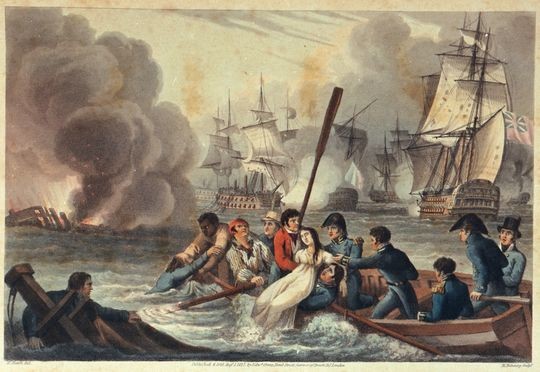
Why Trafalgar Changed Naval Power is not only a story about Atlantic and Europe in the 1805. It is a way to see how institutions, technology, geography, and human decisions became historical forces. The central lesson is that naval dominance shaped wars even when decisive battles happened far from capitals.
HistoryZ approaches this subject as an evidence-based feature rather than a myth or a list of dates. The most useful clues come from Nelson, fleets, blockade, signaling, and sea control. These details show how ordinary systems — records, routes, tools, offices, ships, markets, and habits — often mattered as much as kings and battles.
Because the topic crosses political, economic, and cultural history, it is best read as a system rather than a single moment. A system has people, incentives, habits, and limits. It can be strengthened by success, weakened by crisis, and copied by neighbors who recognize its usefulness.
The Historical Setting
The setting of Atlantic and Europe during the 1805 was shaped by pressures that were both local and connected to wider networks. Communities had to solve problems of movement, authority, food, legitimacy, security, and memory. When those problems changed, political life changed with them. That is why this topic deserves attention beyond a single dramatic event.
In this context, Nelson, fleets, blockade created practical possibilities. They helped people coordinate action across distance and time. A government could demand labor, a merchant could calculate risk, a scholar could preserve a method, or a commander could move supplies. None of these acts looks spectacular on its own, but together they produced a historical structure.
The people involved did not know they were creating a future textbook subject. They were solving immediate problems with the tools available to them. That perspective matters because it keeps the story human. Historical change is often made by practical responses that later generations reinterpret as turning points.
How the System Worked
The mechanism behind the story was not magic. It depended on repeatable practices. People needed shared rules, recognizable symbols, trained specialists, and routes through which information or goods could move. The subject therefore mattered because it connected many small decisions into a larger pattern.
signaling, and sea control gave that pattern durability. When a system can be repeated, taught, financed, or inspected, it becomes harder to dismiss as a temporary accident. This is one reason historians look closely at administrative details, not just famous speeches. The paperwork, tools, roads, courts, ports, schools, or relay stations often reveal what power could actually do.
Every durable system also produced friction. Some groups benefited more than others, some resisted, and some adapted the rules for their own purposes. That tension is part of the history. The same structures that created order could also create inequality, dependency, or new forms of conflict.
Power, Trade, and Everyday Life
The effects reached beyond rulers. Farmers, sailors, scribes, soldiers, artisans, religious communities, and families all encountered the consequences in practical ways. A new route could lower the cost of travel. A new office could change taxation. A new technology could alter who had access to information. A new military habit could shift the burden of war onto different households.
This is where the topic becomes more than a headline. Historical change usually moves through daily routines before it appears in chronicles. The people who carried messages, copied texts, repaired roads, loaded ships, guarded gates, or recorded debts were part of the machinery of change even when their names vanished from the archive.
Trade and power also shaped imagination. Goods carried styles, measurements, stories, and expectations. Officials carried models of authority. Travelers carried comparisons. Even when most people never crossed great distances, their lives could be altered by decisions made far away.
Evidence and Interpretation
The strongest interpretation comes from comparing different kinds of evidence. Material remains can show scale and labor. Written records can show intention and dispute. Later memory can show what people wanted the past to mean. In the case of why trafalgar changed naval power, those layers do not always speak with one voice, so caution is necessary.
A careful reading avoids two common mistakes. The first is to imagine the past as simpler than it was. The second is to turn every achievement into the work of one exceptional person. Individuals mattered, but they operated inside systems of resources, ideas, constraints, and inherited institutions. That balance is what makes the subject historically useful.
Good history also recognizes silence in the sources. Many workers, women, enslaved people, migrants, and rural communities appear indirectly or not at all. Their absence does not mean they were unimportant. It means the evidence must be handled with honesty and proportion.
Why It Still Matters
Why Trafalgar Changed Naval Power still matters because it explains a pattern visible in modern life: durable power depends on organization. States, companies, cities, and social movements still rely on communication, logistics, legitimacy, and trust. The tools have changed, but the underlying challenge remains familiar.
It also reminds us that globalization is not a recent invention. People in the 1805 already lived with long-distance connections, borrowed ideas, unequal exchanges, and unexpected consequences. Understanding those earlier connections helps us see the modern world with more patience and less surprise.
For readers today, the value is not nostalgia. The value is perspective. When we see how earlier societies managed information, movement, wealth, fear, and authority, we become better equipped to understand the systems around us now.
Conclusion
The story of why trafalgar changed naval power is therefore not a closed museum case. It is a historical lesson about how societies organize memory, movement, authority, and exchange. By looking at Nelson, fleets, blockade, signaling, and sea control, we can see why naval dominance shaped wars even when decisive battles happened far from capitals. That is the kind of history that continues to shape how we read power today.
For readers of global history, the most important point is comparison. Similar pressures appeared in other regions, but each society answered them differently. Geography, inherited institutions, available technology, religious authority, and economic incentives all shaped the outcome. This prevents the past from becoming a simple ladder of progress and keeps attention on real historical choices.
The subject also shows why responsible history needs sources and proportion. Dramatic claims are easy to remember, but the deeper explanation is usually found in the slower work of systems. When we follow the evidence carefully, Atlantic and Europe in the 1805 becomes part of a wider human story: how communities tried to make uncertainty manageable.
There is also a practical lesson in scale. A local decision can become regional when roads, ships, officials, or texts carry it outward. A regional habit can become global when trade, empire, migration, or imitation gives it new audiences. This movement from local practice to wider consequence is one of the most important patterns in history.
Finally, this history should be read with humility. The surviving evidence is never complete, and later generations often reshape older events to fit new identities. That does not make interpretation impossible. It means the best history explains what we know, what we can reasonably infer, and where uncertainty remains. HistoryZ uses that approach to turn complex subjects into clear, useful narratives without flattening the past.