
Introduction
In the aftermath of the cataclysm that was World War I, the world found itself at a crossroads, grappling with the immense destruction and loss wrought by the conflict. One of the pivotal moments during this tumultuous time was the signing of the Treaty of Versailles in 1919. This treaty did not merely end hostilities; it sought to reshape the very landscape of international relations and governance. What many don’t realize is how the terms outlined in Versailles set the stage for future global tensions, ultimately leading to the outbreak of World War II. The repercussions of the treaty continue to be felt even today, as its legacy touches the foundations of contemporary geopolitics.
As we delve into this pivotal historical moment, we will unpack the reasons behind the treaty’s formation, the significant events surrounding its drafting and signing, and its long-lasting consequences. The Treaty of Versailles serves as both a conclusion to a horrific war and the embryo of new conflicts. Understanding its implications is crucial, not just for historians, but for anyone wishing to comprehend the complexity of modern international relations.
Historical Background and Context
To truly understand the Treaty of Versailles, one must first explore the historical context of World War I. The war, which lasted from 1914 to 1918, was one of the deadliest in human history, resulting in an estimated 10 million military deaths and potentially double that in civilian casualties. A web of alliances, militarism, imperialism, and nationalism ignited the tensions among European powers, leading to a catastrophic conflict that shifted geopolitical alliances forever.
At its core, World War I saw the clash of the Allied Powers, primarily composed of France, Britain, Russia, and later the United States, against the Central Powers, chiefly Germany, Austria-Hungary, and the Ottoman Empire. With trench warfare becoming the grim hallmark of the war, battles such as the Somme and Verdun exemplified the brutal stalemates and massive loss of life that characterized the front lines.
By the time the armistice was signed on November 11, 1918, the devastation was complete—Europe lay in rubble, economies were shattered, and populations traumatized. The defeated Central Powers faced immense pressure to negotiate peace, and the victorious allies convened to determine the terms of peace, a process culminating in the Treaty of Versailles.
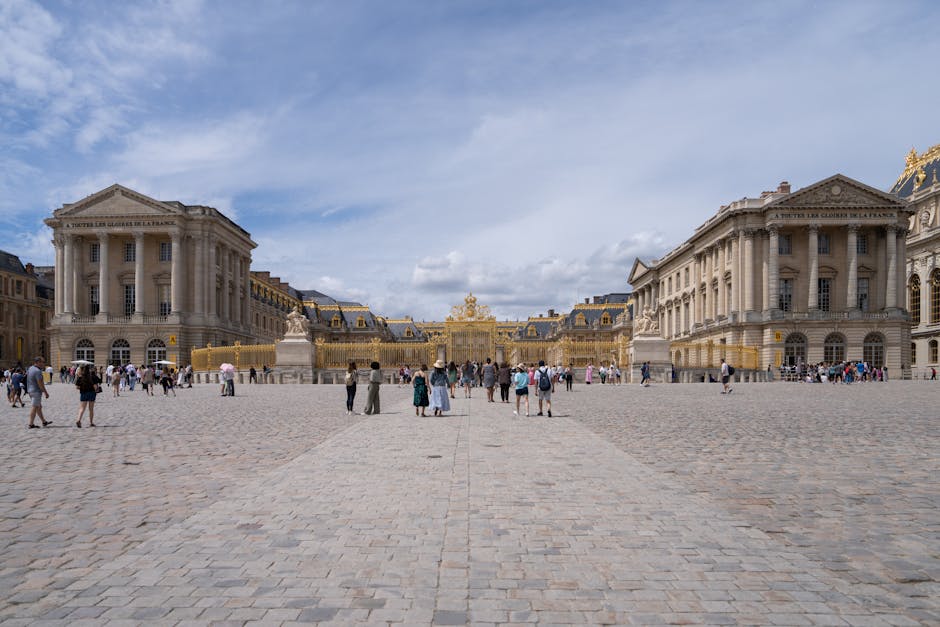
Negotiations took place at the Palace of Versailles, symbolizing both opulence and the very empire status that faced disintegration post-war. Lead negotiators included French Premier Georges Clemenceau, British Prime Minister David Lloyd George, and U.S. President Woodrow Wilson, with their differing agendas reflecting the complexities of peace talks. While Clemenceau sought retribution and security against Germany, Wilson’s Fourteen Points favored self-determination and open diplomacy. This clash of priorities created a contentious negotiation environment that significantly shaped the resulting treaty.
Key Events, Battles, or Developments
The Treaty of Versailles was not a singular event but the result of several crucial developments and discussions. One critical date was January 18, 1919, when the Paris Peace Conference was officially opened. Over the next few months, delegates from the victorious nations debated and discussed the future of post-war Europe.
On January 25, the Allied Supreme Council was formed, which became the main decision-making body during the negotiations. The discussions among the Big Four—France, the United Kingdom, Italy, and the United States—were fraught with tension over the future of Germany. Clemenceau’s hardline stance favored territorial disbandments and reparations from Germany, while Lloyd George also sought the dismantling of German military power but was wary of punishing Germany excessively.
A key and contentious point in the negotiations came to a head regarding territorial claims. The Treaty of Versailles redrew the map of Europe, leading to the creation of new nations and the reconfiguration of borders. The Alsace-Lorraine region, for instance, was returned to France, after being ceded to Germany in 1871. The Polish Corridor was established, providing Poland access to the Baltic Sea by separating East Prussia from the rest of Germany—this decision sowed seeds of further resentment among Germans.
The economic impact of the treaty was also a point of significant contention. Reparations were set at a staggering 132 billion gold marks, or approximately $33 billion at the time, which placed immense strain on the German economy. This number was finalized by the Allied Reparations Commission in 1921, despite protests and objections from German representatives who argued the figure was not only punitive but politically destabilizing.
The moment of actual signing came on June 28, 1919—ironically, the same date that Archduke Franz Ferdinand was assassinated, igniting the war. The grand ceremony at the Hall of Mirrors in Versailles symbolized a triumphant moment for the Allied Powers but was met with anger and humiliation by many Germans, who viewed the treaty as a “Diktat” or dictated peace devoid of negotiation.
Important Figures and Their Roles
The Treaty of Versailles was shaped by several key figures, each bringing distinct perspectives and ambitions that would ultimately influence the treaty’s outcomes.
Georges Clemenceau
The French Premier, known as “Le Tigre,” was adamant about seeking punitive measures against Germany. Clemenceau’s desire for security and vengeance was fueled by the tremendous toll the war had taken on France, particularly in regions such as Verdun and the Somme. He believed that a weakened Germany would ensure that France would never face the same level of destruction again.
David Lloyd George
As the British Prime Minister, Lloyd George faced the challenge of balancing France’s desire for revenge with the need for long-term stability in Europe. He often served as a mediator, advocating for a compromise that would prevent future conflicts while still addressing the British public’s calls for reparations and punishment.
Woodrow Wilson
The American President, whose vision was encapsulated in his Fourteen Points, championed ideas of self-determination and collective security through organizations like the League of Nations. Wilson’s insistence on a fair peace contrasted sharply with Clemenceau’s hardline stance, leading to tensions that marked the negotiations.
Other Notable Figures
Among the other notable figures was Vittorio Orlando, the Italian Prime Minister, whose country sought territorial gains as a reward for joining the Allies. The complexity of these personalities and their conflicting desires significantly influenced the final treaty.
Causes and Consequences
The causes of the Treaty of Versailles stem from both the extensive destruction and loss of life during World War I as well as the complex political negotiations that followed. In summary, the disastrous effects of the war severely impacted the social fabric of Europe, leading to massive inflation, political instability, and the rise of extremist movements.
Consequently, the Treaty of Versailles created a fragile balance in Europe that would prove untenable. The treaty’s harsh reparations exacerbated Germany’s economic woes, leading to hyperinflation during the Weimar Republic’s period (1919-1933). Such economic distress created fertile ground for extremist ideologies, including National Socialism, to take root among disgruntled citizens.
Furthermore, the treaty led to significant political instability within Germany, contributing to its eventual descent into dictatorship under Adolf Hitler. In 1933, Hitler capitalized on the resentment surrounding the Treaty of Versailles to galvanize support, promising to overturn its terms and restore Germany’s former glory.
Global Impact and Legacy
The global impact of the Treaty of Versailles was profound. By redrawing the map of Europe and imposing severe penalties on Germany, the treaty forged conditions that contributed to the rise of totalitarian regimes across Europe. The disillusionment with the post-war settlement played a crucial role in the rise of fascism and communism, fundamentally altering the political landscape of Europe for decades to come.
Moreover, the establishment of the League of Nations aimed at fostering international cooperation and preventing future conflicts. However, the League’s inability to enforce its resolutions and the absence of major powers like the United States weakened its effectiveness, creating a sense of disillusionment with international diplomacy.
As the years slipped into the 1930s, the failure to address the grievances born out of Versailles underscored the urgency for a new approach to international relations, culminating in World War II. The unresolved issues of the treaty served as both a catalyst and a warning for future generations about the complexities of peacemaking in the face of immense national resentment.
Fascinating Little-Known Facts
While the Treaty of Versailles is often a subject of study in the context of World War I, several intriguing aspects may not be widely known. For instance:
- The very act of signing the treaty took place on the anniversary of the assassination of Archduke Franz Ferdinand, making it a grim historical bookend.
- While the treaty was widely publicized, many of its clauses were kept secret, leading to speculation and distrust among the countries involved.
- Despite the treaty being focused largely on Europe, its ramifications were global, influencing colonies and territories far beyond the continent, creating national movements in Africa and Asia.
Conclusion: Modern Relevance
Understanding the Treaty of Versailles is crucial not only for grasping the intricacies of World War I and its aftermath but also for appreciating the foundational elements of our present-day international relations. The treaty serves as a cautionary tale against the dangers of punitive peace and the importance of addressing historical grievances in diplomacy.
The debates surrounding the treaty resonate in modern discussions about reparations, global governance, and international diplomacy. The lessons learned from the Treaty of Versailles remind us that sustainable peace requires not just the cessation of hostilities but a comprehensive approach to reconciliation, understanding, and cooperation among nations.