
Introduction
In a world that often forgets its past, the story of the Byzantine Empire stands as a testament to human resilience, creativity, and ambition. Often overshadowed by the grandeur of Rome and the chaos of the Dark Ages that followed its fall, the Byzantine Empire was a beacon of civilization, preserving ancient knowledge and fostering a unique blend of cultures. Spanning over a millennium, from the founding of Constantinople in 330 AD to its tragic fall in 1453, the empire’s history is filled with fascinating events, formidable personalities, and profound changes that shaped the course of European and Middle Eastern history.
Imagine a city that served as a bridge between two worlds; a hub where trade flourished, artistic innovations thrived, and the spark of Christianity ignited amidst pagan traditions. This city was Byzantium, later known as Constantinople, which flourished under the Byzantine Empire’s rule. The political machinations, religious debates, and military campaigns of the Byzantine Empire are rich tapestries that reveal not just its flaws and conflicts but also its splendor and achievements. As modern society grapples with shifts in power and cultural identity, understanding the Byzantine Empire offers valuable insights into the complexities of governance, faith, and cultural preservation.
Join us as we journey through time to explore the Byzantine Empire’s profound history—from its origins to its downfall, uncovering stories of intrigue, conflict, and legacy. This article will delve into the empire’s historical context, significant events, key figures, and its lasting global impact, while also illuminating some lesser-known facts that paint a fuller picture of this extraordinary civilization.
Historical Background and Context
The Byzantine Empire arose from the ashes of the Roman Empire, principally influenced by the cultural and political legacies of its predecessor. After Emperor Constantine the Great established Constantinople (formerly Byzantium) in 330 AD as the “New Rome,” the city began to emerge as the heart of the Eastern Roman Empire. As the Western Roman Empire crumbled under the weight of internal strife and barbarian invasions, the Eastern Roman Empire thrived, maintaining many of the administrative structures, legal codes, and cultural traditions inherited from Rome.
Throughout the early centuries, the Byzantine Empire faced numerous challenges, ranging from economic instability to external threats. The Sassanian Empire to the east, the Goths to the north, and future Islamic conquests all posed significant challenges to the empire’s security. Yet, it was not until the late 6th and 7th centuries that the empire would face a series of existential threats that would transform it irrevocably.
One such transformative period was during the reign of Emperor Justinian I (527-565 AD), which marked a golden age for the empire. Justinian sought to reconquer lost territories of the Western Roman Empire and initiated comprehensive legal reforms, culminating in the creation of the Corpus Juris Civilis, or the “Body of Civil Law,” which would later serve as the foundation for legal systems in many modern nations.
However, the Byzantine Empire was not solely defined by its emperors and military conquests. The intricate relationship between state and church played a pivotal role in shaping its identity. The disputes between Catholics and Orthodox Christians, especially following the Great Schism in 1054, altered political alignments and religious affiliations throughout Europe and the Near East, shaping the landscape in which the empire operated.
As the centuries progressed, the Byzantine Empire continued to face emerging threats, particularly from the Seljuk Turks, the Crusaders, and later the Ottoman Turks. Each conflict chipped away at the empire’s once-mighty structure, culminating in its eventual fall in the mid-15th century. The complexities of its governance, diverse population, and lively cultural life ensured that the legacy of the Byzantine Empire would resonate throughout history, influencing the Renaissance and even modern geopolitical landscapes.
Key Events, Battles, and Developments
Throughout the hallmarks of Byzantine history, several key events and battles defined the rise and eventual fall of this magnificent empire. The interplay of military, political, and religious dynamics created a rich, multifaceted historical narrative.
The Nika Riots (532 AD)
One of the most dramatic events in Byzantine history occurred in 532 AD during the reign of Justinian I. The Nika Riots erupted in response to Justinian’s unpopular policies, particularly heavy taxation and the emperor’s attempts to consolidate power. Rioters, initially protesting, came together under the banners of the Blues and the Greens—factions that supported different chariot racing teams. The riots escalated quickly, with citizens demanding the overthrow of Justinian.
In a stunning demonstration of both brutality and strategy, Justinian decided to take decisive action. With the help of his wife, Empress Theodora, he ordered the military to silence the insurrection. General Belisarius led a brutal crackdown on the rioters, resulting in thousands of deaths and the eventual retaking of control. This tyrannical response not only quelled the immediate violence but also demonstrated Justinian’s resolve to maintain his rule. Furthermore, it led to an overhaul of the city, as Justinian initiated the rebuilding of Constantinople with remarkable architectural projects, including the magnificent Hagia Sophia.
The Byzantine-Sassanian Wars (602-628 AD)
As the Byzantine Empire was enjoying a resurgence under Justinian, it found itself embroiled in a prolonged conflict with the Persian Sassanian Empire from 602 to 628 AD. This series of wars marked one of the most challenging periods for the Byzantines, stretching their military resources thin while exposing vulnerabilities on their Eastern front.
The wars began with the ambitious Persian King Khosrow II launching an invasion aimed at capturing Byzantine territories in the Levant and the Caucasus. Initial losses plagued the Byzantines, with significant cities like Antioch and Jerusalem falling under Sassanian control. However, it wasn’t until the emergence of Emperor Heraclius in 610 AD that the tide began to shift.
Heraclius reformed the military and led several successful campaigns, culminating in his famous campaigns against the Persians that reached as far as Ctesiphon, the capital of the Sassanian Empire. The brutal conflict culminated in the decisive Battle of Nineveh in 627 AD, where Heraclius achieved a resounding victory over Khosrow’s forces. This victory ultimately exhausted both empires, but it temporarily restored Byzantine prestige and territorial integrity.
The Great Schism (1054 AD)
The schism between the Eastern Orthodox and Roman Catholic Churches, known as the Great Schism, was another significant turning point in Byzantine history, occurring in 1054 AD. Contributing factors included political, theological, and cultural disputes that had been brewing for centuries.
At the time, the Byzantine Emperors sought to counter increasing Western influence, while the Pope in Rome sought to assert authority over Christendom. Critical differences, such as the Filioque controversy—which debated the procession of the Holy Spirit—culminated in mutual excommunications. This division had enormous implications, solidifying the religious rift between the Eastern and Western worlds and influencing relationships between Byzantine emperors and Western powers in subsequent centuries.
The Fourth Crusade (1202-1204 AD)
The Fourth Crusade is one of the most significant events that deeply impacted the Byzantine Empire, leading to its temporary fragmentation. Originally intended to recapture Jerusalem from Muslim control, the crusaders became embroiled in complex political machinations that redirected their efforts towards Constantinople.
In 1204 AD, the crusaders laid siege to the city, resulting in its unprecedented sack and the establishment of the short-lived Latin Empire of Constantinople. This brutal event not only devastated the city’s rich tapestry of culture and economy but also deeply wounded the Orthodox Christian community. The impact of the Fourth Crusade was long-lasting, weakening Byzantine power and increasing vulnerability to future conquests, especially from the Ottomans.
The Fall of Constantinople (1453 AD)
The Byzantine Empire’s epic saga concludes with the Fall of Constantinople in 1453, marking the end of the last remnants of the ancient Roman Empire. The Turkish Ottoman Empire, led by Sultan Mehmed II, laid siege to the fabled city with a well-coordinated strategy and advanced artillery that enabled them to breach the formidable walls of Constantinople.
On May 29, 1453, after weeks of intense bombardment and desperate defense led by the last Byzantine Emperor, Constantine XI Palaiologos, the city fell. This catastrophic event led to significant loss of life and cultural heritage as Ottoman forces entered the city. The fall of Constantinople signified not just the end of Byzantine sovereignty but established the Ottoman Empire as a dominant force in both Europe and the Islamic world. This transition heralded a new era of cultural and political dynamics, leading to the further spread of Islam and significant changes in geopolitical power balances.
Important Figures and Their Roles
The Byzantine Empire was shaped not only by its events and battles but also by the larger-than-life figures who defined its history.
Emperor Justinian I (483-565 AD)
Emperor Justinian I is often considered one of the most important Byzantine emperors due to his ambitious policies aimed at restoring the glory of the Roman Empire. Beyond his military accomplishments, he is renowned for codifying Roman law in the Corpus Juris Civilis and commissioning the dazzling Hagia Sophia, an architectural marvel that remains a symbol of Byzantine heritage.
Empress Theodora (500-548 AD)
Theodora, initially an actress and dancer, rose to become a powerful empress who played a crucial role during her husband’s reign. A stalwart supporter of Justinian’s policies, she fiercely advocated for women’s rights, championing laws that protected women from exploitation and enhancing their rights in divorce and property ownership.
Emperor Heraclius (575-641 AD)
Heraclius was instrumental in reviving the Byzantine Empire amidst adversity. Through military reform and strategic ingenuity, he managed to stabilize the empire following the catastrophic wars with Persia. His successful campaigns reinvigorated Byzantine power, although the gains would soon be challenged by the rise of Islamic expansion.
Constantine XI Palaiologos (1405-1453 AD)
The last Byzantine emperor, Constantine XI Palaiologos, has become a symbol of valiant resistance in the face of overwhelming odds. Leading the defense of Constantinople against the Ottoman siege, his commitment to protecting the city’s heritage and inhabitants remains legendary. While his reign ended tragically in 1453, he has often been romanticized as a tragic hero in Byzantine lore.
Causes and Consequences
The Byzantine Empire’s rise and fall was dictated by a plethora of factors, each interwoven with the others. Internal politics, religious schisms, and external pressures collectively shaped its trajectory.
One significant cause of the empire’s decline arose from economic strains, corroded by heavy taxation and military overreach during the reigns of ambitious emperors. Additionally, civil strife, including mismanagement and familial disputes, weakened the central authority, diminishing the empire’s ability to respond effectively to external threats.
Another pivotal aspect was the cultural and religious rifts that deepened over centuries. The divide between Eastern Orthodoxy and Western Catholicism undermined unity and cooperation, making it more challenging to mount effective defenses against common enemies.
Consequently, the fall of Constantinople in 1453 altered the balance of power in Europe and the Mediterranean. It led to the rise of the Ottoman Empire as a dominant power, significantly impacting Christian Europe and propelling the latter into the Renaissance—an era of exploration, scientific discovery, and cultural expansion. The repercussions of these events resonate today, as remnants of Byzantine culture and influence permeate various aspects of modern society.
Global Impact and Legacy
The Byzantine Empire’s impact extends well beyond its geographic boundaries. Its legacy contributed vitally to the development of European civilization and shaped the contours of Eastern and Western histories.
In terms of governance, Byzantine bureaucratic practices provided a model for future European administrations. The codification of Roman law served as a template for legal systems worldwide, forming the bedrock of modern civil law.
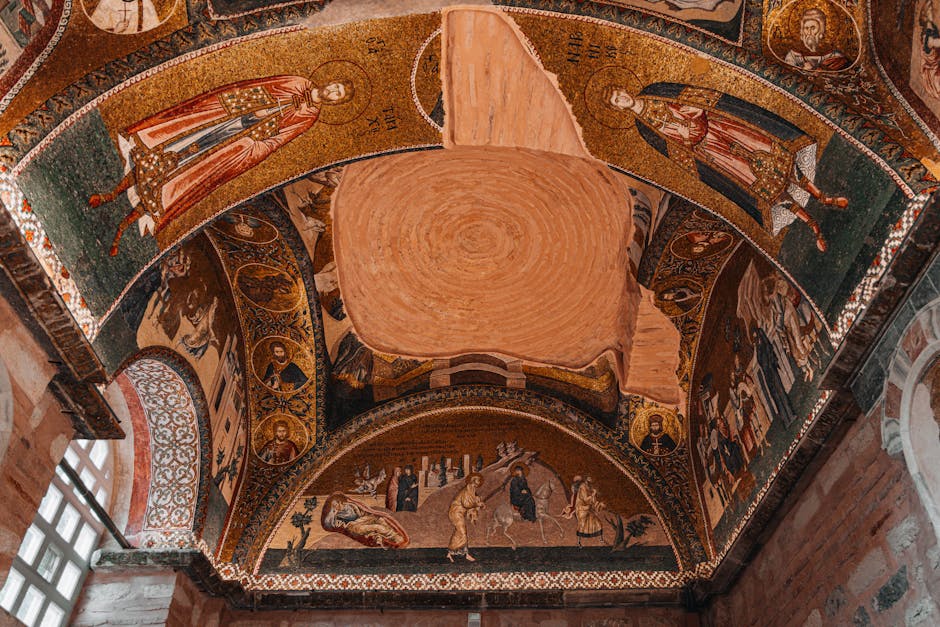
Culturally, the Byzantine Empire preserved ancient Greek and Roman texts, creating a bridge that facilitated the Renaissance. Additionally, Byzantine art, characterized by its vibrant mosaics and iconography, influenced the Romanesque and Gothic styles that followed in Western Europe.
Religiously, the schism between Eastern Orthodox Christianity and Roman Catholicism set the stage for centuries of conflict and rivalry, yet facilitated the development of distinct Christian traditions that exist to this day.
Fascinating Little-Known Facts
While much has been documented about the Byzantine Empire, several intriguing facts often remain obscure. For instance, Byzantine emperors would often wear purple—a color reserved for royalty—which was a testament to their sovereignty. This color, derived from the murex snail, was incredibly expensive to produce.
Additionally, the Byzantine military was one of the first to implement the use of Greek fire, a formidable incendiary weapon still shrouded in mystery. The exact composition remains unknown, and it proved crucial for the Byzantine fleet’s defense against naval forces throughout the centuries.
Moreover, during their height, the Byzantines established a network of spies and diplomats that allowed them to maintain an intricate web of alliances, acquiring precious information about their enemies while spreading their own influence.
Conclusion: Modern Relevance
The story of the Byzantine Empire is one of remarkable resilience and continuous adaptation amidst turmoil. As modern societies grapple with issues of governance, cultural identity, and religious differences, the lessons from Byzantine history offer invaluable insights into human nature and civilization’s capacity to evolve.
Today, the echoes of the Byzantine Empire persist in contemporary politics, legal frameworks, and even art. The complex interplay between state and religion that defined Byzantium remains relevant as contemporary debates over secularism, democracy, and faith continue across the globe. Understanding the intricacies of this remarkable empire enriches our historical perspective and informs our responses to modern global challenges.