
Introduction
The history of the Byzantine Empire is a tale of grandeur, resilience, and eventual decline that captivates historians and enthusiasts alike. At its height, the Byzantine Empire was a beacon of cultural and economic prosperity that not only bridged ancient and medieval worlds but also preserved and enriched much of the heritage of the Greco-Roman civilization. However, this tale is also fraught with intrigue, power struggles, and epic battles that ultimately led to its downfall. The story of the Byzantine Empire is not just a chapter in history; it is a rich tapestry woven with the threads of conquest and cultural dynamism that continues to influence the modern world. From its inception in the midst of the declining Roman Empire to its fall at the hands of the Ottoman Turks, the Byzantine Empire serves as a fascinating study of resilience amidst adversity, and offers lessons still relevant today.
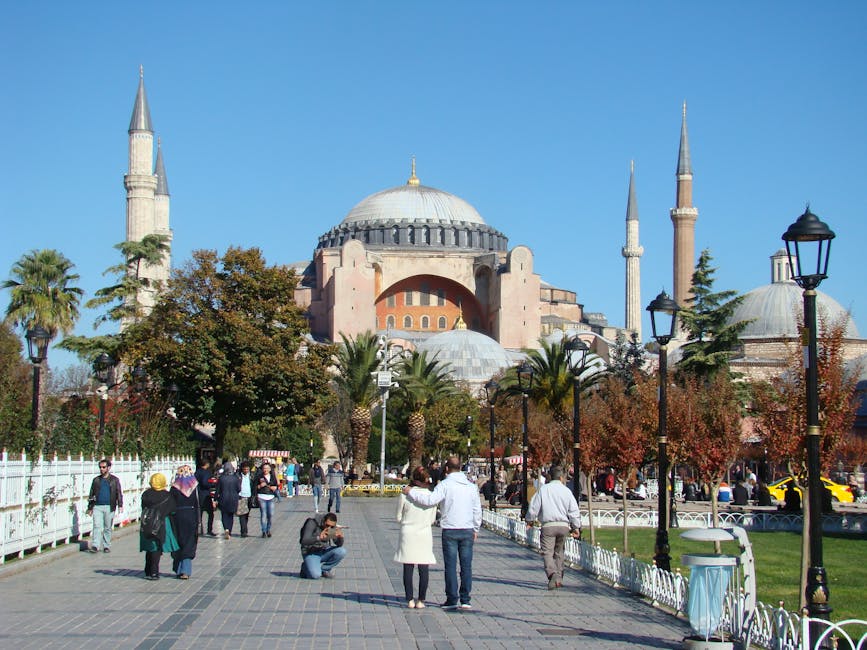
The Byzantine Empire, with its opulent capital at Constantinople, was a hub of trade and cross-cultural interaction. Its strategic location and the labyrinth of cultures it harbored stood at the crossroads of East and West, offering a unique blend of traditions, politics, and religion. For more than a thousand years, the Byzantines withstood invasions, internal upheavals, and natural disasters. This invincible spirit, coupled with their artistic and architectural achievements, such as the unparalleled Hagia Sophia, cast a long shadow across history. Intrigued by both ancient civilization and religious fervor, the Byzantine Empire acted as a guardian of Christianity, influencing the very foundation of the church as we know it today.
Historical Background and Context
The Byzantine Empire, originally known as the Eastern Roman Empire, was officially founded in AD 330 when Roman Emperor Constantine I dedicated the city of Byzantium as his New Rome, later named Constantinople. As the Western Roman Empire crumbled under the weight of barbarian invasions and internal decay, the Eastern Empire thrived, preserving the heritage of Roman law and governance. Its strategic position at the crossroads of Europe and Asia afforded it significant geopolitical influence, as well as a thriving trade economy.
The resilience of Byzantium can be attributed to its strong central authority, carried forward by a series of competent rulers who kept the empire intact through diplomacy and military strength. The cultural richness of the Byzantine polity was a direct consequence of its diverse population and intermingling of Hellenistic, Roman, and Christian traditions. The empire was immensely important in preserving classical knowledge through its scholars and libraries, becoming a haven for intellectual pursuits while Europe languished in the so-called Dark Ages.
This era was marked by monumental achievements like the codification of Roman laws in the form of the Justinian Code, which had a long-lasting influence on European legal systems. The compelling fusion of state and religion was another defining characteristic, with Byzantine Orthodoxy playing a vital role in shaping the empire’s identity and policies. Byzantium wielded religious influence over vast regions, spreading Eastern Orthodox Christianity far beyond its borders and affecting the Christianization of the Slavic peoples.
Key Events, Battles, or Developments
The Foundation and Rise (330-527 AD)
In 330 AD, Constantine the Great embarked on his vision of transforming Byzantium into a grand imperial city, signaling the birth of the Byzantine Empire. This commencement was followed by centuries of expansion and consolidation, marked by conquests and architectural achievements, such as the construction of the Hagia Sophia.
Justinian’s Reign (527-565 AD)
Under Emperor Justinian I, the empire reached its zenith, reconquering former Roman territories in Africa, Italy, and the Iberian Peninsula. The infamous Nika Riots in 532 AD tested Justinian’s rule, persisting civil disorder quelled with bloodshed. His era was most notable for the Justinian Code, entrenching Roman law as a lasting legacy.
The Battle of Manzikert (1071 AD)
One of the pivotal events was the battle of Manzikert where the Seljuk Turks crushed the Byzantine army, signaling the loosening grip on Asia Minor. This defeat shattered Byzantine military prestige and paved way for the gradual seepage of Turkish tribes into the region.
The Fourth Crusade and Fall of Constantinople (1204 and 1453 AD)
The Fourth Crusade was a catastrophe for Byzantium, as Crusaders, diverted from their path, occupied and plundered Constantinople in 1204. This weakened the empire, which struggled to regain its former glory before its eventual fall to the Ottoman Turks in 1453. The fall of Constantinople was not only the end of Byzantine economic and military prowess but also marked a significant shift in global power dynamics.
Important Figures and Their Roles
Constantine the Great – The founder of the Byzantine Empire, whose establishment of Constantinople set the stage for the empire’s prosperity and political influence.
Justinian I – Notable for his ambitious campaigns to recapture lost Roman territories, Justinian’s reign was a high point of Byzantine influence and cultural output, exemplified by the Hagia Sophia.
Theodora – Wife of Justinian I, known for her political acumen and influence over official matters, playing a vital role in the empire’s governance.
Heraclius – Emperor during whose reign saw the empire revamp its military and administrative structures while engaging in numerous wars with the Sassanid Empire.
Alexios I Komnenos – His strategies revitalized the empire and secured alliances that delayed Byzantine decline momentarily, notably through his requests for Western aid, catalyzing the Crusades.
Causes and Consequences
The Byzantine Empire’s decline stemmed from both internal strife and external pressures. The vast geographical size made it difficult to govern, leading to frequent civil wars and revolts. Furthermore, its strategic location made it a perennial target for adjacent powers. The Seljuk Turk victory at Manzikert and the subsequent territorial losses were direct consequences of military complacency and weakened centralized control.
The consequences were stark, with Byzantium’s dominance and influence waning significantly. The economic and territorial losses weakened its defenses, eventually leading to its conquest. However, its downfall led to a migration of scholars and texts to the west, seeding the Renaissance with ancient knowledge and philosophies.
Global Impact and Legacy
The Byzantine Empire’s global impact is evidenced in its preservation and propagation of classical knowledge, which was paramount in transitioning the world from antiquity to the Renaissance. Its Orthodox Christianity became a religious cornerstone in Eastern Europe, profoundly influencing Slavic cultures, from Russia to the Balkans. Architectural marvels of Byzantium, notably the Hagia Sophia, set iconographical standards still resonant in Christian and modern architecture.
With its fall, the migration of Greek scholars to Western Europe was instrumental in sparking the Renaissance, facilitating a revival in philosophy, science, and arts, embodying a legacy beyond its political existence.
Fascinating Little-Known Facts
Despite military adversities, the Byzantines employed ingenious warfare tactics like Greek fire, an incendiary weapon of strategic advantage comparable to modern napalm. This naval dominance kept their adversaries at bay for centuries.
An interesting aspect of Byzantine culture was its bureaucratic network, establishing early prototypes of civil service that enabled efficient governance long before other European entities adopted similar systems.
Moreover, the Byzantines played host to the first recorded instance of state-sponsored medicine, employing imperial physicians ensuring health care for citizens, prefiguring modern health systems.
Conclusion
The Byzantine Empire stands as a testament to human ingenuity and resilience, overcoming centuries of hurdles to leave an indelible mark on history. Its synthesis of Roman governance and Christian ethics laid a groundwork that shaped the socio-political landscape of Europe and beyond. The lessons of Byzantium’s intricate balance of religious influence and secular rule resonate in contemporary times, reflecting on the enduring interplay of culture, religion, and politics.
As we grapple with global cultural exchanges and conflict, the Byzantine story reminds us of the potential for synthesis and cooperation across civilizations. In an era of rapid change and cultural fusion, revisiting Byzantium’s testament offers insights into navigating modern-day complexities with historical wisdom.