
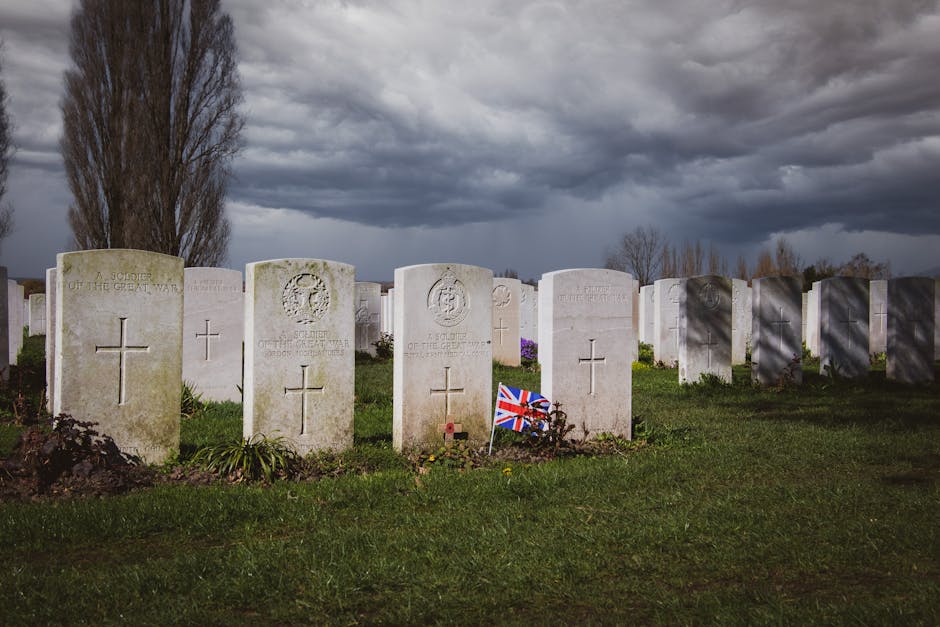
The Great War: Unveiling World War I’s Hidden Stories and Lasting Legacy
Introduction: The World Plunged into Chaos
World War I, often overshadowed by its successor, World War II, carries a tapestry of fascinating stories, monumental shifts, and pivotal moments that altered the course of history. Known as the ‘Great War’, it shattered the tranquility of the early 20th century, leaving indelible marks across continents. This cataclysmic event was not just a series of battles fought amidst the trenches of Europe but a global upheaval that resonated through cultures, economies, and societies. Understanding World War I is crucial for it holds keys to the current geopolitical landscape. As we delve deeper into its causes, significant battles, key figures, and enduring impact, a rich narrative unfolds—a narrative that tells of bravery, tragedy, and the relentless spirit of humanity amidst unprecedented adversity.
Historical Background and Context
To comprehend the origins of World War I, known initially as the ‘War to End All Wars’, it is essential to explore the intricate web of alliances, military buildups, and nationalist fervors that existed in the early 20th century. The assassination of Archduke Franz Ferdinand of Austria on June 28, 1914, served as the catalyst, but the underlying tensions brewing for decades demanded a closer look.
Europe, at the turn of the century, was a powder keg of political and nationalistic rivalries. The major powers—Britain, France, Germany, Austria-Hungary, and Russia—were entangled in a complex alliance system designed ostensibly to maintain peace but ended up binding countries to commitments and escalations. Imperial ambitions, economic competition, and a pervasive belief in militarism fueled an arms race, intensifying tensions further.
The rise of nationalism played a crucial role, especially in the Balkans, where Serbia’s desire for a sovereign Slavic state conflicted with Austria-Hungary’s interests, adding to the complexity. The Ottoman Empire, known as ‘the sick man of Europe,’ was declining, and its remnants posed both opportunities and threats to European powers. These geopolitical strains collectively wove a thick fabric of diplomatic hostility and mistrust, leading to a misjudged sense that the impending war would be short and decisive—a grave underestimation.
Key Events, Battles, and Developments
Following the assassination of Archduke Franz Ferdinand, a chain reaction led to the mobilization of nations, spiraling into a global conflict. The Great War’s timeline is punctuated by significant events and battles that defined its brutal course.
1914: The War Begins
In late July 1914, Austria-Hungary declared war on Serbia, initiating a domino effect as allies on either side were drawn in. Germany’s strategy, the Schlieffen Plan, aimed to swiftly defeat France by invading through Belgium, prompting Britain to declare war on Germany. By late August, the conflict had engulfed most of Europe.
1916: Verdun and the Somme
In 1916, the Battle of Verdun became a symbol of French determination and human endurance, stretching from February to December. German forces attacked the French town of Verdun, leading to one of the longest and bloodiest battles in history. Overlapping with Verdun was the Battle of the Somme, initiated by British and French forces to relieve pressure on Verdun. Beginning on July 1, 1916, the Somme was marked by unprecedented casualties, with over 1 million men wounded or killed.
1917: America Enters the War
April 1917 marked a pivotal shift as the United States entered the war, spurred by Germany’s unrestricted submarine warfare and the interception of the Zimmermann Telegram, which revealed German proposals to Mexico to join forces against America. This entry provided fresh resources and manpower that began tipping the balance in favor of the Allies.
1918: The War Winds Down
In March 1918, Germany launched a massive spring offensive, eager to clinch victory before American forces could exponentially grow. However, the tide turned with the Allies’ counter-offensives bolstered by American troops. The armistice on November 11, 1918, marked the end of hostilities, with the agricultural devastation and famine revealing the war’s harrowing toll on populations and soldiers alike.
Important Figures and Their Roles
World War I saw a variety of leaders whose decisions shaped the conflict’s course, leaving an indelible mark on history.
Kaiser Wilhelm II
As the last German Emperor and King of Prussia, Wilhelm II’s aggressive foreign policies and military postures significantly contributed to the outbreak of the war. His abdication in 1918 was a pivotal moment leading to Germany’s subsequent political upheaval.
Woodrow Wilson
The 28th President of the United States, Wilson initially maintained a stance of neutrality. His later decision to join the Allied cause was instrumental in tipping the balance. Wilson’s post-war efforts were characterized by his vision for a League of Nations, aiming to prevent future conflicts through collective security.
Georges Clemenceau
France’s “Tiger”, Prime Minister Georges Clemenceau, played a crucial role in maintaining French morale and military resistance. His leadership in the Paris Peace Conference defined much of the post-war territorial adjustments and reparations.
General John J. Pershing
The commander of the American Expeditionary Force, Pershing, known as “Black Jack,” was pivotal in integrating U.S. troops effectively into the Allied operations, insisting on an independent American force that contributed significantly to the final offensive drives.
Causes and Consequences
The immediate cause of World War I was the assassination of Archduke Franz Ferdinand, but this was merely a spark in a room filled with combustible materials.
The deeper causes included nationalist fervor overflowing across Europe, imperial ambitions, and a complex web of alliances. Militarism had ascended across the continent, fostering an environment ripe for confrontation. The war culminated with colossal human and economic costs, leading to vast territorial changes, the dismantling of empires such as Austria-Hungary, the Ottoman, Russian and German empires, and laid the groundwork for political tensions that seeded World War II. The Treaty of Versailles’ punitive reparations imposed on Germany fueled economic turmoil and nationalistic resentments, giving rise to extremist ideologies and setting the stage for another global conflict.
Global Impact and Legacy
World War I shifted global power dynamics, accelerating the decline of colonial empires and influencing international policy and thought. The League of Nations emerged from the conflagration as an early version of today’s United Nations, embodying the fledgling attempt at establishing global governance and peacekeeping. Technological innovations, including tanks, airplanes, and chemical warfare, modernized military tactics thereafter.
Globally, the war fostered transitions in societal roles, notably with women stepping into new labor environments, a precursor to societal transformations. The artistic and literary movements that arose post-war reflected disillusionment, shaping modern cultural expressions.
Fascinating Little-Known Facts
- Armistice’s Timing: Though the armistice was signed at 5:45 AM on November 11, 1918, it only came into effect at the eleventh hour of the eleventh day, marking a poignant symmetry yet causing unnecessary casualties in the intervening hours.
- Carrier Pigeons’ Valor: Carrier pigeons played a secret yet crucial role, with one famous pigeon, Cher Ami, awarded the Croix de Guerre for delivering a message that saved hundreds of American lives during the Meuse-Argonne Offensive.
- Ghost Army Tactics: The British used dummy tanks and phony artillery in a creative strategy called the ‘Ghost Army’ to deceive German forces during the Battle of the Somme, which later inspired similar World War II tactics.
Conclusion: The Indelible Imprint on Modern World
The legacy of World War I is enduring and multifaceted. Not merely a historical footnote, its impact continues to reverberate through contemporary geopolitics and society. The dissolution of long-standing empires and the redrawing of borders altered international relations in profound ways, introducing a range of regional disputes and conflicts that persist to this day.
Modern technology, from advances in medicine to communications, owes much to innovations necessitated by the war. Furthermore, the widespread societal movements during and after the war paved the way for significant political, economic, and social change, including movements for civil rights, women’s suffrage, and decolonization.
In understanding the lessons of World War I, the modern world reaffirms the need for global cooperation, dialogue, and understanding to prevent future conflicts of such devastating magnitude. It remains a stark reminder of what can transpire when nationalist fervor, unchecked political ambitions, and complex alliances go awry.