
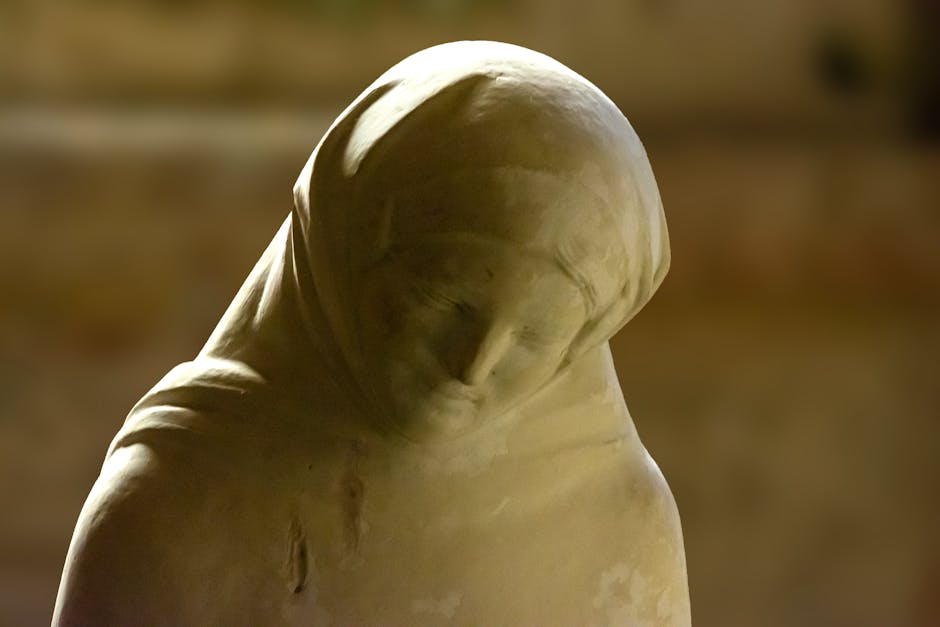
Introduction: A Girl Who Ignited a Nation
Imagine a teenage girl, clad in rusty armor, standing before a skeptical army and claiming divine orders to save a kingdom. This is not a scene from a Hollywood blockbuster; it is the astonishing reality of Joan of Arc, the 15th‑century French heroine whose story has resonated for centuries. Born into a modest farming family in Domrémy, a small village near the Lorraine border, Joan’s rise from obscurity to the battlefield is a narrative of vision, courage, and political intrigue. Her brief yet explosive career—from the moment she first heard voices she believed were saints, to her martyrdom at the stake in 1431—shook the very foundations of medieval Europe. In this article, we uncover the layered history behind Joan’s legend, explore the wars, politics, and personalities that shaped her destiny, and reveal the lasting impact she continues to wield in modern culture. Whether you are a history buff, a student of leadership, or simply love a good underdog story, Joan of Arc’s saga offers timeless lessons on conviction, resilience, and the power of a single voice to change the course of history.
Historical Background and Context
The early 1400s were a turbulent era for France. The country was entrenched in the Hundred Years’ War (1337‑1453), a protracted conflict with England over claims to the French throne. By 1415, the English had secured a decisive victory at the Battle of Agincourt, leaving the French crown fragmented and vulnerable. The duchy of Burgundian allies, intoxicated by territorial ambition, further destabilized the kingdom by siding with the English. In 1419, the French king, Charles VI, succumbed to insanity, creating a power vacuum that pitted the Orléans faction (supporting Charles VII) against the Burgundians.
It was within this chaotic backdrop that Joan was born on January 6, 1412. Her family—Jacques d’Arc, a farmer, and Isabelle Romée—were modest but devout, raising six children amid the constant threat of marauding troops. The surrounding region suffered from famine, plague, and relentless raids, fostering a climate of desperation. The French populace, weary of endless taxation and foreign occupation, yearned for a savior. Prophetic religious movements were not uncommon; visions and divine messages had long been part of medieval spirituality. However, Joan’s claims would soon transcend folklore and become a catalyst for political realignment.
Key Events, Battles, and Developments
1. The First Visions (December 1415 – 1419)
At the tender age of thirteen, Joan reported hearing voices she identified as Saint Michael, Saint Catherine, and Saint Margaret. These apparitions urged her to “save France” and promised divine guidance. Over the next four years, she concealed these experiences, awaiting the appropriate moment to act.
2. The Journey to Vaucouleurs (January 1428)
In early 1428, driven by her visions, Joan left Domrémy and traveled alone to Vaucouleurs, a fortified town loyal to Charles VII. After a dramatic encounter with the town’s commander, Robert de Baudricourt, she persuaded him to provide a small escort, claiming that the king would personally vindicate her mission.
3. Audience with Charles VII (February 11, 1429)
Joan’s persistence paid off when she arrived at Chinon, crossing the Loire under a banner of the French royal standard. On February 11, 1429, she met Charles VII—a disheartened monarch often called “the Dauphin” at that time. Presenting a signed letter of authenticity from credible local nobles, she convinced the king to allow her to accompany the army to Orléans. The meeting was crucial; Charles, hoping to harness any morale boost, gave her the nickname “la Pucelle d’Orléans” (the Maid of Orléans).
4. The Siege of Orléans (October 12 – May 8, 1429)
The English, bolstered by Burgundian allies, had besieged Orléans since October 1428. The city’s fall would have likely sealed Charles VII’s claim to the throne. Joan arrived at the siege on April 29, 1429, accompanied by a small group of soldiers. Within days, she participated in the pivotal assault on the bastion of Les Tourelles, leading to its capture on May 7. The next day, the English lifted the siege, marking a turning point in the war.
5. The Loire Campaign (June – July 1429)
Emboldened by the Orléans victory, Joan spearheaded a rapid series of attacks on English strongholds along the Loire River. Between June 18 and July 7, 1429, she helped reclaim Jargeau, Meung-sur-Loire, and Beaugency. These swift successes disrupted English supply lines and forced them into a defensive posture.
6. Coronation at Reims (July 17, 1429)
According to French tradition, a king could not be fully legitimized without being crowned at the cathedral of Reims. Joan escorted Charles VII along the perilous route, overcoming ambushes at Patay on June 18, 1429. The crowning ceremony, on July 17, 1429, fulfilled her divine promise and cemented Charles’s legitimacy.
7. The Capture at Compiègne (May 23, 1430)
Continuing the fight, Joan joined a sortie to relieve the besieged town of Compiègne. During the clash, she was wounded and taken prisoner by Burgundian forces led by John of Luxembourg, Count of Ligny. The capture shocked both allies and enemies, as she was the embodiment of French hope.
8. Trial and Execution (February – May 1431)
Transferred to English custody, Joan faced an ecclesiastical trial in Rouen, overseen by pro‑English bishop Pierre Cauchon. Charged with heresy, witchcraft, and cross‑dressing, she endured months of interrogation. On May 30, 1431, at the age of nineteen, Joan was burned at the stake in the marketplace of Rouen. Her death was intended as a deterrent, yet it amplified her martyrdom.
Important Figures and Their Roles
Charles VII (1403‑1461) – The French king whose coronation hinged on Joan’s victories. His later reign saw the eventual expulsion of English forces from France.
Robert de Baudricourt (c. 1380‑1454) – The commander of Vaucouleurs who, after initial skepticism, provided Joan with men and armor.
Jean de Dunois (1402‑1468) – Known as the “Bastard of Orléans,” he fought alongside Joan at Orléans and later became a key military leader for Charles VII.
Pierre Cauchon (1400‑1472) – The Bishop of Beauvais who presided over Joan’s trial; his political alignment with the English made the proceedings biased.
John of Luxembourg, Count of Ligny (1382‑1441) – The Burgundian commander who captured Joan at Compiègne, later handing her over to the English.
Causes and Consequences
The immediate cause of Joan’s emergence was the dire military situation faced by France after successive defeats at Agincourt and the loss of Normandy. The popular yearning for a unifying figure created fertile ground for her claims. Her successes accelerated the French reconquest, culminating in the eventual expulsion of English forces by 1453. Politically, Joan’s martyrdom provoked outrage across France, strengthening nationalist sentiment and delegitimizing the English claim to the throne. The posthumous retrial in 1456, which nullified the earlier verdict, restored her reputation and paved the way for her canonization in 1920.
Global Impact and Legacy
Joan of Arc’s legacy transcends centuries and borders. She has become a symbol of female empowerment, inspiring countless works of art, literature, and film—from Shakespeare’s tragedies to modern cinema such as Luc Besson’s La Passion de Jeanne d’Arc. Her story also shaped French national identity, embodying the ideal of a citizen‑soldier motivated by moral conviction. Internationally, she is celebrated as a saint in the Roman Catholic Church, a patron of soldiers, and an emblem of resistance against oppression, influencing movements from the French Revolution to contemporary feminist activism.
Fascinating Little‑Known Facts
- Joan’s birth name was Jeanne d’Arc; the English later Anglicized it to “Joan of Arc.”
- She never learned to read or write, yet she memorized entire prayers and biblical passages.
- During her trial, Joan famously responded to accusations of cross‑dressing with, “If I am sentenced to death, I shall die the same as men die, at the point of a sword.”
- Her final words, recorded by witnesses, were a request for a priest to say a prayer for her soul.
- In 1917, French soldiers buried a stone tablet in the courtyard of the Palatine Chapel, Versailles, acknowledging her as a “Guardian of the Nation.”
Conclusion: Joan of Arc’s Relevance Today
Joan of Arc’s journey—from a peasant village to the altar of martyrdom—remains a powerful testament to the influence of individual conviction in shaping history. In an era where voices are often drowned by institutional noise, her story reminds us that authenticity, bravery, and a clear sense of purpose can inspire transformative change. Modern leaders, activists, and everyday citizens continue to draw parallels between Joan’s unwavering belief in her mission and contemporary struggles for justice, equality, and national identity. As we navigate the complexities of the 21st century, Joan’s enduring legacy serves as a beacon, urging each of us to listen to our inner callings and act with integrity, no matter the odds.