
Introduction: A Submerged Enigma
The winter of 1900 witnessed a momentous discovery that would redefine our understanding of ancient technology — the Antikythera Mechanism. Recovered from an ancient shipwreck off the coast of the Greek island Antikythera, this artifact puzzled scientists and historians alike. Lying dormant under the sea for nearly 2000 years, its complexity and purpose were shrouded in mystery. It’s not just an archaeological find but a window into the past, challenging our perceptions of what the ancients were capable of and igniting a century-spanning journey of curiosity and investigation.
Historical Background and Context
The Discovery
In 1900, a group of Greek sponge divers stumbled upon a sunken shipwreck near the island of Antikythera, located between Crete and mainland Greece. Among the statues and amphorae, a corroded clump of metal emerged, which would later be recognized as the world’s first known analog computer. This site, dated to around 70-60 BCE, revealed technology far ahead of its time.
The Greek Era of Innovation
During the Hellenistic period, Greece was a hub of scientific advancement. Geographically nestled at the crossroads of Asia, Europe, and Africa, it served as a breeding ground for philosophical and scientific thought. The Greeks refined disciplines ranging from philosophy to mathematics, yet widespread knowledge of complex machinery was thought to be primitive—until the Antikythera Mechanism rose from the depths, challenging historical narratives.
The Age of Inscribed Stones
In an era where inscribed stones were the pinnacle of recording data, the Antikythera Mechanism stood out with its intricate assembly of gears and dials. Its existence hinted at a sophisticated grasp of astronomy and engineering, concepts previously attributed much later in history. This was not a mere oddity; it was a testament to a lost technological expertise that mirrored the genius of its makers.
Key Events and Developments
The Mechanism’s Construction
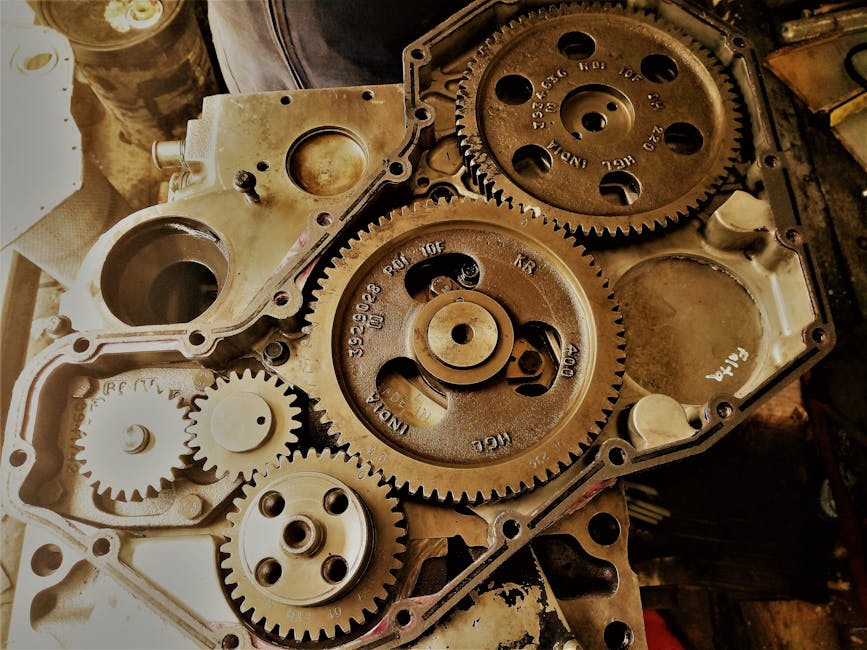
The Antikythera Mechanism was crafted from bronze, consisting of at least 30 interlocking gears housed within a wooden frame box. Meticulously designed, these gears simulated the movements of celestial bodies with astonishing precision. Scholars estimate that it was created between 150-100 BCE, displaying functions related to an astrological calendar, as well as eclipses and Olympiad cycles.
Decoding the Enigma: 1902 Onwards
Following its recovery, the mechanism was initially overshadowed by more visually significant artifacts. In 1902, Greek archaeologist Valerios Stais first posited its mechanical nature when bronze fragments revealed forensics of a clock view. The realization launched decades of study where x-ray, gamma-ray imaging, and 3D tomography revealed inscriptions and construction details, propelling our understanding further.
Technological Milestones: 1950s to Present
The post-war era saw pivotal technological insights: British science historian Derek J. de Solla Price’s comprehensive 1959 study and Tony Freeth’s 21st-century digital reconstructions established its purpose as an astronomical calculator. This sophisticated device indicated a heliocentric world model that organized lunar phases, predicted eclipses, and charted planetary motion with remarkable accuracy.
Important Figures and Their Roles
Archimedes’ Shadow
Thought to be developed by craftsmen possibly influenced by Archimedes, the Antikythera Mechanism bears resemblance to the speculated inventions of this renowned mathematician. Although there’s no direct evidence linking Archimedes’ hand, his legacy of mechanical innovation provides the conceptual backdrop.
Valerios Stais: The First Seer
Tasked with cataloguing the wreck artifacts, Stais displayed exceptional foresight in recognizing the mechanism’s importance. His initial observations laid the foundation for future explorations into its mechanical nature.
Derek J. de Solla Price: The Analytical Mind
Price’s relentless pursuit and eventual 1959 landmark publication brought global attention to the delicate artifact. His reconstruction theories set the stage for technological interpretations, earning the mechanism its rightful place in the annals of technological history.
Causes and Consequences
Intellectual Curiosity Bred Innovation
The Hellenistic era, marked by curiosity and reason, nurtured talents such as Hipparchus, who likely influenced mechanisms like Antikythera. This period’s amalgam of mathematical theory and empirical observation yielded groundbreaking inventions, leading to an advanced understanding of celestial movements. The Mechanism exemplifies this convergence.
A Lost Legacy
The fall of technological sophistication alongside the decline of ancient civilizations resulted in the loss of Antikythera’s know-how. Bronze Age cultures obscured by subsequent periods of turbulence led to a historical oversight, leaving modern scholars to piece together fragmented insights.
Global Impact and Legacy
Pioneering Technological Advancement
The Antikythera Mechanism remains a milestone in the timeline of technology. As evidence of complex mechanics predating medieval advancements by several centuries, it inspires ongoing dialogue about the transmission of knowledge in the ancient world. It suggests that similar, unexamined artifacts might have existed, hinting at untapped areas of past brilliance that could redefine historical narratives.
Influence on Modern Science
This ancient relic influences modern engineering and astronomical research. It underscores the age-old intrigue of automata and calculation devices, providing insight into how historical ingenuity foreshadowed foundational principles vital to contemporary civilization.
Fascinating Little-Known Facts
1. Materials Speak Volumes: Copper-lead bronze gears were chosen for their sturdy yet workable characteristics—a testament to the ancient Greeks’ mastery of optimizing material properties.
2. Astrological Agenda: The mechanism’s inscriptions detailed astrological theory popular among the elite, denoting both scientific and cultural significance.
3. Unseen Fingers: Roman artifact enthusiasts suggest that Cicero’s writings mention such devices owned by famous Roman generals, hinting at a broader historical presence and allure.
Conclusion: Legacy of Innovation
The Antikythera Mechanism stands as a monument to humanity’s enduring quest for knowledge. Its intricate design and purpose epitomize a saga of innovation, excellence, and mystery. While modern technology has surpassed its mechanical intricacies, the revelation of its existence has left an indelible mark on historical scholarship, encouraging a reevaluation of the ancient world. Today, as we create ever more sophisticated technology, the mechanism’s legacy lies in its reminder of our ongoing potential to innovate, aspire and uncover the secrets of the universe.