
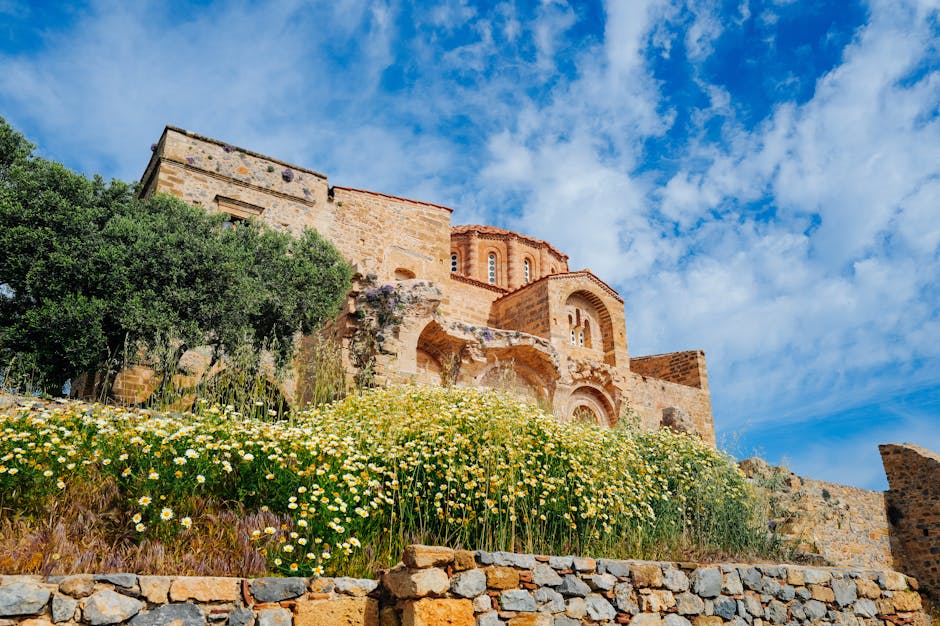
Compelling Introduction with Hook
Amidst the annals of history stands a civilization whose prowess, culture, and longevity have left indelible imprints on the world – the Byzantine Empire. Revered as the Eastern Roman Empire, Byzantium’s thousand-year saga is a testament to the endurance of an empire during the vicissitudes of time. From humble beginnings as a Greek colony to the epicenter of Roman influence, and finally, to its grand metamorphosis to Orthodox Christianity, Byzantium’s legacy is a beacon of the confluence between antiquity and the medieval world. Unravel this captivating chronicle where emperors defended against invasions with ingenuity, and where art and theology thrived in symphonic harmony. Discover how Byzantium not only survived the fall of Rome but also flourished to shape the course of world history.
Historical Background and Context
Founded around 657 BC, the city of Byzantium began as an ancient Greek colony. Its strategic location at the crossroads of Europe and Asia Minor within the Bosphorus Strait positioned it as a prominent commercial hub. This enviable location attracted Roman interests, and in AD 330, Emperor Constantine I embarked on transforming Byzantium into the Roman Empire’s new capital, renaming it Constantinople.
Constantinople rapidly evolved into a vital center for the later Roman Empire, creating a fusion of Greek culture with Roman governmental institutions. The city’s impregnable fortifications and wealth soon made it the Eastern Roman Empire’s heart. Post the fall of the Western Roman Empire in the 5th century, the Eastern Empire, later known as the Byzantine Empire, continued to thrive, drawing from its rich cultural and economic resources.
The Byzantine Empire, significantly influenced by Christianity, served as a bastion of the Christian faith particularly under the reign of Emperor Justinian I (527-565 AD). His era witnessed ambitious ventures such as the reconquest of former Roman territories and the codification of Roman laws known as the Corpus Juris Civilis. Despite its eventual decline, the empire’s ability to adapt and survive through tumultuous centuries signifies its historical importance.
Key Events, Battles, or Developments with Specific Dates and Details
The Byzantine Empire’s story is marked by pivotal events and battles that defined its resilience and evolution. One such watershed moment was the Nika Riots of 532 AD. During the reign of Justinian I, tensions flared in Constantinople, culminating in violent riots that threatened his rule. Emperor Justinian, with the counsel of his wife, Empress Theodora, quashed the uprisings using decisive force, stabilizing the internal strife.
Another landmark was the Battle of Yarmouk in 636 AD, where Byzantine forces faced the Muslim armies under Khalid ibn al-Walid. The decisive victory for the Rashidun Caliphate led to the loss of Byzantine territories in the Levant, marking a shift in the power dynamics of the region.
The Empire’s fortitude was again tested during the reign of Emperor Leo III in 717 AD, when utilizing innovative military tactics, the Byzantines repelled the vast Umayyad siege of Constantinople. This victory fortified Byzantium’s eastern frontier and arched a new era of military resilience.
By the 11th century, internal strife and external pressures eroded the Empire’s prosperity, highlighted by the critical event of the Battle of Manzikert in 1071 AD. Byzantine forces, severely defeated by the Seljuk Turks under Sultan Alp Arslan, suffered territorial losses in Anatolia, precipitating a chain of events that would lead to the First Crusade.
The fall of Constantinople in 1204 due to the Fourth Crusade exemplified a stark descent from Byzantine glory, albeit temporarily. The Empire reclaimed Constantinople in 1261 under the Nicaean Empire’s leadership, demonstrating its tenacity once more before its eventual fall to the Ottoman Turks in 1453.
Important Figures and Their Roles
The intricate tapestry of Byzantine history is woven with the lives of influential leaders who orchestrated its policies and shaped its legacy. Emperor Justinian I, known as ‘Justinian the Great,’ was instrumental in attempting to reunite the Roman Empire while fostering cultural and legal advancements.
Empress Theodora, wife of Justinian, played a crucial role not only as a counselor in political decisions but as a formidable leader whose strength was evidenced during the Nika Riots.
Emperor Heraclius (610-641 AD), known for his military prowess, conducted successful campaigns against the Sassanid Empire, thereby restoring Byzantine territories to the east and establishing the Greek language as the foundational lingua franca.
Another key figure, Basil II, ‘the Bulgar Slayer’ (976-1025 AD), marked an apex in the Empire’s military hierarchy, expanding its borders into the Balkans, thereby demonstrating the resilience and strength of Byzantium during its height.
Causes and Consequences
The causes of the Byzantine Empire’s unprecedented longevity can be attributed to its strategic geographic location, robust administrative systems, and adept diplomacy. These facets allowed it to manage crises, maintain its riches, and ensure legislative continuity.
The consequences of the Byzantine Empire’s dynastic quarrels and occasional internal weaknesses led to vulnerability from external threats, notably from the rising Ottoman power. In addition, religious divisions, particularly the schism with the Western Church in 1054 AD, fragmented its ecclesiastical unity.
While Byzantium’s fall resonated as a historic loss of a formidable bastion, its consequences laid fertile ground for new empires and carried forward its cultural and theological legacies through Eastern Orthodox Christianity and Byzantine aesthetics.
Global Impact and Legacy
Despite its eventual decline, the Byzantine Empire’s global impact reverberates prominently in the annals of history. Byzantium served as a cultural bridge between classical antiquity and the European Middle Ages, preserving Greek and Roman knowledge through translation and scholarship, which later influenced the Renaissance.
The Byzantine Orthodox Church’s theological doctrines and church architecture significantly shaped Eastern European and Russian religious practices. Byzantine art styles trickled into European cultures, influencing medieval iconography.
The persistence of Byzantine governance models, statecraft, and law-factoring systems provided foundational structures for emerging European polities. This legacy, embodied through the Byzantine military and administrative prowess, echoes profoundly in contemporary geopolitical strategies.
Fascinating Little-Known Facts
Beyond its well-known historical impact, the Byzantine Empire houses lesser-known fascinating facets. The famed Hagia Sophia, initially the world’s largest cathedral upon its completion in 537 AD, functioned as the heart of Orthodox Christianity and stands as a marvel of Byzantine architectural innovation.
The Empire’s socio-economic achievements are noteworthy as Byzantine coinage, such as the gold solidus, was among the first standardized currency used across Europe and the Mediterranean, symbolizing the Empire’s robust economic influence.
Additionally, the Byzantine Empire’s adaptation to Greek fire, a formidable naval weapon that effectively secured its supremacy at sea, showcases its strategic ingenuity during naval conflicts.
Strong Conclusion with Modern Relevance
The Byzantine Empire’s saga reflects not only a narrative of a civilization’s endurance but provides us with lessons of strategic resilience and cultural richness. As modern societies look to sustain amidst economic and geopolitical challenges, the adaptability of Byzantium offers a historical framework promoting cultural integration and administrative innovation.
The Byzantine legacy, rooted in its theological doctrine, continues today as the backbone of Eastern Orthodox Christianity. Its intricate art and architecture continue to inspire contemporary art and church design.
Ultimately, the enduring legacy of the Byzantine Empire invites reflection on the necessity of culture as a unifying force amidst diversity, a lesson increasingly relevant in our global society’s quest for harmonious coexistence.