
Introduction: The Last Remnants of Rome
The Byzantine Empire, often overshadowed by its predecessor, the Roman Empire, stands as one of history’s most fascinating civilizations. Born from the ashes of Rome, this empire thrived for over a millennium, preserving and transforming the cultural, artistic, and philosophical heritage of the ancient world. But how did a city built on a strategic crossroads between Europe and Asia evolve into a beacon of Christianity and classical learning? The story of the Byzantine Empire is one of resilience, innovation, and devastating decline.
In this article, we will explore the intriguing history of the Byzantine Empire, tracing its roots from the establishment of Constantinople to its eventual fall in 1453. We will delve into significant events, key figures, and the profound impacts this civilization had on the world. Understanding the Byzantine Empire is not just key to grasping the past; it offers insights into the modern socio-political landscape, cultural identity, and the continued influence of this unique heritage.
Historical Background and Context
The seeds of the Byzantine Empire were sown in the 4th century AD, as the Roman Empire began to fragment. The empire was divided into Eastern and Western halves, with the Eastern Roman Empire (later known as the Byzantine Empire) centered around the city of Byzantium, which would be renamed Constantinople after Emperor Constantine the Great in 330 AD. This new capital became a crucial nexus of trade, culture, and military power.
Byzantium was strategically positioned along the Silk Road and the Mediterranean Sea, allowing it to flourish economically. While the Western Roman Empire faced destructive invasions and internal decay, the Eastern Roman Empire emerged as a center of stability and development, embracing the Christian religion which gained prominence under Constantine. The advent of the Nicaean Council in 325 AD laid the foundation for Christian doctrine, establishing the Orthodox faith as a cornerstone of Byzantine identity.
Throughout the centuries, the Byzantine Empire would be defined by its complicated relationship with neighboring peoples, particularly the Persians to the east and later the Islamic Caliphates. Its culture became a melting pot of Roman governance, Greek philosophy, and Middle Eastern traditions, which would heavily influence the arts, architecture, and theology of subsequent civilizations. Thus, the foundation was laid for a prolonged era of innovation and cultural exchange, marking the Byzantine Empire’s legacy as a resplendent bridge from antiquity to the modern world.
Key Events, Battles, and Developments
Several critical events shaped the trajectory of the Byzantine Empire, standing as milestones in its history. Here are some key moments:
The Reign of Justinian I (527-565)
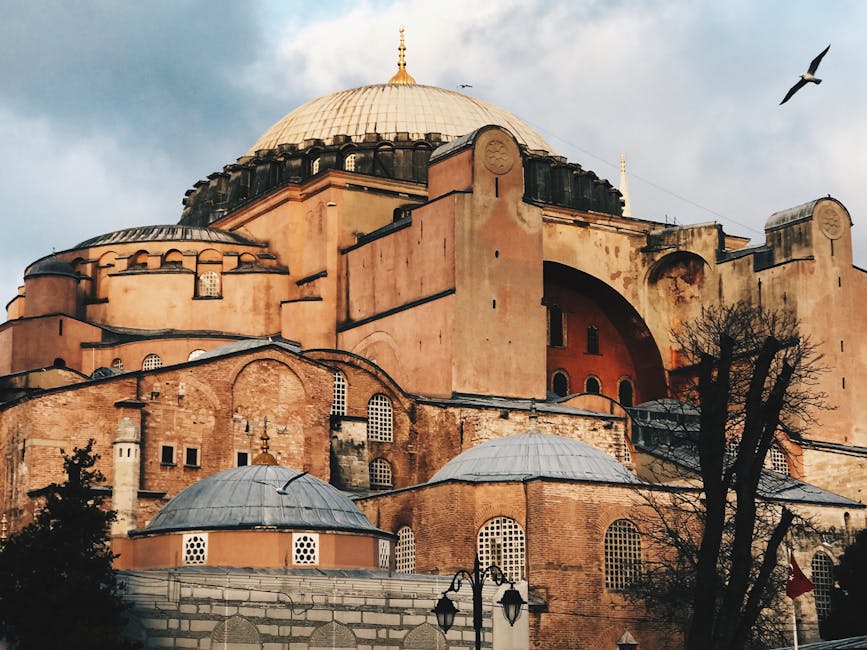
One of the most significant eras began with Emperor Justinian I, known as “the Great.” His reign from 527 to 565 marked a period of expansive territorial gains and monumental architectural accomplishments, most notably the Hagia Sophia, completed in 537. Under Justinian, the empire sought to reclaim lost territories in the west, leading to the reconquest of parts of North Africa and Italy, albeit with substantial military costs.
The Nika Riots (532)
In 532 AD, the Nika Riots erupted in Constantinople, spurred by discontent among the populace regarding high taxes and oppressive governance. These riots, which initially started as a factional conflict at the Hippodrome, escalated into a near-revolt against Justinian’s authority. The unrest was suppressed through ruthless measures, including the infamous massacre of thousands in the Hippodrome, showcasing Justinian’s resolve to maintain control.
The Plague of Justinian (541-542)
In 541, the Byzantine Empire faced a new threat not from invaders, but from within. The Plague of Justinian decimated the population, killing an estimated 25-50 million people across Europe and Asia. This devastating public health crisis significantly weakened the empire’s economic and military strength, leading to the gradual loss of territories.
The Iconoclast Controversy (726-843)
A religious and political conflict known as the Iconoclast Controversy characterized the Byzantine Empire’s 8th and 9th centuries. It started with Emperor Leo III’s edict against the veneration of icons, dividing society and the church into iconoclasts (those against icons) and iconodules (those in favor). This split would have lasting implications, ultimately straining the relationship between the Byzantine Empire and the Papacy.
The Battle of Manzikert (1071)
The Battle of Manzikert in 1071 marked a pivotal moment in Byzantine history. The empire faced a devastating defeat against the Seljuk Turks, leading to the loss of Anatolia, a critical territory for both military and agricultural supply. This defeat not only highlighted internal disunity but also triggered the request for help from Western Europe, laying the groundwork for the Crusades.
The Fourth Crusade and the Sack of Constantinople (1204)
The Fourth Crusade resulted in an unexpected and catastrophic blow to the Byzantine Empire. Originally intended to reclaim Jerusalem, the Crusaders diverted to Constantinople due to political intrigue. In 1204, they sacked the city, leading to the establishment of a short-lived Latin Empire, which fragmented Byzantine authority and set back the empire significantly in terms of wealth and territorial control.
The Fall of Constantinople (1453)
The final event that sealed the fate of the Byzantine Empire was the Fall of Constantinople in 1453. Sultan Mehmed II of the Ottoman Empire laid siege to the city, utilizing advanced artillery to breach its formidable walls. The fall of Constantinople marked the end of the Byzantine Empire and a monumental shift in power, prompting waves of change across Europe and leading to the rise of the Ottoman Empire.
Important Figures and Their Roles
Throughout its long history, the Byzantine Empire was shaped by a plethora of influential figures whose decisions and leadership would echo through time.
Constantine the Great (272-337)
As the founder of Constantinople and the first Roman emperor to convert to Christianity, Constantine laid the foundational principles for the Byzantine Empire. His embrace of Christianity facilitated the acceptance of the faith throughout the empire, setting a religious backdrop for future governance.
Justinian I (482-565)
Justinian I remains one of the most iconic emperors, renowned for his ambitious projects, including the codification of Roman law, known as the “Corpus Juris Civilis.” His military campaigns sought to revive the empire’s former glory, yet his reign also faced significant challenges, such as the plague and the Nika Riots.
Theodora (c. 500-548)
As the wife of Justinian I, Empress Theodora wielded considerable influence, promoting women’s rights and advocating for social reforms. Her wisdom and political acumen contributed significantly to Justinian’s reign, especially during the Nika Riots, where she famously urged him to stay and fight.
Manuel II Palaiologos (1350-1425)
As one of the last emperors of the Byzantine Empire, Manuel II struggled to maintain the shrinking realm in the face of Ottoman advance. His intellectual prowess is evident in his writings, and his diplomatic missions sought to solidify alliances in the waning days of the empire.
Causes and Consequences
The prolonged existence of the Byzantine Empire was interwoven with myriad causes and consequences that defined its unique historical narrative. Internal conflicts, economic challenges, and external aggressions played critical roles in the empire’s fate.
Causes of Decline
The decline of the Byzantine Empire can be attributed to various interrelated factors. The loss of key territories, particularly after the battle of Manzikert, severely weakened its military position. Additionally, the schism between the Eastern Orthodox Church and the Roman Catholic Church divided loyalties and diminished potential alliances. Ongoing strife such as the Crusades diverted resources and attention, while a series of incompetent rulers plagued the political landscape toward the end, contributing to decentralization and internal discord.
Consequences of the Fall
The fall of Constantinople in 1453 resulted in significant shifts across Europe and the Middle East. It marked the end of Christian Byzantine rule in the region and the rise of the Ottoman Empire, which would control southeastern Europe for centuries. This event altered trade routes, leading to exploration and the eventual Age of Discovery, as European powers searched for new pathways to the riches of Asia. Furthermore, the fall revived interest in classical learning and the arts, fuelling the Renaissance as scholars fled to the West.
Global Impact and Legacy
The Byzantine Empire’s influence extends far beyond its lifespan, shaping religions, cultures, and even political structures that resonate today. Its commitment to preserving Greco-Roman knowledge ensured the survival of classical heritage through tumultuous times.
Artistic and Cultural Contributions
Byzantine art and architecture, characterized by iconic mosaics and domed cathedrals, laid the groundwork for the development of Renaissance art. The empire’s architectural innovations influenced the design of countless structures in Europe and beyond, including St. Peter’s Basilica in Rome.
Legal Frameworks
The legal frameworks established by Justinian’s Corpus Juris Civilis influenced the development of modern legal systems in Europe, providing foundational principles that persist in contemporary law.
Religious Influence
Byzantium also played a crucial role in the spread of Orthodox Christianity, establishing a theological tradition that continues to be vital in Eastern Europe today. The influence of Byzantine culture is evident in many traditions, rituals, and religious art forms practiced in Orthodox communities around the world.
Fascinating Little-Known Facts
Many aspects of Byzantine culture remain lesser-known but are equally fascinating:
- The term “Byzantine” is a modern designation; the empire referred to itself as the Roman Empire.
- The Byzantine military made pioneering advancements, including the development of Greek fire, a potent incendiary weapon used in naval warfare.
- The Hagia Sophia was not only a church but also a mosque after the Ottoman conquest, before being converted into a museum in the 20th century, and is now a mosque again.
- Byzantine diplomacy was exceptionally sophisticated, often employing marriages and political alliances as tools of statecraft.
- The phrase “Byzantine politics” describes complex or intricate politics, stemming from the great internal strife within the empire.
Conclusion: The Byzantine Echo in Modern Times
In conclusion, the tale of the Byzantine Empire is one of grandeur and tragedy, innovation and stagnation, and ultimately, a legacy that shaped vast realms beyond its borders. While it may no longer exist as a political entity, the impact of Byzantine culture, legal principles, and religious thought continues to influence the contemporary world.
Modern societies in Eastern Europe can trace elements of their civilizational identities back to Byzantine roots, from cultural festivals to legal practices. The Byzantine Empire exemplifies the importance of resilience in the face of adversity, a lesson that resonates today as nations grapple with challenges ranging from political instability to cultural preservation.