
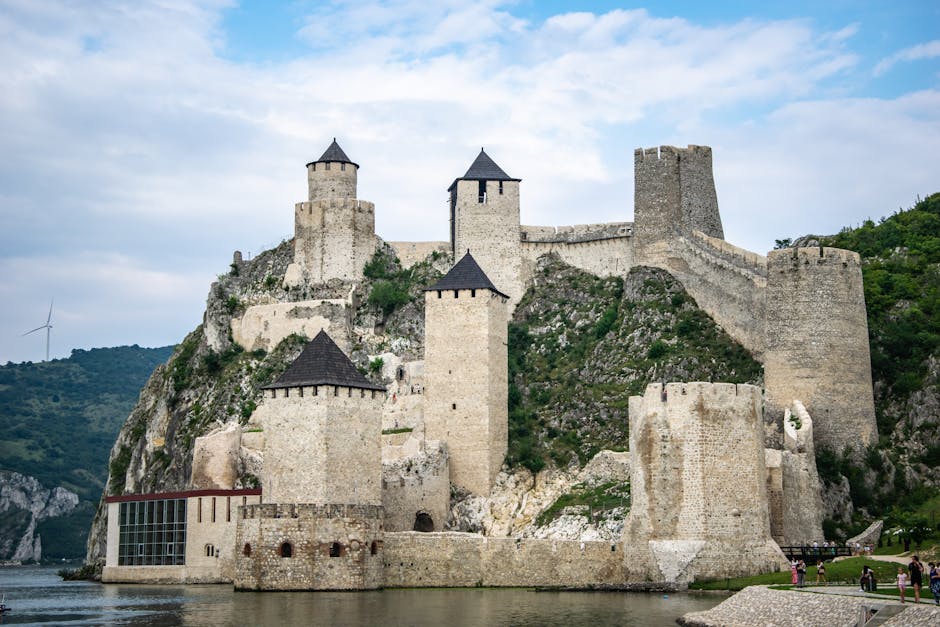
Introduction: Stepping Into the Shadows of the Middle Ages
The medieval period, often romanticized by knights in shining armor and castles perched on misty hills, was far more complex than the glittering fairy‑tale image we see in movies. Spanning roughly from the 5th to the late 15th century, this millennium of transformation forged the foundations of modern Europe, reshaped trade routes across continents, and cultivated cultural traditions that echo today. Imagine a world where a single sword could decide the fate of a kingdom, where the echo of a cathedral’s organ signaled both devotion and power, and where scholars in cloistered scriptoria painstakingly copied ancient texts that would later ignite the Renaissance. In this article we travel through time, tracing the rise and fall of empires, the clash of armies at iconic battlefields, and the lives of remarkable individuals whose decisions still reverberate in our laws, languages, and art. Whether you’re a history buff, a student preparing for an exam, or simply curious about the roots of our contemporary world, join us on a captivating journey through the medieval epoch—a saga of war, faith, innovation, and enduring legacy.
Historical Background and Context
The Dawn of the Middle Ages (5th–9th Century)
With the fall of the Western Roman Empire in 476 CE, Europe entered a period of fragmentation. Germanic tribes such as the Visigoths, Ostrogoths, and Franks carved out kingdoms on former Roman lands, blending Roman law with tribal customs. By the early 8th century, the rise of the Carolingian dynasty under Charles Martel and his grandson Charlemagne (crowned Holy Roman Emperor in 800 CE) began to reunite large swaths of Western Europe, establishing a network of monasteries that preserved classical knowledge.
The High Middle Ages (10th–13th Century)
The 10th century ushered in a wave of population growth, agricultural innovation (the heavy plow and three‑field system), and the birth of towns. Feudalism crystallized: lords granted land (fiefs) to vassals in exchange for military service, while serfs worked the fields. The Crusades (1096–1291) opened routes to the Levant, sparking exchange of ideas, spices, and technologies between East and West.
The Late Middle Ages (14th–15th Century)
Plagues, famines, and wars marked the later period. The Black Death (1347–1351) decimated up to one‑third of Europe’s population, triggering labor shortages and social upheaval. Yet this turbulence also paved the way for centralized monarchies, the decline of feudal obligations, and the intellectual awakening that would culminate in the Renaissance.
Key Events, Battles, and Developments
Battle of Tours (October 10, 732)
Frankish leader Charles Martel halted the northward expansion of Umayyad forces near modern‑day Poitiers, France. By repelling the Muslim army, the battle preserved Christian dominance in Western Europe and earned Martel the nickname “the Hammer.”
Coronation of Charlemagne (December 25, 800)
Pope Leo III crowned Charlemagne as Holy Roman Emperor in Rome, symbolically reviving the Western Roman Empire and cementing a political‑religious alliance that influenced European governance for centuries.
First Crusade (1096–1099)
Called by Pope Urban II at the Council of Clermont (1095), European knights captured Jerusalem on July 15, 1099, establishing the Kingdom of Jerusalem. The crusade spurred the construction of fortified castles, such as Krak des Chevaliers, and initiated lasting cultural exchanges.
Magna Carta (June 15, 1215)
Under pressure from rebellious barons, King John of England sealed the Magna Carta at Runnymede. This charter limited royal authority, introduced the concept of due process, and laid groundwork for modern constitutional law.
Battle of Agincourt (October 25, 1415)
During the Hundred Years’ War, King Henry V’s English forces—outnumbered three to one—defeated the French using longbows, killing an estimated 6,000–7,000 French soldiers. The victory demonstrated the strategic shift from heavy cavalry to ranged infantry.
The Fall of Constantinople (May 29, 1453)
Ottoman Sultan Mehmed II captured the Byzantine capital after a 53‑day siege, employing massive cannons like the Basilica. The conquest ended the Eastern Roman Empire, drove Greek scholars to Italy, and accelerated the Renaissance.
Printing Press Introduced to Europe (c. 1440)
Johannes Gutenberg’s movable‑type press in Mainz revolutionized information dissemination. By 1500, over 20,000 books were printed, dramatically increasing literacy and spreading reformist ideas.
Important Figures and Their Roles
Charlemagne (742–814)
As King of the Franks and Lombards, Charlemagne unified much of Western Europe, instituted the Carolingian Renaissance—a revival of art, education, and script— and laid the administrative foundations of the Holy Roman Empire.
Eleanor of Aquitaine (c. 1122–1204)
One of the wealthiest women of the Middle Ages, Eleanor married Louis VII of France and later Henry II of England. Her patronage of troubadours and involvement in the Second Crusade significantly shaped Anglo‑French politics.
Genghis Khan (c. 1162–1227)
Founder of the Mongol Empire, Genghis Khan’s campaigns (1206–1227) connected East and West, facilitating the Silk Road trade that introduced Chinese papermaking and Persian medicine to Europe.
Joan of Arc (1412–1431)
A peasant girl claiming divine visions, Joan lifted the Siege of Orléans (May 7–October 8, 1429) and led Charles VII to be crowned King of France, altering the course of the Hundred Years’ War.
Thomas Aquinas (1225–1274)
Dominican theologian whose seminal work, “Summa Theologica,” synthesized Aristotelian philosophy with Christian doctrine, profoundly influencing medieval scholasticism and Catholic education.
Causes and Consequences
Root Causes of Medieval Conflict
Territorial ambition, dynastic succession disputes, and religious fervor fueled centuries of warfare. Feudal obligations demanded military service, while the Church’s crusading ideology turned spiritual motives into geopolitical ventures.
Economic and Social Consequences
War spurred technological advancements—such as the stirrup, improved fortifications, and the longbow—that reshaped combat. The Black Death’s demographic shock accelerated wage growth, undermined serfdom, and prompted the transition to market‑based economies.
Political Outcomes
Prolonged conflicts led to stronger central monarchies in England, France, and Spain, diminishing the power of local nobles. Legal milestones like the Magna Carta introduced proto‑democratic principles that echo in modern constitutions.
Global Impact and Legacy
Medieval Europe’s legal codes, linguistic evolution, and architectural marvels such as Gothic cathedrals remain visible today. The period’s trade networks linked Africa, Asia, and the Americas, laying groundwork for the Age of Exploration. Educational reforms from medieval universities (e.g., Bologna, 1088; Oxford, 1096) evolved into today’s research institutions.
Fascinating Little‑Known Facts
- The earliest recorded instance of a medical school dates to Salerno, Italy, around 9th century, where Arabic, Greek, and Latin texts were taught together.
- Medieval knights sometimes used a “pavise”—a large shield—mounted on a pole to protect archers while they re‑loaded.
- In 13th‑century England, a law called the “Statute of Labourers” (1351) attempted to freeze wages at pre‑plague levels, revealing early governmental attempts to control the economy.
- The legendary “Voyage of the Ark” (the ship of Saint Brendan) may have inspired Irish monks to reach North America centuries before Columbus.
- Gothic cathedrals employed flying buttresses not only for structural support but also to create larger stained‑glass windows, bathing interiors in vivid color.
Conclusion: The Medieval Echo in Modern Times
The medieval era was not a stagnant dark age, but a dynamic crucible of conflict, faith, and innovation. Its legal charters shape our justice systems; its universities form the backbone of contemporary scholarship; its artistic achievements still inspire architects and designers. By understanding the complexities of the Middle Ages—its triumphs, tragedies, and transformative ideas—we gain insight into the forces that sculpted today’s global landscape. As we navigate modern challenges, the medieval lesson remains clear: resilience, adaptation, and the relentless pursuit of knowledge are timeless pathways to progress.